
Mature Skin Treatment Finder
Select the primary skin concern you're experiencing to find the recommended professional treatment path.
Recommended Treatment
Treatment Intensity
Quick Takeaways for Mature Skin
- For deep wrinkles: Look for collagen-stimulating treatments like Microneedling or Radiofrequency.
- For dullness/pigment: Chemical Peels or Microdermabrasion are your best bets.
- For extreme dryness: Hydrafacials and Oxygen facials provide the immediate plump.
- For sensitivity: Stick to LED Light Therapy and gentle enzyme facials.
The Science of Skin After 50
Before picking a treatment, you have to understand what's actually happening under the surface. After 50, especially for those in post-menopause, Estrogen is a key hormone that maintains skin thickness and moisture. When it drops, your skin loses collagen and elastin. This is why skin starts to sag and feel thinner.
You aren't just dealing with surface lines; you're dealing with a slower Cell Turnover is the process where the skin sheds dead cells and replaces them with new ones. In your 20s, this happened every few weeks. Now, it can take a month or more. This is why a simple "cleaning" facial often isn't enough. You need treatments that actively trigger the skin to behave like it did years ago.
The Gold Standard for Texture and Tone
If your main goal is to get rid of "age spots" or a rough texture, you want something that removes the old layers. Microdermabrasion is a minimally invasive procedure that uses a special applicator to sand away the top layer of skin. It's like a deep exfoliation that tells your brain, "Hey, we need new skin here!"
Then there are Chemical Peels, which are solutions applied to the skin to chemically exfoliate the epidermis. For those over 50, I recommend starting with a medium-depth peel. Using Glycolic Acid or Lactic Acid helps break the bonds of dead skin cells. Unlike the harsh peels of the 90s, modern versions are far more controlled. A well-timed peel can lift the hyperpigmentation caused by decades of sun exposure and leave the skin looking luminous rather than matte.
| Treatment | Best For | Downtime | Intensity |
|---|---|---|---|
| Microdermabrasion | Fine lines & dullness | None to minimal | Low to Medium |
| Chemical Peel | Pigment & deep wrinkles | 3-7 days (depending on depth) | Medium to High |
| Diamond Polish | Sensitive skin texture | None | Low |
Plumping Up: Hydration and Volume
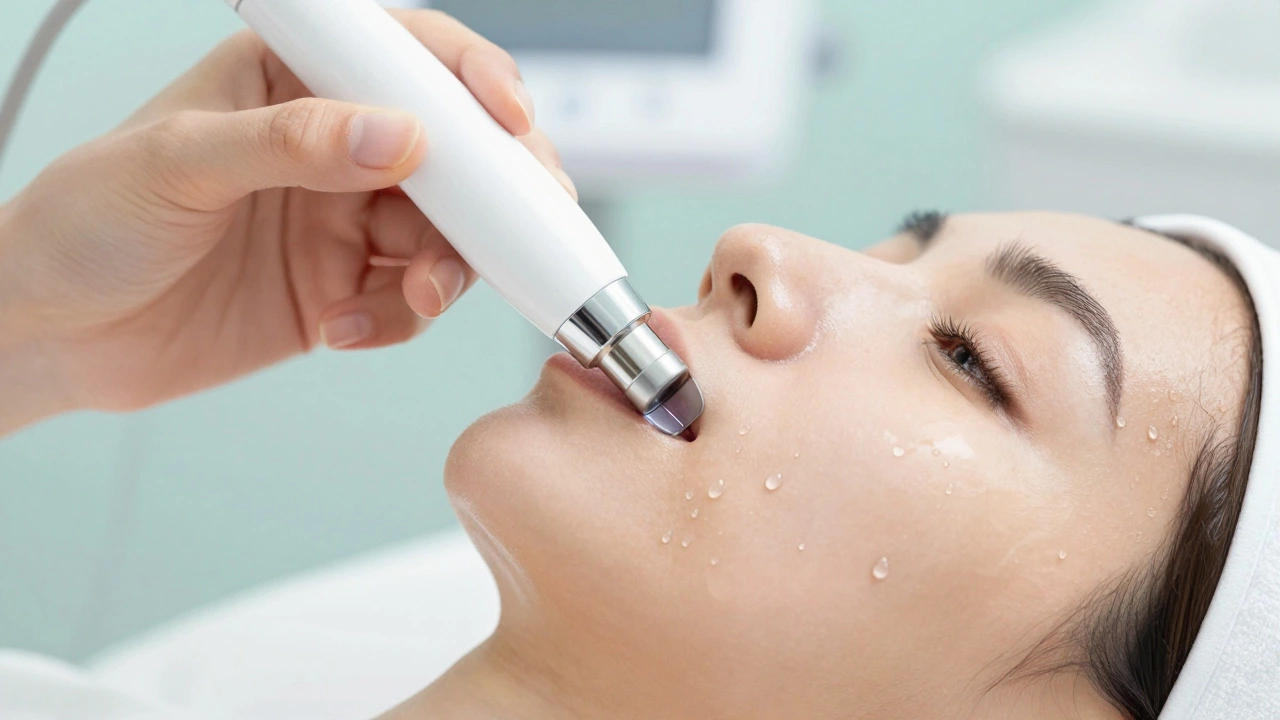
If your skin feels "tight" or looks sunken, exfoliation isn't your first step-hydration is. This is where the HydraFacial is a medical-grade surface device that cleanses, exfoliates, and hydrates the skin using a vacuum-like tip. It doesn't just sit on top of the skin; it pushes serums deep into the pores.
Another fantastic option is the Oxygen Facial. This treatment delivers a high-pressure stream of oxygen and hyaluronic acid. While it's often seen as a "red carpet" quick fix, for older skin, it provides an immediate surge of moisture that fills in fine lines temporarily. If you have a big event, this is the one. But for long-term health, look for treatments that include Hyaluronic Acid, a molecule that can hold 1,000 times its weight in water, effectively "plumping" the skin from within.
Stimulating the Foundation: Collagen Boosters
Let's be real: creams can only do so much. To actually change the structure of your skin, you need to create a controlled "injury" that forces the body to produce new collagen. Microneedling is a process using tiny needles to create micro-channels in the skin, triggering a healing response. For skin over 50, this is a game-changer because it targets the deeper dermal layers where the sagging actually starts.
If you're nervous about needles, Radiofrequency (RF) Therapy is a treatment that uses energy to heat the deep layer of skin, tightening and smoothing the skin's surface. RF therapy works by contracting existing collagen fibers and stimulating the production of new ones. Think of it as a non-surgical "lift." It's particularly effective for the jawline and the area around the mouth, where marionette lines tend to form.
The Gentle Approach: LED and Enzymes
Not everyone can handle a peel or a needle. If you have rosacea or extremely sensitive skin, LED Light Therapy is a non-invasive treatment that uses specific wavelengths of light to stimulate cellular activity. Red light, in particular, penetrates deep into the skin to reduce inflammation and boost collagen without any irritation.
Pair this with an enzyme facial. Instead of harsh acids, these use fruit enzymes (like pineapple or papaya) to dissolve dead skin. It's a much softer way to get a glow without the risk of redness or peeling. For many women over 50, this "low and slow" approach is more sustainable and keeps the skin barrier intact.

Building Your Treatment Plan
You don't have to pick just one. The most effective way to manage mature skin is a "ladder" approach. Start with hydration to prepare the skin, then move to exfoliation to clear the path, and finally use stimulating treatments to build structure.
For example, a quarterly plan might look like this: Month 1: HydraFacial for deep hydration. Month 2: A mild chemical peel to clear pigment. Month 3: Microneedling to target deep wrinkles. This cycle ensures you aren't over-stressing the skin while hitting all the necessary biological targets.
One mistake people often make is ignoring the neck and chest. The skin on your décolletage is even thinner than the skin on your face. Whatever facial you choose, make sure your esthetician extends the treatment down to your chest. There's nothing more jarring than a glowing face paired with a sun-damaged neck.
Will these facials actually remove deep wrinkles?
No facial can completely erase a deep wrinkle-that's what surgery or fillers are for. However, treatments like Microneedling and Radiofrequency can significantly soften the appearance by thickening the skin and improving elasticity, making the lines look less severe.
How often should I get a professional facial after 50?
For maintenance, once every 4 to 6 weeks is ideal. This aligns with your skin's slower cell turnover cycle. If you're doing more aggressive treatments like deep chemical peels, you may only need them every 3 to 6 months to avoid over-processing your skin.
Can I get a chemical peel if I use Retinol at home?
Yes, but you must stop using your home Retinol at least 3 to 7 days before and after a professional peel. Using both at the same time can compromise your skin barrier, leading to redness, peeling, or even chemical burns.
Which facial is best for thinning skin?
For thinning skin, avoid aggressive scrubs. Focus on LED Light Therapy and HydraFacials. These improve the skin's health and moisture levels without stripping away the already thin protective layers of the epidermis.
Do I need to do anything after a facial to keep the results?
Absolutely. The most critical step is using a broad-spectrum SPF. Many of these treatments make your skin more sensitive to the sun. If you don't protect your skin after a peel or microdermabrasion, you might actually end up with more pigment spots than you started with.
Next Steps for Different Skin Goals
If you are currently struggling with extreme dryness, start with a series of three HydraFacials spaced two weeks apart. This "loads" the skin with moisture before you attempt any exfoliating treatments.
If your primary concern is sagging skin, book a consultation for Radiofrequency or Microneedling. These require a professional assessment to ensure your skin thickness can handle the treatment.
If you have sensitive skin and redness, avoid the "trending" strong peels. Request an enzyme-based facial and a session of red LED light therapy to calm the skin and build a healthy glow without the irritation.
 Skincare