
Skin Nutrient Routine Builder
Nutritional Support (Inside-Out)
Quick Tips for Smoothing Crepey Skin
- Prioritize Vitamin C and Vitamin A (Retinoids) to trigger collagen.
- Focus on hydration with Hyaluronic Acid and Omega-3s.
- Use a broad-spectrum SPF 50 daily to stop further breakdown.
- Combine topical serums with a nutrient-dense diet for the best results.
You wake up, look in the mirror, and notice your skin looks like thin, crinkled tissue paper. It's usually on the backs of the hands, the neck, or around the eyes. This is what we call crepey skin. It isn't just a few wrinkles; it's a loss of structural integrity. The real problem is that your skin has lost its "bounce," which happens when your levels of collagen and elastin plummet. While you can't completely erase time, you can definitely firm things up by targeting the specific vitamins your skin is starving for.
The Heavy Hitter: Vitamin A and Retinoids
If there is one ingredient that actually moves the needle, it's Vitamin A is a group of fat-soluble vitamins that regulate the function of the immune system and skin cell growth. When used topically as Retinol, it works by speeding up cell turnover. Instead of old, damaged skin cells sitting on the surface, your body pushes new, plump cells to the top.
Think of it as a renovation for your face. Retinoids signal your body to produce more collagen, the protein that acts like the scaffolding for your skin. Without enough collagen, your skin collapses into those tiny, crepey folds. However, be careful with the strength. Starting with a 0.25% retinol concentration prevents the "purging" phase where your skin peels and gets red. Apply it only at night, as sunlight breaks down the active molecules and can make your skin more sensitive to burns.
The Brightener: Vitamin C for Structural Support
You can't build a house without cement, and you can't build collagen without Vitamin C. This water-soluble antioxidant also known as ascorbic acid is a mandatory cofactor for the enzymes that stabilize and cross-link collagen fibers. Without it, any collagen your body tries to make is weak and unstable.
Beyond just building protein, Vitamin C protects your skin from "free radicals" caused by pollution and UV rays. If you live in a sunny place like Sydney, your skin is constantly under attack. Applying a L-ascorbic acid serum in the morning creates a shield that prevents the sun from eating away at your existing elastin. Look for formulas that combine it with Vitamin E and Ferulic Acid; these three together are significantly more powerful than Vitamin C alone.
Hydration from Within: Vitamin E and Omega-3s
If Vitamin A and C are the builders, Vitamin E is the protector. It's a lipid-soluble antioxidant that keeps the skin's moisture barrier intact. Crepey skin is often exacerbated by "transepidermal water loss," which is just a fancy way of saying your skin is leaking moisture into the air.
When you pair Vitamin E with Omega-3 Fatty Acids (found in fish oil or flaxseed), you're essentially waterproofing your skin. These healthy fats integrate into the cell membranes, making them more resilient and capable of holding onto water. If your skin feels tight and looks papery even after moisturizing, you're likely missing these essential fats.
| Nutrient | Primary Role | Best Source/Form | Visible Result |
|---|---|---|---|
| Vitamin A (Retinol) | Cell Turnover | Topical Serums | Firmer texture, fewer fine lines |
| Vitamin C | Collagen Synthesis | L-Ascorbic Acid Serum | Brite tone, structural plumpness |
| Vitamin E | Moisture Barrier | Almonds, Avocado, Oils | Dewy finish, reduced dryness |
| Omega-3 | Membrane Repair | Salmon, Walnuts | Supple skin, less "papery" feel |

The Role of Hyaluronic Acid and B-Vitamins
While not a vitamin in the traditional sense, Hyaluronic Acid is the gold standard for immediate relief of crepey skin. It is a humectant, meaning it can hold up to 1,000 times its weight in water. It doesn't "reverse" the damage permanently, but it fills in the gaps between skin cells, instantly smoothing out the crinkles.
Then you have the B-complex vitamins, specifically Niacinamide (Vitamin B3). This powerhouse helps the skin produce ceramides. Ceramides are the glue that holds your skin cells together. When you lack ceramides, your skin becomes thin and translucent, which is the hallmark of crepey skin. Using a 5% to 10% Niacinamide serum helps thicken the outer layer of the skin, making it look less fragile.
Common Pitfalls and What to Avoid
Many people make the mistake of over-exfoliating in an attempt to "scrub away" the crepey look. This is a disaster. Crepey skin is already thin; using harsh physical scrubs or high-percentage glycolic acids can tear the skin barrier further. Instead, opt for chemical exfoliants like Lactic Acid, which gently removes dead skin while actually helping the skin retain moisture.
Another trap is relying solely on creams. Creams are great for locking in moisture, but they rarely penetrate deep enough to trigger collagen production. To actually reverse the texture, you need "active" ingredients-the vitamins mentioned above-that reach the dermis. If your moisturizer doesn't contain a retinal or a stable Vitamin C derivative, it's just a temporary fix.
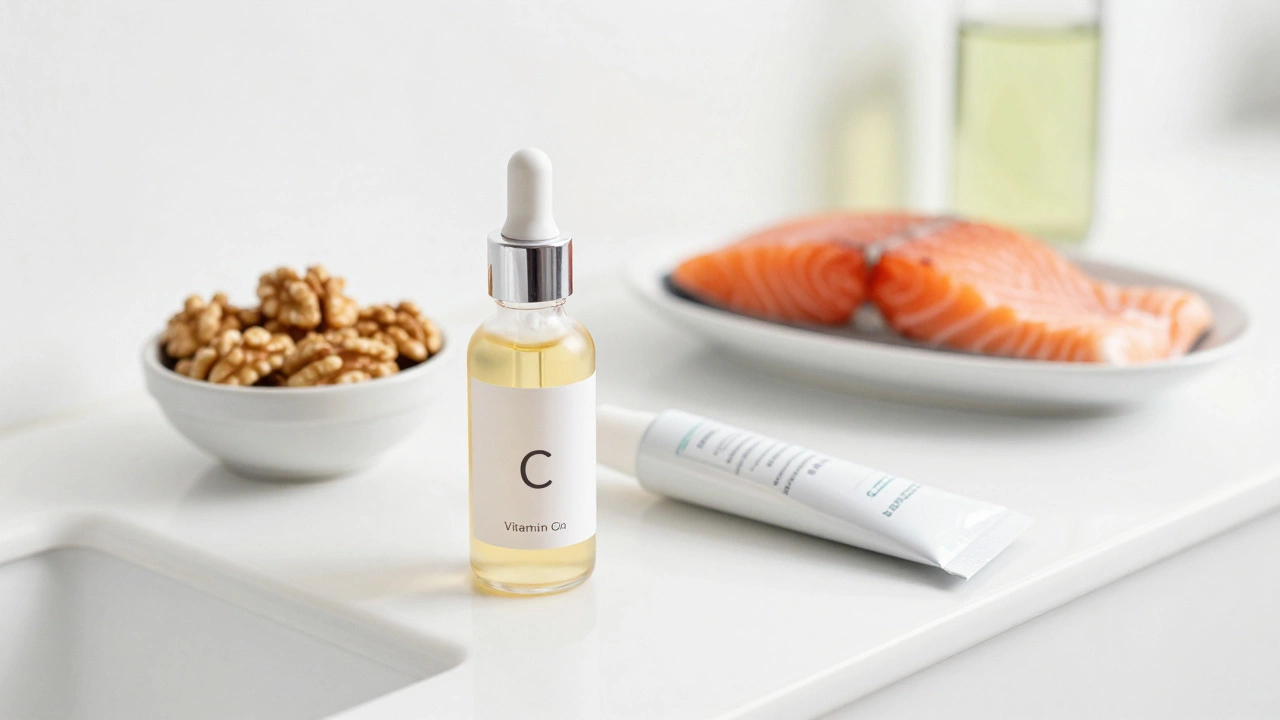
How to Build a Vitamin-Based Routine
You can't just throw everything on your face at once or you'll end up with a chemical burn. A smart approach is to stagger your actives. In the morning, use your Vitamin C serum followed by a heavy-duty moisturizer and a broad-spectrum sunscreen. The sunscreen is non-negotiable; if you use Vitamin A or C without SPF, the sun will destroy the new collagen faster than you can build it.
In the evening, focus on repair. This is when you apply your Retinol. Start twice a week to let your skin adjust. Follow it up with a cream containing Vitamin E or Niacinamide to soothe any irritation. For those with extremely crepey skin on the body, using a body lotion with Alpha Hydroxy Acids (AHAs) paired with an Omega-3 supplement can yield visible results within six to eight weeks.
Can supplements actually reverse crepey skin?
Supplements provide the building blocks, but topical applications are generally more effective for specific areas. For example, taking Vitamin C helps your body produce collagen generally, but applying a Vitamin C serum targets the skin's surface and protects against UV damage directly. For the best result, combine a nutrient-rich diet (rich in Omega-3s and antioxidants) with a dedicated skincare routine.
How long does it take to see a difference?
Skin cells typically take about 28 to 40 days to turn over. Because collagen synthesis is a slow process, you won't see a "magic" overnight change. Most people notice a smoother texture after 4 to 6 weeks of consistent Retinol and Vitamin C use, with significant firming occurring around the 3-month mark.
Is crepey skin the same as wrinkles?
Not exactly. Wrinkles are usually deeper folds caused by repetitive facial expressions or deep collagen loss. Crepey skin is a more general thinning of the skin's surface, making it look like crumpled silk or crepe paper. While they both involve collagen loss, crepey skin is more about the loss of elasticity and moisture in the epidermis.
Can I use Retinol and Vitamin C together?
It's generally not recommended to apply them at the exact same time because they require different pH levels to work effectively. Vitamin C thrives in an acidic environment, while Retinol can be irritating if combined with other strong acids. The gold standard is Vitamin C in the morning and Retinol at night.
Which vitamin is safest for sensitive skin?
Niacinamide (Vitamin B3) and Vitamin E are the gentlest. If you have sensitive skin, avoid high-strength pure Retinol and instead look for "Bakuchiol," which is a plant-based alternative that mimics Vitamin A's effects without the redness and peeling.
Next Steps for Different Skin Types
If you have dry, mature skin, focus on the "moisture sandwich." Apply Hyaluronic Acid on damp skin, follow with a Vitamin E-rich cream, and seal it with a thin layer of facial oil. This prevents water from escaping and mimics the natural lipids your skin is no longer producing.
For those with combination or oily skin, stick to lightweight serums. A water-based Vitamin C serum and a gel-based Retinol will give you the collagen boost without clogging your pores. Always introduce one new product every two weeks so you can pinpoint exactly what's working (or what's causing a breakout).
 Skincare