
Laser Hair Removal Suitability Calculator
Personal Assessment
Your Results
People ask if laser hair removal can permanently get rid of hair-and the answer isn’t a simple yes or no. It’s not magic. It’s science. And if you’ve spent money on waxing, threading, or depilatory creams only to see hair grow back in a week, you’re not alone. Laser hair removal promises longer-lasting results, but what does permanent really mean here?
How Laser Hair Removal Actually Works
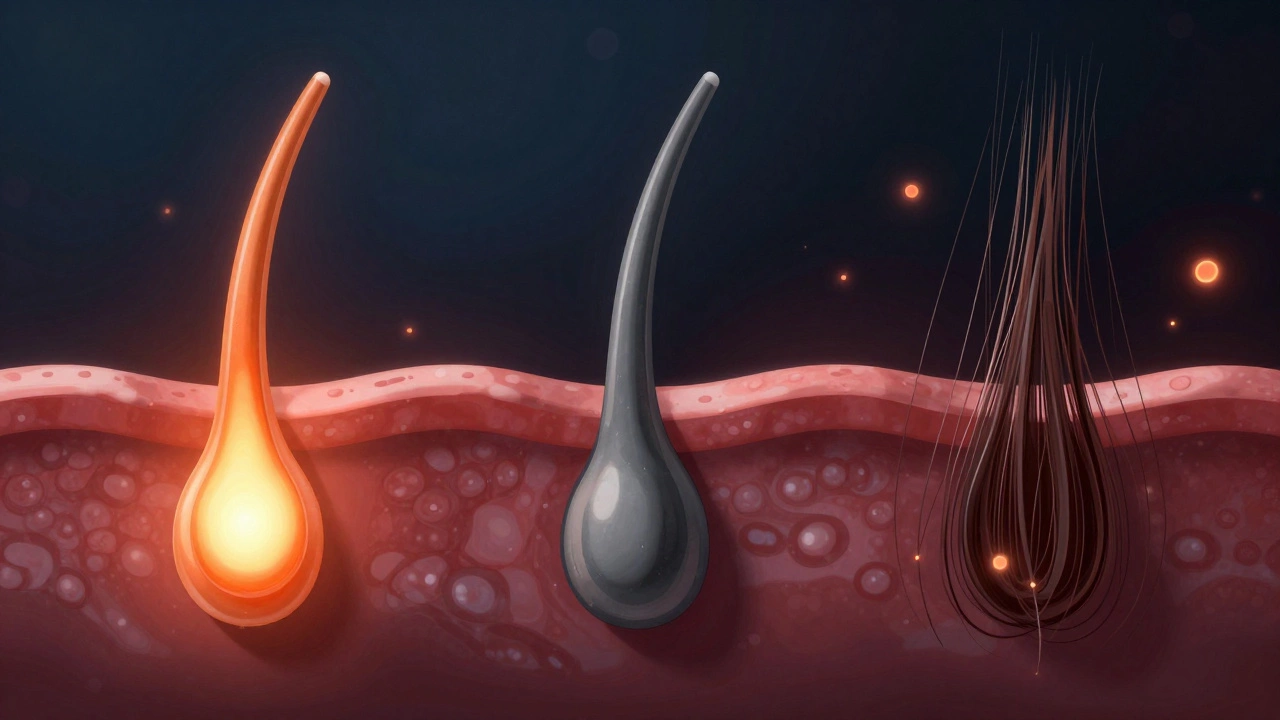
Laser hair removal targets the pigment in hair follicles. The laser emits a specific wavelength of light that’s absorbed by melanin-the color in your hair. That light turns into heat, which damages the follicle enough to slow or stop future growth. It doesn’t zap every hair in one go. Hair grows in cycles: active, resting, and shedding. Lasers only work on hairs in the active growth phase. That’s why you need multiple sessions-usually 6 to 8-spaced 4 to 8 weeks apart.
Not all skin and hair types respond the same. Dark hair on light skin gives the best results because the contrast helps the laser focus on the hair, not the skin. Newer devices like Alexandrite, Nd:YAG, and Diode lasers can now safely treat darker skin tones, but results still vary. If your hair is blonde, gray, red, or very fine, the laser may not work well. There’s just not enough pigment to target.
What ‘Permanent’ Really Means
The FDA doesn’t allow companies to claim laser hair removal is 100% permanent. Instead, they approve it as permanent hair reduction. That means after a full treatment course, most people lose 70% to 90% of their hair in the treated area. The rest is usually finer, lighter, and grows much slower. For many, that’s good enough. You might only need to touch up once a year-or never again.
Think of it like this: you won’t be completely hair-free like you were before puberty. But you’ll go from needing to shave every few days to maybe waxing once every six months. Some people never see regrowth in areas like the underarms or bikini line after completing treatment. Others, especially on the face or hormonal areas like the chin, may need occasional maintenance sessions.
Why Some People See Regrowth
If you had laser treatment and hair came back, it’s not necessarily because it failed. Hormones play a big role. Conditions like polycystic ovary syndrome (PCOS), thyroid imbalances, or even menopause can trigger new hair growth. Medications like steroids or certain antidepressants can also cause regrowth. Pregnancy can change your hair pattern too.
Also, if you didn’t finish your full course of treatments, you didn’t catch all the follicles in their active phase. Skipping sessions or spacing them too far apart reduces effectiveness. And if you tanned before or after treatment, the laser might have targeted your skin instead of your hair-leading to burns or reduced results.
Side Effects and Risks
Laser hair removal is safe when done by trained professionals using FDA-cleared devices. But it’s not risk-free. Common side effects include redness, swelling, and mild discomfort-like a rubber band snap-that fades within hours. Rarely, people get blistering, scarring, or changes in skin color (lighter or darker patches), especially if they have darker skin and the wrong laser setting was used.
Eye injury is possible if protective goggles aren’t worn. That’s why you should never do at-home laser devices on your face unless they’re specifically designed and approved for facial use. Most over-the-counter gadgets lack the power to deliver real results and can cause burns if misused.
Who Gets the Best Results?
People with coarse, dark hair and light skin still see the most dramatic outcomes. But technology has improved. Devices like the Nd:YAG laser can treat olive, brown, and even black skin safely. The key is finding a clinic with experienced technicians who adjust settings based on your skin tone and hair color-not just use a one-size-fits-all approach.
Teenagers and people with hormonal hair growth (like chin hair in women) should be cautious. Hormones may still be changing, so results can be unpredictable. It’s often better to wait until your hair pattern stabilizes. Men seeking laser hair removal on the back or chest usually get excellent, long-term results because their hair is typically thick and dark.
Cost and Time Commitment
A full course of laser hair removal costs between $200 and $800 per area, depending on location and clinic. Larger areas like legs or back cost more. Most people pay $1,000 to $3,000 total for six to eight sessions across one or two areas. That sounds expensive-but compare it to spending $300 a year on waxing for 10 years. Laser pays for itself.
Each session takes 15 minutes for upper lip, 30 minutes for underarms, and up to an hour for full legs. You’ll need to avoid sun exposure, tanning, and plucking for weeks before each session. Shaving is fine-it’s actually required. Waxing or threading removes the hair root, which the laser needs to target.

What Happens After Treatment?
Right after your session, hair may look like it’s still there. That’s normal. The follicles are damaged, but the hair shafts are still in the skin. Over the next 1-3 weeks, they’ll shed naturally. Don’t pluck or pull them out-let them fall on their own. You’ll notice less hair with each session. After the third treatment, many people say they can skip shaving for days longer than before.
Some people see a slight reduction after just one session. But don’t quit early. The full effect builds up over time. Waiting too long between sessions lets follicles recover and grow new hair, which defeats the purpose.
Alternatives to Laser
If laser doesn’t suit you-maybe your hair is too light or your skin too sensitive-there are other options. Electrolysis is the only FDA-approved method for true permanent hair removal. It destroys each follicle with a tiny electric current. But it’s slow: one hair at a time. A full face treatment can take 50-100 hours over months. It’s also more painful and expensive per session.
Intense Pulsed Light (IPL) devices are cheaper and available for home use. But they’re less powerful and less precise than medical lasers. Results are inconsistent, especially on darker skin. They’re not a replacement for professional laser treatment.
Final Verdict: Is It Worth It?
If you’re tired of shaving, waxing, or dealing with unwanted hair, laser hair removal is one of the most effective long-term solutions available. It’s not 100% permanent, but for most people, it’s close enough to change their daily routine forever. You’ll save time, money, and irritation over the years.
Success depends on choosing the right clinic, sticking to the full treatment plan, and understanding your own hair and skin type. Don’t go to the cheapest place. Ask about the device they use, the technician’s experience, and whether they offer a patch test. A good provider will tell you upfront if you’re a good candidate-or if you should try something else.
For many, laser hair removal isn’t a beauty treatment. It’s a lifestyle upgrade.
Can laser hair removal permanently remove all hair?
No, laser hair removal cannot remove every single hair permanently. The FDA approves it as "permanent hair reduction," meaning most people lose 70% to 90% of hair in treated areas. Remaining hair is often finer and lighter. Some people see no regrowth for years; others need occasional touch-ups, especially on hormonal areas like the face.
How many sessions do you need for laser hair removal?
Most people need 6 to 8 sessions, spaced 4 to 8 weeks apart. This is because hair grows in cycles, and lasers only affect hairs in the active growth phase. Missing sessions or spacing them too far apart reduces effectiveness. Some areas, like the bikini line or underarms, respond faster than the face or back.
Does laser hair removal work on blonde or gray hair?
Usually not well. Lasers target pigment, and blonde, gray, red, or very fine hair has too little melanin for the laser to detect. Some newer devices claim better results on light hair, but success is rare. If you have light hair, electrolysis is a better option for permanent removal.
Is laser hair removal safe for dark skin?
Yes, but only with the right laser and technician. Nd:YAG lasers are safest for darker skin tones because they target hair without overheating the skin. Avoid clinics that use older or generic devices on dark skin-this increases the risk of burns or discoloration. Always ask for a patch test before your first full session.
Can I shave between laser sessions?
Yes, shaving is not only allowed-it’s required. Shaving cuts the hair above the skin without disturbing the root, so the laser can still target the follicle. Never wax, pluck, or use depilatory creams between sessions. Those methods remove the hair root, which the laser needs to destroy.
How long do laser hair removal results last?
Results can last years or even be permanent for many people, especially in areas like the underarms or legs. Some may need a yearly touch-up, particularly on the face or areas affected by hormones. After completing your full treatment plan, most people experience significantly reduced hair growth for at least 5-10 years.
What’s the difference between laser and IPL?
Laser uses a single, focused wavelength of light that targets hair follicles precisely. IPL (Intense Pulsed Light) uses a broad spectrum of light, making it less precise and less effective. Professional lasers deliver stronger, more consistent results and are safer for darker skin. Home IPL devices are cheaper but rarely deliver long-term results.
Why did my hair grow back after laser treatment?
Hair regrowth after laser treatment usually happens because you didn’t complete all sessions, your hair was too light, or hormonal changes triggered new growth. Conditions like PCOS or thyroid issues can cause new follicles to activate. It’s not always treatment failure-it’s often biology. Maintenance sessions can help manage this.
 Skincare