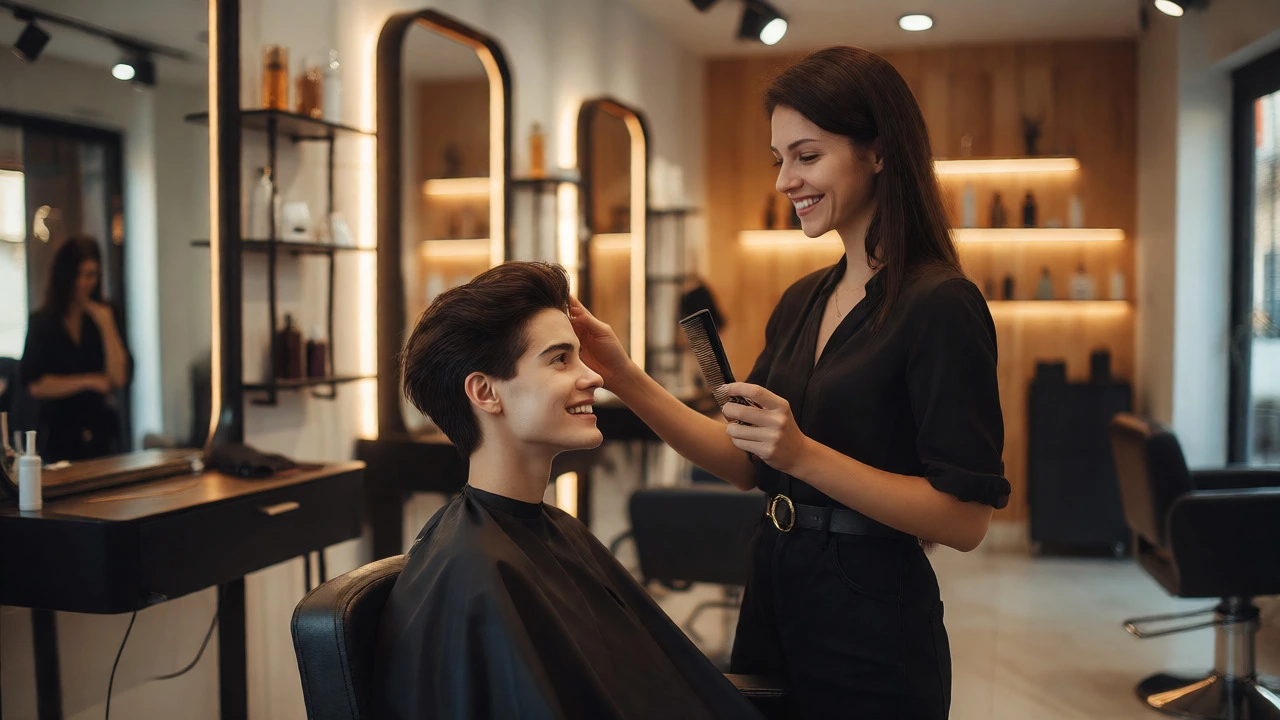
Salon Owner Tipping Calculator
Not sure how much to tip if your stylist owns the salon? Use this tool to find a polite, context-aware amount based on your location and the service provided.
Suggested Tip Amount
Why this amount?
You’re sitting in the chair, your hair looks fantastic, and you feel great. Then comes the awkward moment: reaching for your wallet or tapping your card on the terminal. Do you add a tip? And what if the person holding the scissors is also the person who pays the rent for the building? It’s a question that pops up constantly in beauty salons, especially when dealing with independent stylists or small business owners.
The short answer is yes, you generally still tip, but the amount might change depending on context. Tipping isn’t just about paying for the cut; it’s about acknowledging skill, time, and customer service. Even if the stylist owns the shop, they are providing a personal service that requires expertise. However, the dynamics shift slightly compared to tipping an employee at a large chain. Let’s break down exactly how to handle this without making things weird.
Why We Tip Service Providers In The First Place
To understand whether you should tip an owner, we first need to look at why we tip anyone. In many industries, including hospitality and beauty, base pay doesn’t always reflect the true value of the labor provided. Tips serve as a direct reward for exceptional service, punctuality, and attention to detail. When you tip a stylist, you’re essentially saying, “I appreciate the care you took with my hair.”
This concept holds true regardless of employment status. Whether the stylist is an employee receiving a commission or an owner taking home all the profit after expenses, the act of cutting, coloring, and styling your hair is skilled labor. Owners often have higher overhead costs-rent, utilities, product inventory-but their hourly rate for actual client time is often comparable to or only slightly higher than senior employees. Skipping the tip because they own the place can sometimes feel like penalizing them for being entrepreneurial.
The Owner-Operator Dynamic: Does Ownership Change The Etiquette?
There is a common misconception that business owners don’t need tips because they set their own prices. While technically true that they control the price list, most independent salon owners do not mark up their rates to include a built-in gratuity. They price their services based on market competition and cost recovery, not necessarily assuming every client will add extra cash on top.
In Australia, where tipping culture is more relaxed than in the United States, the expectation is lower but still present for high-quality service. If you live in Sydney or Melbourne, you’ll notice that while a 10% tip isn’t mandatory, rounding up or adding $5-$10 for a great experience is a common gesture of appreciation. For an owner, this small gesture reinforces loyalty. It tells them you value their specific touch, which can lead to better appointment availability or priority booking next time.
However, context matters. If the owner has raised their prices significantly above the local average to compensate for no-tip expectations, then tipping becomes optional rather than expected. Check their pricing against nearby competitors. If their blow-dry costs $60 while others charge $45, that premium likely covers their owner-status convenience. In that case, a smaller tip or simply a warm thank-you might suffice.
How Much Should You Tip A Salon Owner?
If you decide to tip, how much is appropriate? Since owners already take home the full fee (minus expenses), some people argue for a reduced percentage. Here is a practical guide based on current norms in major cities like Sydney:
- Standard Service: If the service was good and met expectations, rounding up to the nearest $5 or $10 increment is polite. For a $80 cut, paying $90 is a nice gesture.
- Exceptional Service: If they fixed a bad previous job, stayed late, or gave incredible advice, aim for 10-15%. This aligns with standard employee tipping but acknowledges their dual role.
- Complex Services: For color corrections, balayage, or treatments that take three hours or more, a flat tip of $20-$30 is respectful of the physical stamina required.
- No Tip Needed: If the service was mediocre, rushed, or if the owner explicitly stated "no tips necessary" (some do to keep pricing simple), you can skip it entirely.
Remember, consistency builds relationships. If you tip regularly, you become a preferred client. Stylists remember those who show appreciation, even if it’s modest.

Cash vs. Card: How To Tip An Owner Discreetly
Tipping mechanics can be tricky when the owner runs the front desk themselves. Handing over cash feels personal and immediate. It allows you to say, “Here’s a little something for the great work,” creating a positive interaction. Many owners prefer cash tips because they avoid transaction fees associated with credit cards.
If you pay by card, many modern POS systems allow you to add a tip before finalizing the transaction. However, some older systems might not offer this option clearly. In these cases, leaving cash on the counter is often easier. If you don’t carry cash, ask politely: “Can I add a tip to the card payment?” Most owners will accommodate this. Avoid trying to transfer money via banking apps unless you have a close rapport, as it can feel impersonal or administratively burdensome for them.
When You Might Skip The Tip Entirely
Are there scenarios where skipping the tip for an owner is completely fine? Yes. If you are a regular client who books months in advance and maintains a long-term relationship, occasional skipping is acceptable. Owners value retention over one-off gratuities. If you’ve been going to the same owner for five years, they know you’re loyal. You don’t need to buy their affection every visit.
Also, consider the economic climate. If inflation has hit hard and your budget is tight, don’t stress. A genuine compliment and a positive online review are valuable currencies too. Owners rely heavily on word-of-mouth. Leaving a detailed 5-star review mentioning their name can drive new clients to their door, potentially earning them more than a $10 tip ever would.
International Context: What About The US And UK?
If you travel frequently, you might wonder if these rules apply globally. In the United States, tipping is deeply embedded in the wage structure. Even salon owners often receive tips because the cultural norm is so strong that withholding it can be seen as rude, regardless of ownership. Expectations there remain 15-20%.
In the United Kingdom, similar to Australia, tipping is discretionary. It’s appreciated for excellent service but not obligatory. Independent salon owners in London might expect a small token of appreciation, but large chains definitely do. The key difference is that in the US, the base price rarely reflects the full cost of labor, whereas in Australia and the UK, the listed price is closer to the true cost of service.
| Region | Expected Tip % | Owner-Specific Adjustment | Preferred Method |
|---|---|---|---|
| Australia (Sydney/Melbourne) | 0-10% | Round up or small flat fee ($5-$10) | Cash preferred, Card accepted |
| United States | 15-20% | Full standard tip usually expected | Card (POS system) or Cash |
| United Kingdom | 0-10% | Discretionary, often rounded up | Cash or Contactless |
| Canada | 15-20% | Similar to US, slight reduction possible | Card or Cash |
Beyond Money: Other Ways To Show Appreciation
Money isn’t the only way to thank a salon owner. If you’re unsure about tipping, consider other gestures that strengthen the professional bond. Bringing coffee or pastries during busy seasons shows thoughtfulness. Referring friends is arguably the best gift for a small business owner. Each new client referred helps offset their marketing costs.
Social media shout-outs also matter. Tagging them in Instagram stories or posting a before-and-after photo with their handle boosts their visibility. For solo operators or small teams, digital exposure translates directly into revenue. If you skip the monetary tip, make sure your verbal and digital feedback is loud and clear.
Common Pitfalls To Avoid
Don’t make assumptions. Never assume that because someone owns the salon, they don’t want a tip. Some owners actually rely on tips to supplement income during slow months. Conversely, don’t feel pressured to tip excessively just to prove you’re generous. Authenticity beats obligation.
Another mistake is tipping inconsistently without explanation. If you usually tip 10% but suddenly stop, it might signal dissatisfaction. If you’re struggling financially, communicate it lightly: “Things are tight right now, so I’m skipping the tip today, but I love my hair!” Transparency preserves the relationship.
Is it rude not to tip a salon owner?
No, it is not inherently rude, especially in countries like Australia or the UK where tipping is discretionary. However, if the service exceeded expectations, skipping the tip might be interpreted as lack of appreciation. A small round-up or a heartfelt thank-you note bridges this gap effectively.
Should I tip differently for color services versus cuts?
Yes, complex services like color correction or balayage require more time and skill. These often warrant a higher tip percentage or a larger flat amount compared to a simple trim. The effort involved in mixing formulas and processing time justifies additional gratitude.
What if the salon has a 'no tipping' policy?
Respect the policy. Some high-end salons implement no-tipping rules to ensure fair wages for all staff and simplify billing. In this case, express your satisfaction through reviews, referrals, and loyalty bookings instead of cash.
Do I tip the assistant or shampoo person separately?
If the salon owner handles everything themselves, no separate tip is needed. If there is a junior stylist or assistant helping with washing and drying, it is customary to give them a small separate tip (e.g., $5-$10) or include them in the total tip distribution if the owner manages it.
Does tipping affect my appointment priority?
It can. Regular clients who tip consistently are often remembered fondly and may get priority slots during peak times. It fosters a goodwill relationship that benefits both parties, ensuring you get the time slot you need.
 Skincare