Cruelty-Free Brand Checker
Is This Brand Truly Cruelty-Free?
Many brands claim "cruelty-free" but still allow animal testing in China. Enter a brand name to see if it meets real cruelty-free standards (Leaping Bunny certified and no China sales).
Results will appear here
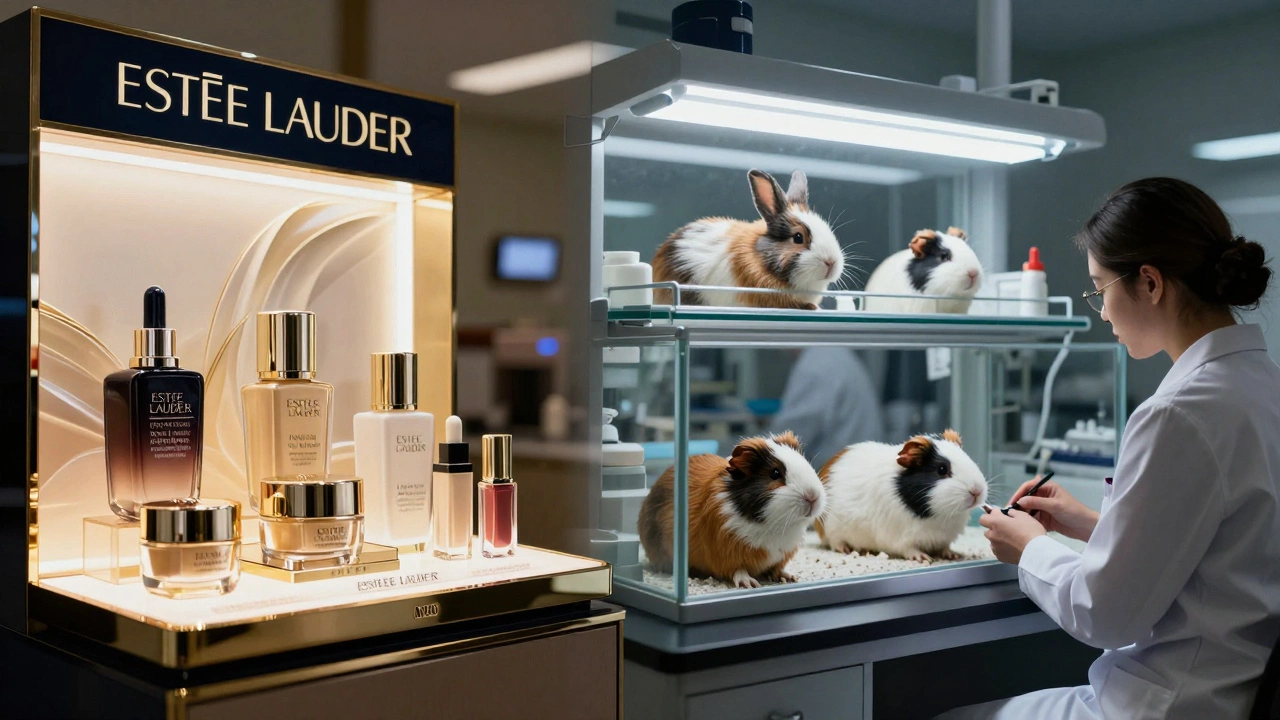
When you buy makeup from Estee Lauder, you’re paying for luxury, performance, and brand trust. But behind the glossy packaging and high-end marketing is a question that matters more than ever: Does Estee Lauder test on animals? If you’re trying to avoid products linked to animal cruelty, this isn’t just a side note-it’s a dealbreaker.
The short answer? Estee Lauder does not test its products on animals directly. But that’s not the whole story. The brand sells in countries where animal testing is required by law, and it allows third parties to test on animals on its behalf. This means that while Estee Lauder itself doesn’t conduct the tests, it still profits from and enables animal testing in certain markets.
What Estee Lauder Says About Animal Testing
Estee Lauder Companies, which owns brands like Clinique, MAC, Bobbi Brown, and La Mer, states on its website that it does not test on animals. It claims to have been a pioneer in eliminating animal testing in the cosmetics industry, dating back to the 1980s. The company says it uses advanced, non-animal testing methods like lab-grown human tissue and computer modeling to ensure product safety.
These claims sound reassuring. But here’s the catch: company policy ≠ global reality. If a country requires animal testing for imported cosmetics, and Estee Lauder wants to sell there, it must comply. China is the biggest example. Until 2021, China mandated animal testing for all imported cosmetics. Even though it relaxed rules for some ordinary cosmetics (like shampoo and lipstick) in 2021, it still requires animal testing for products labeled as "special use"-such as sunscreen, whitening creams, and anti-aging formulas. Estee Lauder sells all of these in China.
How Animal Testing Still Happens Under Estee Lauder’s Name
Estee Lauder doesn’t run the labs where animals are tested. But it pays for it. Here’s how it works:
- Estee Lauder submits its products to Chinese authorities for approval.
- Chinese regulators choose which products to test and which labs to use.
- Animals-rabbits, mice, guinea pigs-are forced to ingest, inhale, or have chemicals applied to their skin or eyes.
- Estee Lauder receives the test results and sells the products in China.
This isn’t a loophole. It’s a business decision. Estee Lauder made the choice to enter the Chinese market, which is worth over $70 billion in beauty sales. That’s more than the entire beauty market in the UK and Germany combined. So while the company avoids direct testing, it still funds and benefits from animal testing to access this market.
What About Certifications Like Leaping Bunny or PETA?
You might see Estee Lauder brands labeled "cruelty-free" on social media or in stores. But certifications don’t lie-they just have rules. The Leaping Bunny Program, run by Cruelty Free International, requires companies to prove they don’t test anywhere in the world and don’t allow third parties to test on their behalf. Estee Lauder doesn’t meet this standard. It’s not Leaping Bunny certified.
PETA’s Beauty Without Bunnies list is looser. It only checks if a company tests on animals directly. It doesn’t require proof that the company doesn’t allow testing in third-party countries. So Estee Lauder appears on PETA’s list. But that’s misleading. PETA doesn’t check for indirect testing, which is exactly what happens in China.
That’s why many ethical shoppers ignore PETA’s list and trust Leaping Bunny instead. If a brand isn’t Leaping Bunny certified, it’s not truly cruelty-free-no matter what the marketing says.
Which Estee Lauder Brands Are Actually Cruelty-Free?
Not all brands under Estee Lauder Companies are the same. Here’s the breakdown:
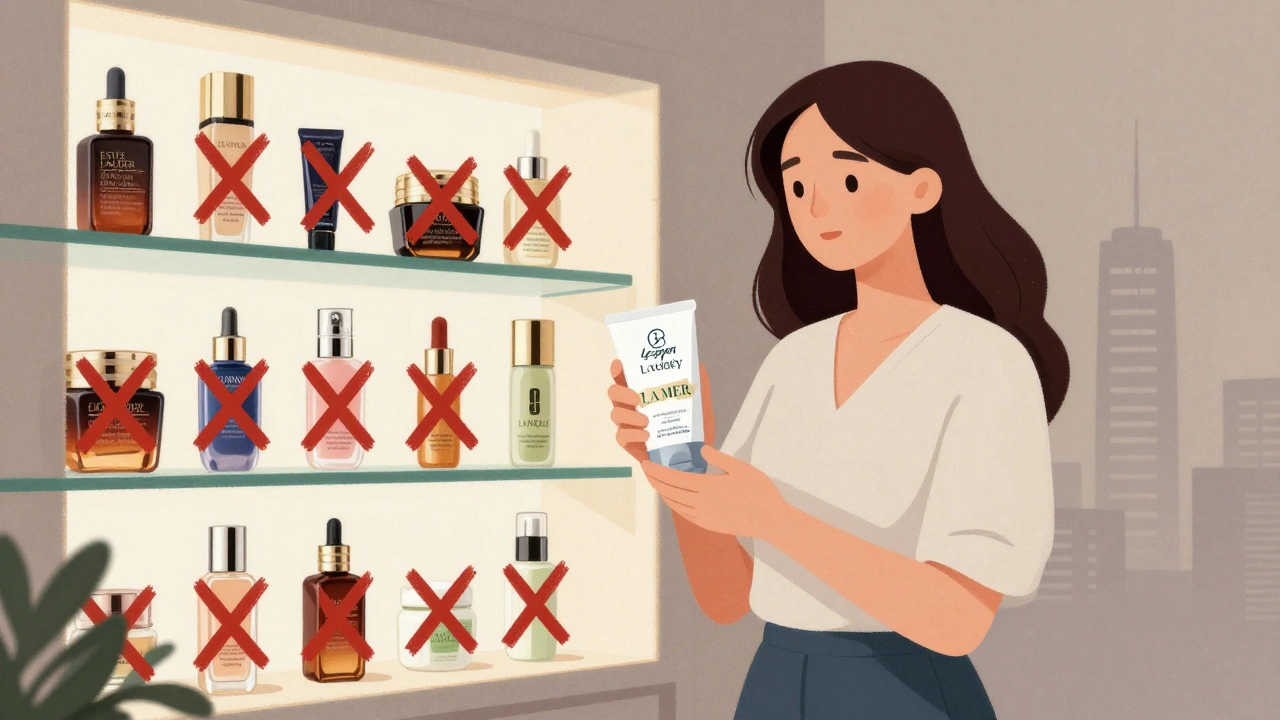
- Not cruelty-free: Estee Lauder, Clinique, MAC, Bobbi Brown, La Mer, Aveda, Origins, Tom Ford Beauty
- Cruelty-free: None of the major Estee Lauder-owned brands are fully cruelty-free because they all sell in China.
Even brands marketed as "natural" or "clean," like Origins and Aveda, still allow animal testing in China. Aveda, for example, says it’s "committed to cruelty-free practices"-but it sells in China. That’s a contradiction. You can’t be cruelty-free if you allow animals to be tested on for your products.
There’s one exception: Smashbox. It’s owned by Estee Lauder, but it doesn’t sell in mainland China. That means it avoids the mandatory testing requirement. Smashbox is Leaping Bunny certified and is the only Estee Lauder-owned brand that meets true cruelty-free standards.
What Can You Do If You Care About Animal Testing?
If you want to avoid supporting animal testing, here’s what works:
- Don’t buy Estee Lauder brands-even if they say "cruelty-free" on Instagram. The label doesn’t mean what you think it means.
- Look for Leaping Bunny certification. It’s the gold standard. The logo is small, but it’s reliable.
- Check if a brand sells in China. If yes, assume animal testing is happening. No exceptions.
- Support truly cruelty-free brands like Fenty Beauty, Too Faced, Kat Von D Beauty, or Pacifica.
Some people argue, "But Estee Lauder is trying to change the system." Maybe. But change doesn’t come from selling in markets that require cruelty. It comes from refusing to participate. Brands like Lush and The Body Shop refused to enter China for years because of this. And now, those brands are trusted globally for their ethics.
Why This Matters Beyond Estee Lauder
Estee Lauder isn’t alone. L’Oréal, Unilever, and Procter & Gamble all do the same thing. They claim they don’t test on animals, but they sell in China. This isn’t just about one company-it’s about how the entire beauty industry manipulates language to make cruelty seem ethical.
When you buy a product labeled "cruelty-free" from Estee Lauder, you’re not just buying lipstick or foundation. You’re funding a system where animals suffer for profit. And that’s not a choice you should make without knowing the full truth.
The Bottom Line
Estee Lauder does not test on animals itself. But it allows and pays for animal testing to happen in China. That makes it not cruelty-free by any meaningful standard. If you want to avoid animal testing, skip Estee Lauder entirely. Look for Leaping Bunny certified brands instead. Your choices matter more than the marketing.
 Skincare