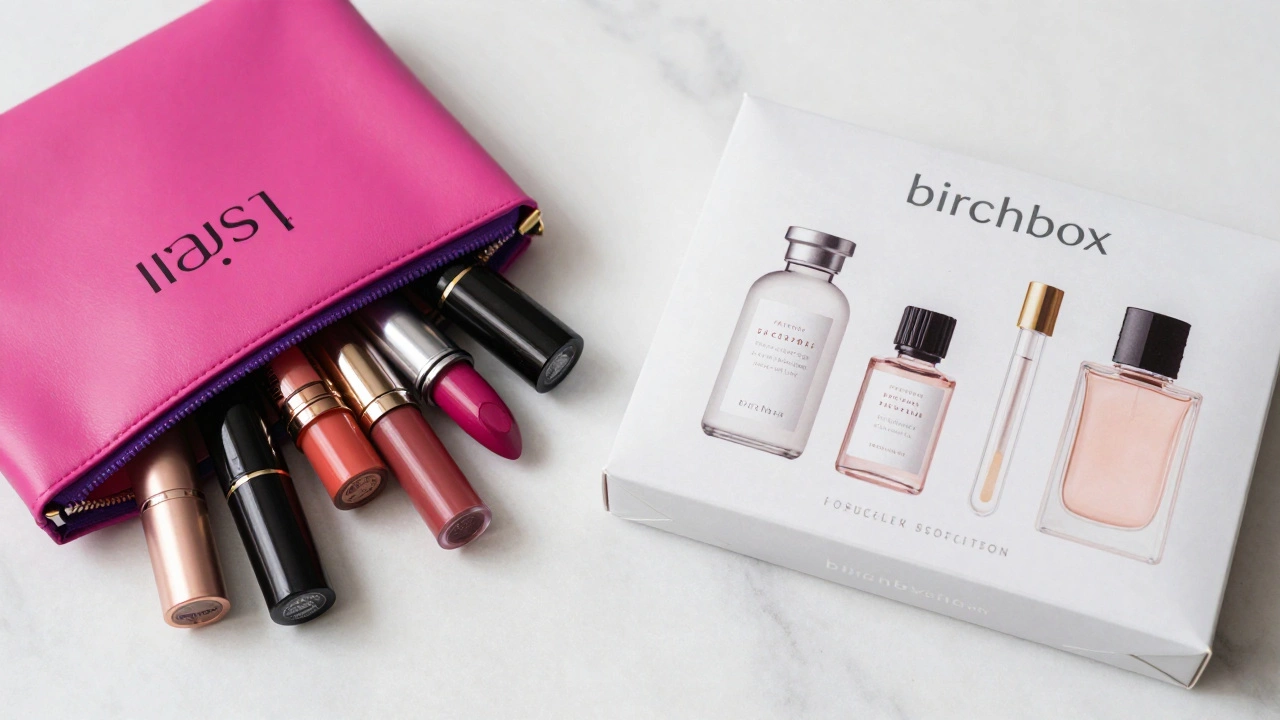
Ipsy vs. Birchbox: Which Box Fits You?
Select your preferences and click Compare to see which service matches your needs.
It’s a question that pops up constantly in online beauty forums and Reddit threads. You’re scrolling through your monthly Ipsy bag or unpacking the sleek samples from Birchbox, and suddenly you wonder: are these two giants actually part of the same family? Does one own the other? It makes sense to ask. They dominate the same niche, they both send curated beauty products to your doorstep, and they’ve been battling for market share since the early days of the subscription economy.
The short answer is no. Ipsy does not own Birchbox. They are separate companies with different owners, different business models, and distinct strategies for keeping subscribers happy. In fact, they are fierce competitors in the crowded world of beauty delivery services. Understanding who owns what-and how these brands differ-can help you decide which box is actually worth your money in 2026.
Who Actually Owns Ipsy?
To understand the landscape, we first need to look at Ipsy is a beauty subscription service founded by Michelle Phan, Maria Naficy, and Mary Phillips in 2011. Ipsy grew rapidly by leveraging the power of social media and influencer marketing, largely thanks to its co-founder Michelle Phan, who was already a YouTube sensation. For years, Ipsy operated as an independent entity, but like many tech-driven startups, it eventually sought investment to scale.
In recent years, Ipsy has undergone significant corporate shifts. While it remains a privately held company, it has taken on various rounds of venture capital funding. Unlike Birchbox, which went public, Ipsy has stayed private, allowing it to make quicker strategic pivots without the immediate pressure of quarterly earnings reports. This structure means Ipsy answers primarily to its investors and board of directors rather than public shareholders. The brand focuses heavily on volume and variety, often sending full-size products alongside samples to increase perceived value.
The Ownership Story Behind Birchbox
Birchbox is a pioneer in the subscription box industry, founded by Katia Beauchamp and Hayley Barna in 2010. Birchbox is often credited with popularizing the concept of the "subscription box" itself. Its model was simpler: pay a low monthly fee (originally $10) and receive three curated samples of high-end beauty products. If you liked them, you could buy the full-size version directly through their platform.
Birchbox’s corporate journey took a very different path. In 2015, Birchbox went public on the NYSE under the ticker symbol BRKH. Going public brought scrutiny and volatility. Over the next few years, the company struggled with profitability, facing intense competition from larger players like Ipsy and Sephora. In 2019, Birchbox was acquired by Thrasio is an e-commerce growth company that acquires and scales direct-to-consumer brands. Thrasio is known for buying established DTC (Direct-to-Consumer) brands and using data analytics to optimize their operations. So, while Ipsy is backed by venture capital, Birchbox is currently owned by a large e-commerce holding company.
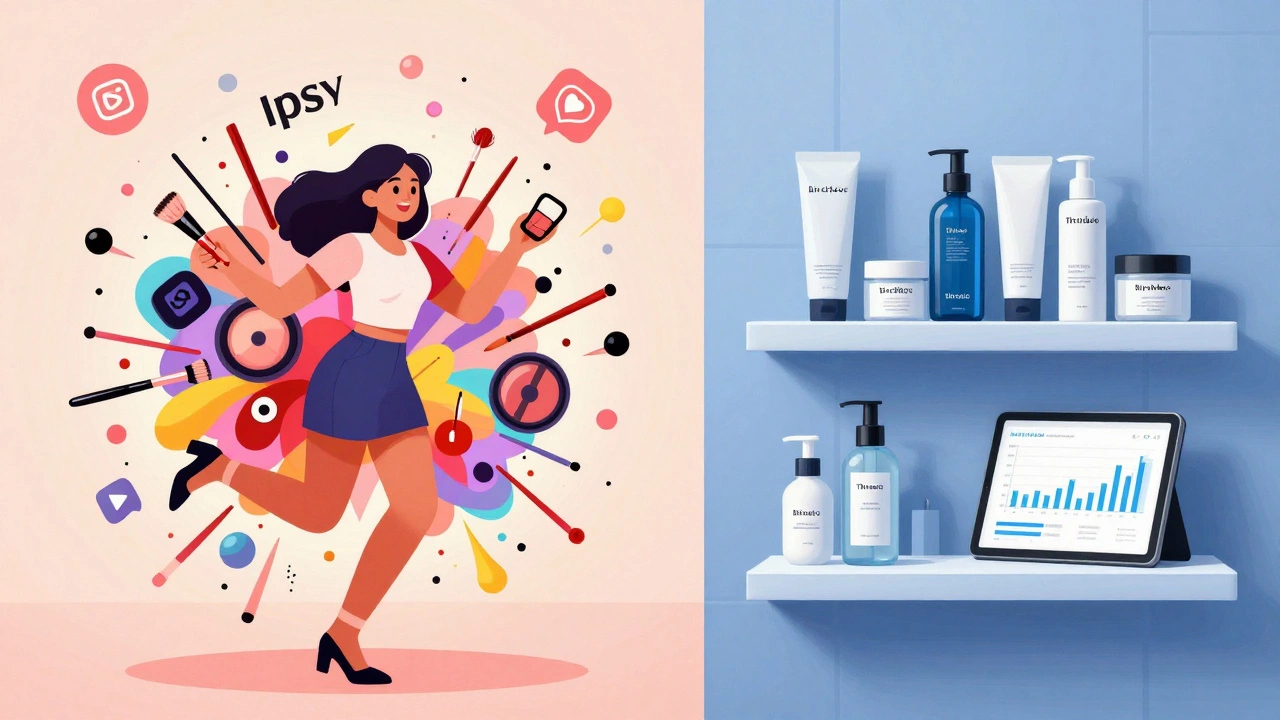
Ipsy vs. Birchbox: More Than Just Ownership
Since they aren’t related by ownership, why do people confuse them? It’s because they solve the same problem: the overwhelming choice paralysis in the beauty aisle. However, their approaches are fundamentally different. Here is a breakdown of how they compare in 2026.
| Feature | Ipsy | Birchbox |
|---|---|---|
| Current Owner | Private Investors / Venture Capital | Thrasio (E-commerce Holding Company) |
| Core Model | Tiered subscriptions ($10-$25+) | Single tier, sample-focused ($13) |
| Product Size | Mix of samples and full-size (depending on tier) | Primarily deluxe samples |
| Customization | d>High (Quiz-based, swap options) | Medium (Preference settings) |
| Brand Focus | Indie, emerging, and mainstream brands | Curated mix of indie and prestige |
How Their Business Models Differ
The difference in ownership reflects a difference in strategy. Ipsy relies on a tiered membership system that encourages upselling. When you sign up for Ipsy, you choose a level. The base Glowy Bag is cheap, but the real revenue comes from higher tiers like the Luxe Bag or VIP levels, where you get more full-size products. Ipsy also makes a significant portion of its revenue through affiliate links; when you buy a product featured in your bag, Ipsy gets a commission. This creates a funnel: try the sample, love it, buy the full size via Ipsy’s link.
Birchbox, under Thrasio, focuses on operational efficiency and brand consolidation. Thrasio’s playbook involves taking brands that have loyal customer bases but lack scale, and then optimizing their supply chain, marketing, and customer retention. For Birchbox, this means less experimentation with flashy new tiers and more focus on steady, reliable delivery. The goal is to keep churn low. Birchbox tends to feel more "curated" and less "mass-produced" than Ipsy, partly because its subscriber base is smaller and more niche.
Why the Confusion Persists
It’s easy to see why the lines blur. Both companies use similar packaging aesthetics-bright colors, clean fonts, and unboxing experiences designed for Instagram. Both rely on quizzes to determine your preferences. And both have faced criticism over the years regarding product quality, shipping delays, and customer service bottlenecks.
Furthermore, the beauty subscription market has consolidated. Other major players like Sephora’s Play! Collection and Ulta’s Glossy Rewards have entered the space, squeezing out smaller competitors. As the market shrinks, the remaining giants start to look alike. But despite the similarities, Ipsy and Birchbox remain distinct entities competing for your wallet.
Which One Should You Choose in 2026?
Your choice shouldn’t be based on who owns whom, but on what you want from your monthly beauty fix.
- Choose Ipsy if: You want variety and don’t mind sorting through samples. If you enjoy discovering new indie brands and want the option to upgrade to full-size products frequently, Ipsy’s tiered system offers more flexibility. It’s also better if you’re a makeup enthusiast who wants color cosmetics (lipsticks, eyeshadows) regularly.
- Choose Birchbox if: You prefer a simpler, no-fuss experience. Birchbox is ideal if you want to test high-end skincare or fragrance samples without committing to expensive full-size bottles. It’s also a good pick if you appreciate a slightly more editorial, curated vibe rather than a mass-market feel.
Neither company owns the other. They are rivals navigating a tough market. Ipsy is pushing for scale and tiered revenue, while Birchbox is being optimized for stability under Thrasio. Knowing this helps you understand why their bags might look different, why their prices vary, and why their customer service experiences can diverge. Ultimately, the best box is the one that fits your specific beauty routine and budget.
Is Ipsy part of Sephora?
No, Ipsy is not owned by Sephora. They are completely separate companies. Sephora has its own subscription program called the Play! Collection, but it does not have any stake in Ipsy.
Who owns Birchbox now?
Birchbox is owned by Thrasio, an e-commerce growth company that acquired Birchbox in 2019 after it went public and struggled with profitability.
Are Ipsy and Birchbox the same quality?
Quality is subjective, but generally, Ipsy offers a wider range of price points and more full-size options in higher tiers. Birchbox tends to focus on deluxe samples of mid-to-high-end brands. Many users find Birchbox’s curation slightly more consistent, while Ipsy offers more volume.
Can I switch between Ipsy and Birchbox?
Yes, you can subscribe to both, cancel one, or switch entirely. Since they are competitors, there is no penalty for moving between them. Many beauty enthusiasts rotate subscriptions every few months to keep their discovery fresh.
Did Birchbox go bankrupt?
Birchbox did not go bankrupt. It faced financial difficulties after going public, which led to its acquisition by Thrasio. It continues to operate as a active subscription service today.
 Skincare