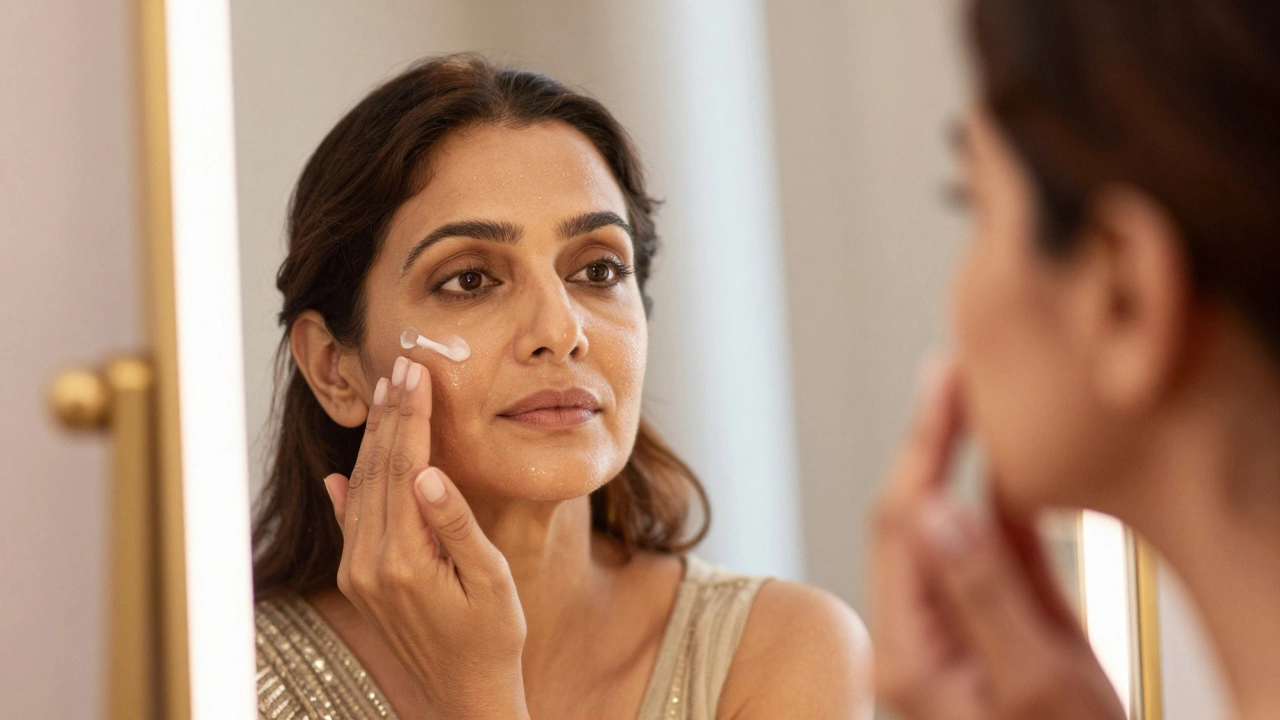
Mature Skin Makeup Guide & Product Finder
Select your skin's current primary concern to find the ideal product recommendations tailored for mature skin.
Ever feel like the foundation that worked for a decade suddenly started clinging to every fine line and making you look older? You're not alone. As our skin changes, the products we love often stop cooperating. The goal isn't to hide every wrinkle-because let's be real, that's impossible-but to use textures and tones that make your skin look luminous and fresh.
Quick Tips for a Fresh Look
- Prioritize Hydration: Swap heavy powders for creams and liquids.
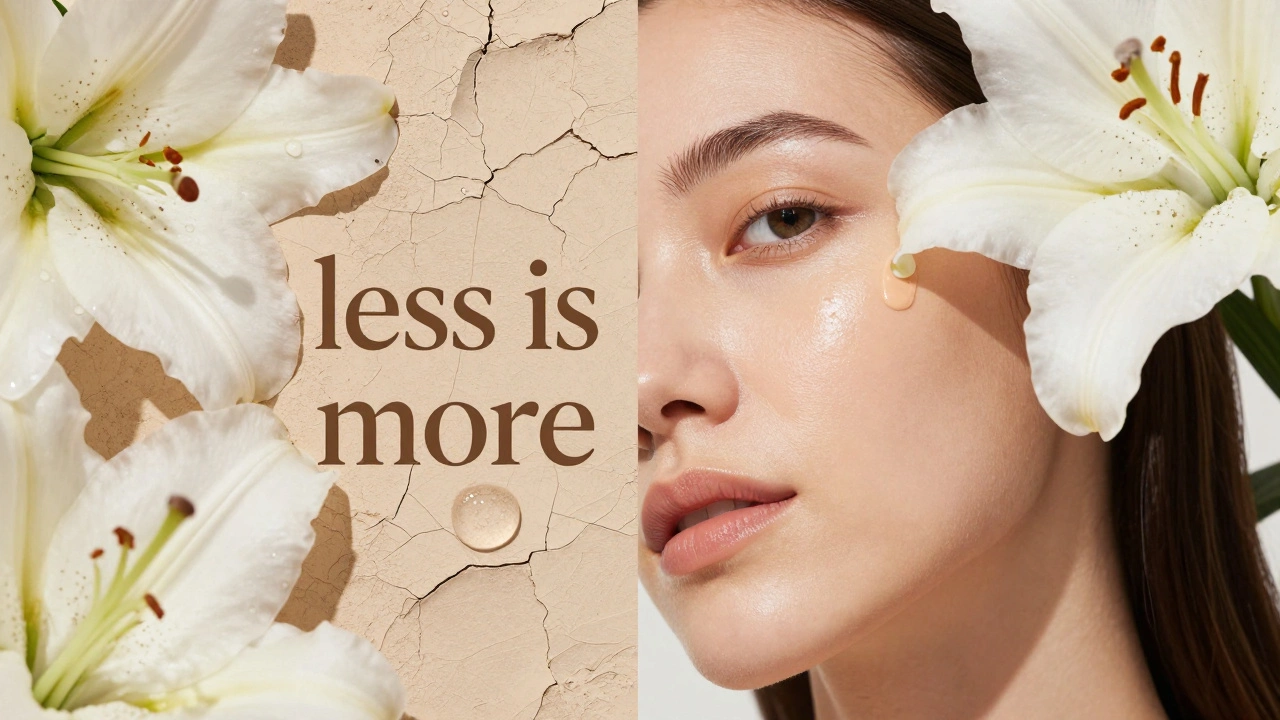
- Less is More: Heavy layers settle into creases; sheer coverage is your best friend.
- Focus on Light: Use brightening products on the high points of your face.
- Prime Correctly: Use a hydrating primer to create a smooth canvas.
Understanding the Shift in Your Skin
Before picking up a brush, it's helpful to know why your old favorites aren't working. Around the time of menopause, the production of Estrogen is a primary female sex hormone that helps maintain skin elasticity and moisture drops. This leads to a decrease in Collagen, which is the structural protein that gives skin its firmness and bounce.
When collagen disappears, skin becomes thinner and drier. If you use a matte, full-coverage foundation, it acts like a sponge, soaking up what little moisture you have left and highlighting every dip and fold. To fix this, we need to move toward "dewy" finishes and moisture-rich formulas.
Finding Your Perfect Base
The base is where most people struggle. If you're still using a heavy matte liquid, it's time for a change. You want a makeup for mature skin that mimics the skin's natural glow rather than masking it.
Look for Cream Foundation, which is a makeup base with a high oil or wax content that provides a hydrating, flexible finish. Unlike powders, creams move with your face. If you prefer something lighter, a Tinted Moisturizer is a lightweight blend of skincare and pigment that evens out skin tone without looking heavy. These are ideal for days when you just want a polished look without the "cakey" feel.
| Product Type | Finish | Best For | Potential Pitfall |
|---|---|---|---|
| Cream Foundation | Dewy/Satin | Medium to full coverage | Can be too heavy for oily areas |
| Tinted Moisturizer | Natural/Glowy | Daily wear / Sheer coverage | Doesn't cover dark spots well |
| Serum Foundation | Luminous | Dry skin / Thin skin | May slide off without primer |
| Powder Foundation | Matte | Very oily mature skin | Settles into deep wrinkles |
The Art of Concealing Without Creasing
The area under the eyes is usually the first to show age. The mistake most of us make is applying a thick, high-coverage concealer in a semi-circle under the eye. This creates a "trough" of product that inevitably cracks by noon.
Instead, use a Liquid Concealer that contains hyaluronic acid or glycerin to lock in moisture. Apply it only to the inner corner where the darkness is deepest and a tiny bit on the outer corner to lift the eye. Blend it out with your ring finger-the warmth of your skin helps the product melt in. If it still creases, lightly tap a translucent powder only on the areas that move the most, but keep it minimal.
Bringing Life Back to Your Cheeks and Eyes
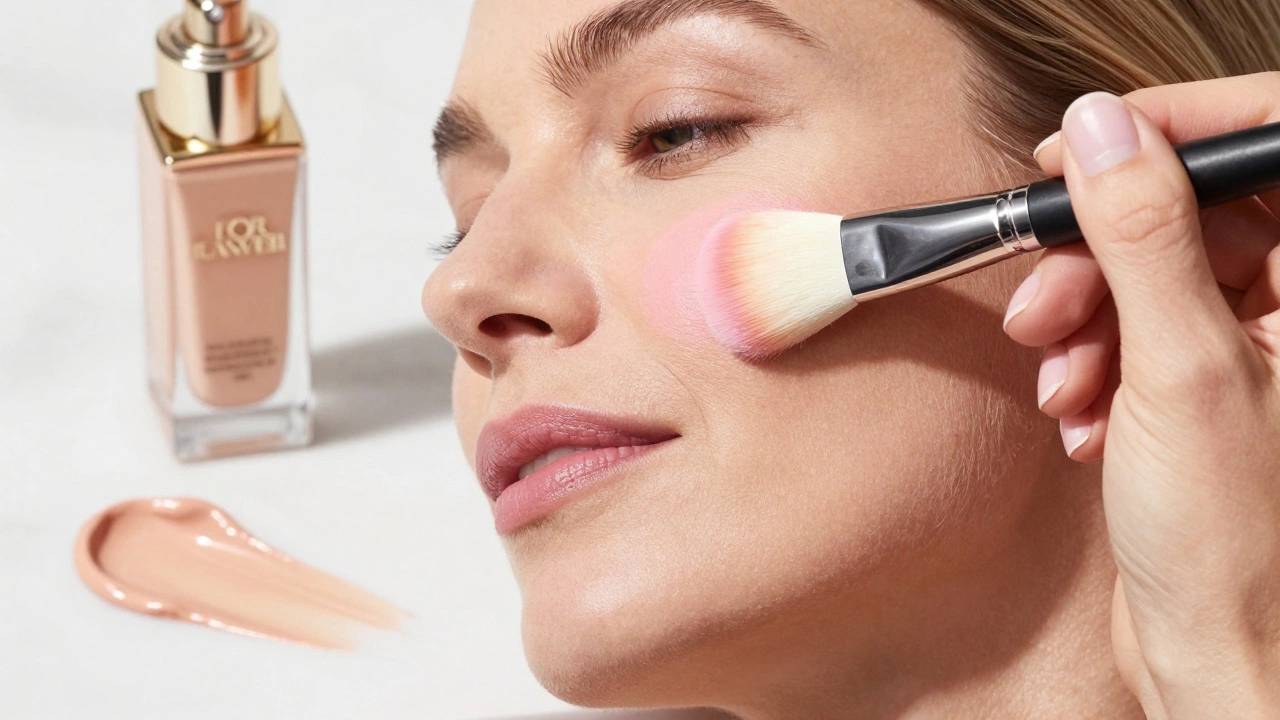
As we age, our natural flush often fades, and our features can look a bit "flat." The secret here is color placement. Avoid powder blushes that can look chalky. Instead, reach for a Cream Blush, which is a pigment-rich cream that blends seamlessly into the skin for a natural flush.
Apply blush slightly higher on the cheekbones than you used to. If you put it in the "apples" of your cheeks, it can actually pull the face down. By placing it higher, you create a visual lift. For the eyes, skip the heavy black eyeliner, which can look harsh. Try a deep brown or plum Gel Eyeliner to define the eyes without creating a stark, aging line.
Managing the T-Zone and Setting Your Face
You might think you can ditch powder entirely, but some setting is usually necessary to stop your makeup from sliding. The trick is to avoid Talcum Powder, which is a mineral powder that can be overly drying and emphasize texture.
Use a Finishing Powder that is milled very finely. Instead of sweeping it across your whole face, use a small brush to target only the T-zone (forehead, nose, and chin). If you apply powder to your cheeks or under your eyes, you risk losing that youthful glow and introducing those dreaded "crack lines."
The Secret Weapon: The Right Primer
Think of primer as the bridge between your skincare and your makeup. For mature skin, a Hydrating Primer is non-negotiable. It fills in microscopic gaps in the skin and prevents the foundation from sinking into pores.
If you have a lot of redness, a green-tinted color-correcting primer can neutralize the skin before you even apply foundation. This allows you to use less foundation overall, which is the golden rule for mature skin: the less product you use, the more natural you look. A a professional tip is to mix a drop of Facial Oil into your foundation if you find it's too thick. This creates a custom, luminosity-boosting blend that keeps the skin supple all day.
Should I stop using powder entirely?
Not necessarily, but you should change how you use it. Avoid heavy powders all over. Use a finely milled translucent powder only on areas that get oily, like the nose or chin. If you use too much, it can make your skin look dry and accent wrinkles.
Which is better: cream or liquid foundation?
Generally, cream foundations are better for mature skin because they are more emollient and flexible. However, a hydrating liquid or serum foundation is also a great choice. The most important thing is to avoid "matte" or "long-wear" formulas that dry down completely, as these usually cling to fine lines.
How do I stop my concealer from creasing?
First, prep the area with a lightweight eye cream. Second, use a hydrating liquid concealer and apply it sparingly. Third, blend it with your finger to warm the product. Finally, set only the areas where you notice the most creasing with a tiny amount of powder.
Can I still use a bold red lipstick?
Absolutely! But keep in mind that matte lipsticks can make lips look thinner and emphasize vertical lines. Opt for a creamy lipstick or a satin finish. A pro tip is to use a lip liner to define the edges, as lip borders tend to blur over time.
What is the best way to apply makeup for older skin?
Stippling or tapping is better than rubbing. Use a damp beauty sponge or a soft buffing brush to press the product into the skin. This prevents you from accidentally "streaking" the makeup and helps it bond with the skin for a smoother look.
Next Steps for Your Routine
If you're feeling overwhelmed, start with one change. Swap your powder blush for a cream one this week. Once you see how much more natural that looks, try switching your foundation to a serum or cream version. Remember, the goal is to enhance your features, not to mask them. If your skin feels tight or itchy, you might be using a product with too much alcohol or fragrance; always patch test new items on your jawline first.
 Skincare