Organic Skincare Authenticity Checker
Awaiting Input
Enter product details to see if it meets organic standards.
Analysis Breakdown:
You’ve just picked up a jar of face cream that looks like it belongs in a high-end spa. The packaging is earthy, the marketing talks about 'pure nature,' and the price tag suggests premium quality. But before you slather it on your face, you need to ask one critical question: is this product actually organic? In an industry flooded with vague claims, distinguishing between genuine organic skincare and clever marketing copy is essential for your health and your wallet.
The term 'organic' has become a buzzword used so loosely that it often means nothing at all. Without understanding the specific certifications and regulations behind these labels, you might be paying extra for products that contain synthetic pesticides or fillers. This guide cuts through the noise to help you verify exactly what is in your bottle.
Quick Summary / Key Takeaways
- Certification is King: Look for official seals from bodies like USDA Organic, COSMOS, or Ecocert. If there is no seal, the claim is likely unverified.
- Read the INCI List: Ingredients are listed by weight. If water is first and organic ingredients are last, the product is mostly water. Look for INCI names starting with 'Aloe Barbadensis Leaf Juice' (organic) rather than just 'Water'.
- Beware of Greenwashing: Terms like 'natural,' 'clean,' and 'eco-friendly' have no legal definition in many countries. They do not guarantee organic farming practices.
- Check the Percentage: Labels like 'Made with Organic Ingredients' mean only 70% of the content is organic. '100% Organic' is the gold standard but rare in formulated skincare due to preservation needs.
Understanding the Legal Definition of Organic Skincare
To know if a product is organic, you first need to understand what 'organic' legally entails. It isn't just about avoiding harsh chemicals; it’s about how the raw materials were grown. Organic farming prohibits the use of synthetic pesticides, herbicides, genetically modified organisms (GMOs), and irradiation. It also mandates soil health management and biodiversity protection.
When applied to skincare, this means the botanical ingredients-like lavender oil, shea butter, or jojoba seed oil-must come from farms certified under strict agricultural standards. However, the final product also undergoes scrutiny. Processing aids must be approved, and the manufacturing facility must prevent contamination from non-organic sources.
In many regions, including Australia and the United States, the word 'organic' on a cosmetic label is heavily regulated, but loopholes exist. For instance, a brand might source one organic ingredient and slap an 'organic' label on the entire product if they aren't using a recognized certification body. This is why relying on marketing text alone is dangerous.
The Gold Standard: Recognizing Official Certifications
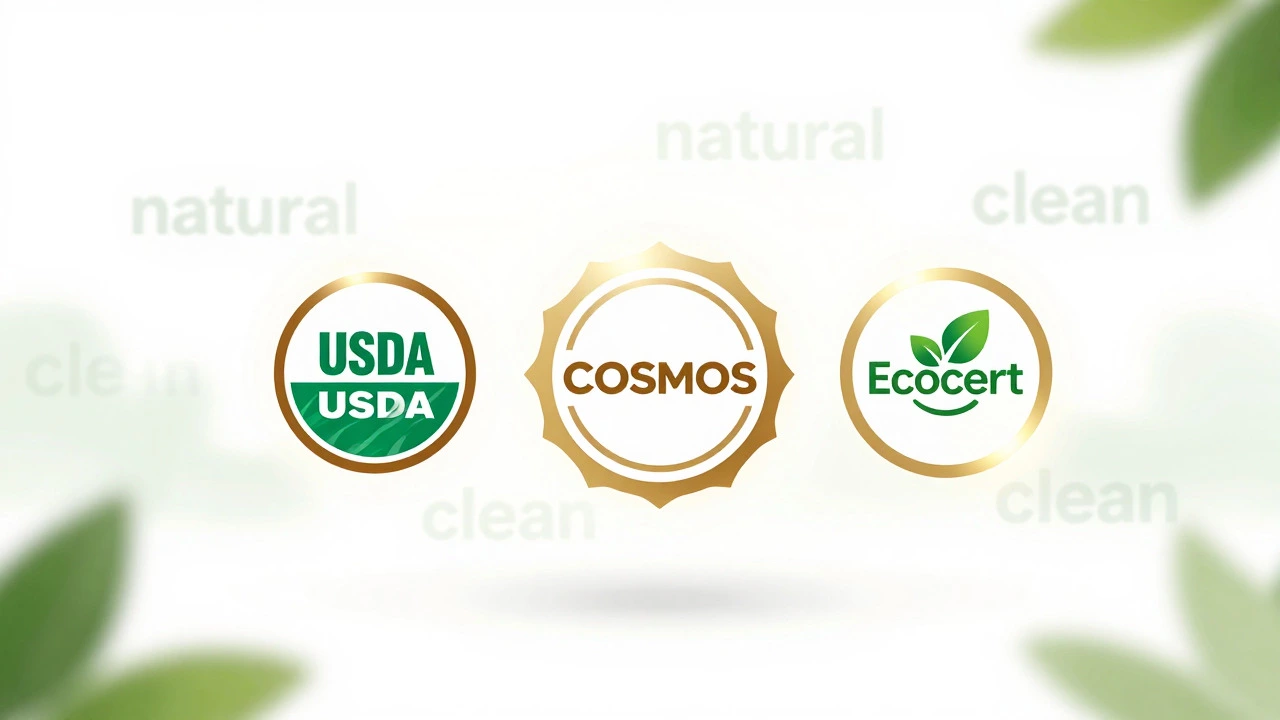
The most reliable way to verify organic status is to look for third-party certification logos. These organizations audit supply chains, test ingredients, and inspect facilities. Here are the primary entities you should recognize:
| Certification Body | Region/Origin | Key Requirements | Label Types |
|---|---|---|---|
| USDA Organic | United States (Global Recognition) | No synthetic pesticides, GMOs, or ionizing radiation. Annual audits required. | 100% Organic, Organic (95%+), Made with Organic (70%+) |
| COSMOS | Europe (International) | Strict limits on preservatives and synthetic fragrances. Biodegradable surfactants required. | COSMOS Organic, COSMOS Natural |
| Ecocert | France (Global) | Minimum 10% organic ingredients total. Minimum 5% organic plant-based ingredients in rinse-off products. | Ecocert Cosmos Organic, Ecocert Natural |
| ACO (Australian Certified Organic) | Australia | NASAA standards. No animal testing, no synthetic colors or fragrances. | ACO Organic, ACO Natural |
If a product claims to be organic but lacks one of these seals, proceed with caution. Some brands may be 'certified pending' or self-certified, which offers little protection against false claims. Always check the certification number on the brand’s website or the certifier’s public database to ensure the license is current.
Decoding the Ingredient List (INCI)
Once you’ve checked for seals, you must read the International Nomenclature of Cosmetic Ingredients (INCI) list. This is where brands can hide their true composition. Regulations require ingredients to be listed in descending order of concentration, except for those present in concentrations below 1%.
Here is how to spot the difference between organic and conventional ingredients:
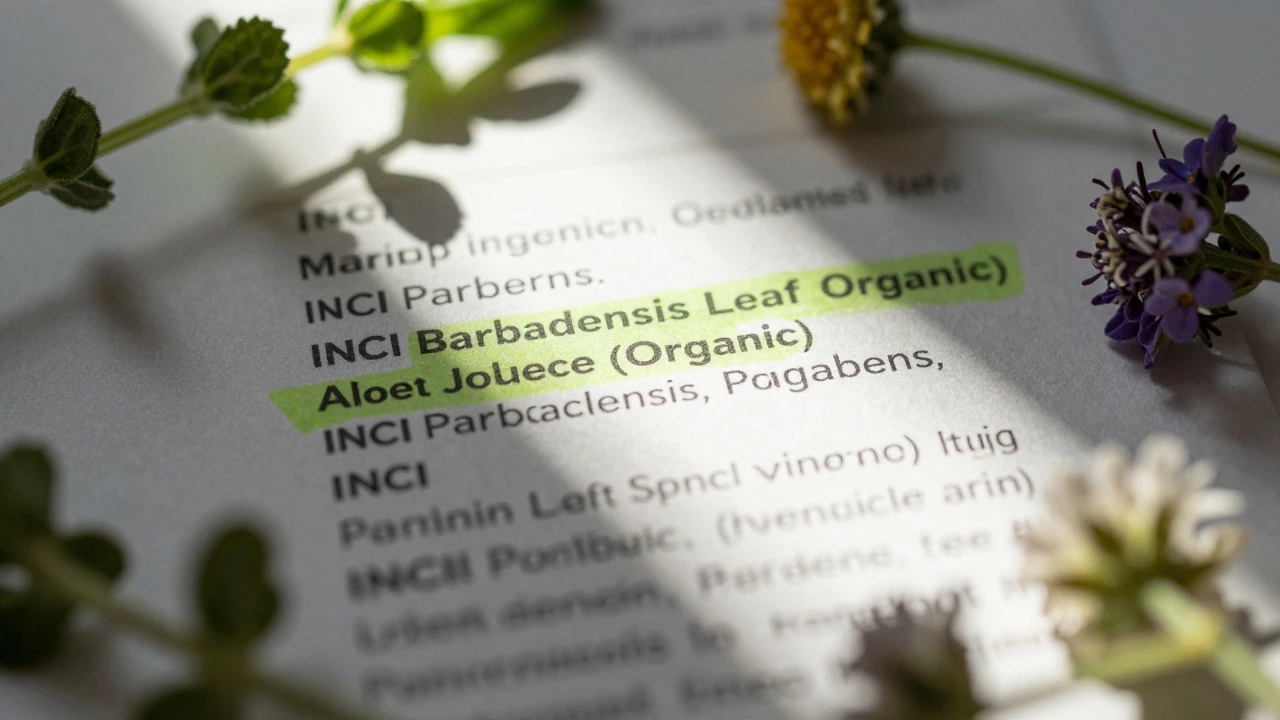
- Look for the '(Bio)' or '(Organic)' suffix: In many jurisdictions, if an ingredient is organically farmed, it will be marked with '(Bio)' or '(Organic)' next to its INCI name. For example, Aloe Barbadensis Leaf Juice (Organic) is distinct from plain Aloe Barbadensis Leaf Juice.
- Identify Synthetic Fillers: Common non-organic ingredients include Parabens (methylparaben, propylparaben), Silicones (dimethicone, cyclomethicone), and Synthetic Fragrances (listed simply as 'Fragrance' or 'Parfum'). While some organic certifications allow certain silicones or preservatives in limited amounts, heavy reliance on them usually indicates a lower percentage of organic content.
- Check the Position of Water: If Aqua or Water is the first ingredient, it makes up the bulk of the product. This isn't inherently bad, but it dilutes the potency of active organic ingredients. High-quality organic serums often list organic juices or hydrosols first.
Remember, 'organic' refers to the farming method, not necessarily the safety or efficacy of the ingredient. An organic pesticide residue is still a pesticide residue, albeit minimal. The goal is to find products where the majority of the formula comes from certified organic agriculture.
Spotting Greenwashing: Red Flags to Avoid
Greenwashing is the practice of misleading consumers about the environmental benefits of a product. In the beauty industry, this is rampant. Brands use language that sounds organic without meeting the criteria. Here are common red flags:
- 'Natural' Claims: 'Natural' is largely unregulated in cosmetics. Poison ivy is natural, but you wouldn’t put it on your face. A product can be 100% natural and 0% organic if the plants were grown with synthetic fertilizers.
- Vague Terminology: Words like 'earth-friendly,' 'green,' 'eco-conscious,' or 'plant-powered' are marketing fluff. They do not imply organic certification.
- Hidden Synthetic Additives: A product might feature a prominent image of a rose and claim 'Rose Infused,' but the ingredient list reveals Sodium Lauryl Sulfate (SLS) and Phthalates near the top. These are harsh surfactants and plasticizers rarely found in truly organic formulations.
- Lack of Transparency: If a brand refuses to share its full ingredient list or sourcing information, assume the worst. Organic brands pride themselves on transparency because their supply chain is verifiable.
In Australia, the Australian Competition and Consumer Commission (ACCC) enforces the Australian Consumer Law, which prohibits misleading or deceptive conduct. However, enforcement relies on complaints. If a label says 'Organic Rosehip Oil' but the bottle contains only 5% rosehip oil and the rest is mineral oil, it may be technically compliant if disclosed, but it is certainly not an organic skincare product in spirit.
Organic vs. Natural vs. Clean Beauty
Confusion often arises because these terms are used interchangeably by marketers. Understanding the distinctions helps you make informed choices.
Natural Beauty implies ingredients derived from nature (plants, minerals). However, it does not regulate how those ingredients were grown or processed. Natural products can still contain synthetic preservatives necessary for shelf stability.
Clean Beauty is a marketing term focused on excluding ingredients perceived as harmful (e.g., parabens, sulfates, phthalates). It does not address environmental impact or farming practices. A clean product can be made with conventionally grown crops treated with glyphosate.
Organic Beauty is the most rigorous category. It requires certification, verifies farming methods, and sets limits on synthetic processing aids. If your priority is reducing exposure to agricultural chemicals and supporting sustainable farming, organic is the only choice that guarantees this.
Practical Steps to Verify Your Products
Before you buy, follow this simple checklist to ensure you’re getting genuine organic skincare:
- Scan for Logos: Check the front and back of the packaging for USDA, COSMOS, Ecocert, or ACO seals.
- Verify the Certificate: Visit the certifier’s website and enter the brand’s name or certificate number. This confirms the product is currently certified and hasn’t lost its status.
- Read the Fine Print: Look for phrases like 'Made with 70% certified organic ingredients.' Understand that the remaining 30% may include non-organic but approved ingredients.
- Check the Date: Organic certifications expire. Ensure the product wasn’t manufactured years ago when standards might have been different, though this is less common with modern tracking.
- Consult Independent Databases: Apps and websites like EWG (Environmental Working Group) or Think Dirty can provide additional insights into ingredient safety, though they focus more on toxicity than organic status.
By taking these steps, you empower yourself to cut through the marketing haze. You’ll support brands that invest in sustainable agriculture and ensure that what goes on your skin is pure, potent, and genuinely organic.
Is 'natural' skincare the same as organic?
No. 'Natural' means ingredients are derived from nature, but it doesn't regulate how they were grown. Organic specifically refers to farming methods that prohibit synthetic pesticides and GMOs, verified by third-party certification.
Can organic skincare products contain preservatives?
Yes, but only specific ones. Organic certifications like COSMOS and Ecocert allow certain mild preservatives (e.g., benzyl alcohol, radish root ferment) to prevent bacterial growth. Harsh synthetic preservatives like parabens are typically prohibited.
What does 'Made with Organic Ingredients' mean?
Under USDA guidelines, this label means the product contains at least 70% certified organic ingredients. The remaining 30% can be non-organic but must be approved for use in organic products. It is not considered '100% Organic.'
Are organic skincare products more expensive?
Generally, yes. Organic farming is more labor-intensive and yields less per acre than conventional farming. Certification fees and smaller-scale production also drive up costs. However, prices vary widely based on brand positioning and ingredient rarity.
How do I know if a brand is greenwashing?
Look for vague terms like 'clean' or 'natural' without certification seals. Check if the ingredient list includes synthetic fillers or hidden fragrances. If the brand doesn't disclose its sourcing or certification details, it’s likely greenwashing.
 Skincare