Jowl Treatment Finder
Answer a few questions about your skin and jawline to find the treatment category that best fits your needs.
Just starting to notice loss of definition
Subtle folds, mostly visible in photosVisible folds along the jawline
Noticeable sagging in the mirrorHeavy jowls / Excess skin
Skin can be pinched in significant amountsIt snaps back instantly
Suggests a volume or structural issueIt takes a moment to return
Suggests skin laxity (loss of elastin)Recommended Approach:
Quick Takeaways: What Actually Works
- Mild sagging: Retinoids, peptides, and professional microneedling.
- Moderate sagging: Radiofrequency (RF) treatments, Ultherapy, and dermal fillers.
- Severe sagging: Surgical face lifts or neck lifts.
- Prevention: Sunscreen and weight stability to protect the skin's structural integrity.
Why your jawline loses its edge
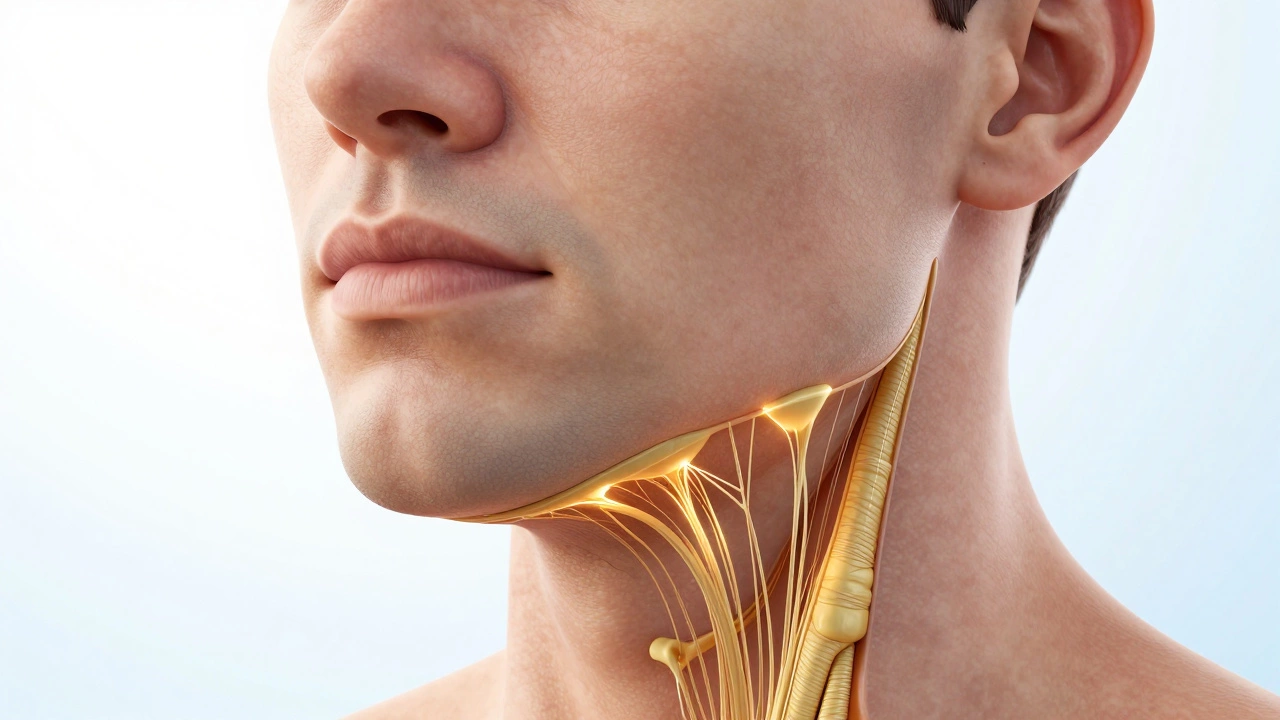
To fix the problem, you have to understand why it's happening. Your face is held up by a network of ligaments and fat pads. As you age, your Collagen-the protein that acts like the scaffolding for your skin-starts to break down. At the same time, Elastin, which allows your skin to snap back, disappears. Imagine a brand new rubber band versus one that has been stretched out for five years; that's exactly what's happening to the skin on your cheeks and jaw.
It's not just about the skin, though. The fat pads in your cheeks naturally shift downward due to gravity. When that fat migrates, it puts pressure on the skin at the jawline, pushing it outward and creating that "jowl" effect. This is why some people have great skin elasticity but still have jowls-it's a structural issue, not just a surface one.
Non-surgical options for mild to moderate sagging
If you're just starting to see a loss of definition, you don't need a scalpel. There are several ways to stimulate your own body to tighten things up. The goal here is to trigger a wound-healing response that forces your skin to produce new collagen.
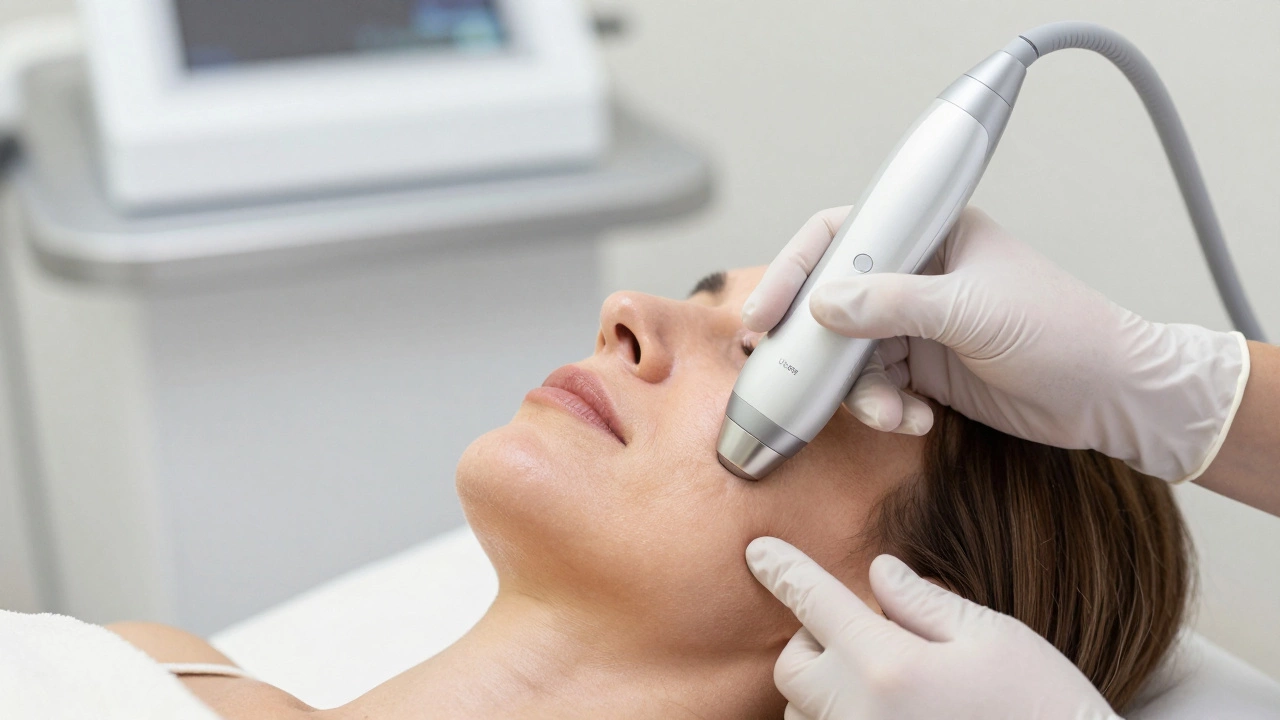
One of the most effective non-invasive tools is Ultherapy. This isn't a laser; it's focused ultrasound. It reaches the deeper layers of the skin-the same layers surgeons target during a lift-and heats them up to contract the tissue. Because it works deep, the results aren't instant. You'll likely see the change 3 to 6 months after the procedure as your body builds new collagen.
Then there is Radiofrequency (RF) Therapy. RF uses electrical energy to heat the dermis. This causes immediate contraction of collagen fibers, giving you a temporary "shrink-wrap" effect, followed by long-term remodeling. Many people prefer RF because it's generally less intense than ultrasound, though it requires more frequent sessions to maintain the look.
| Treatment | Mechanism | Downtime | Result Speed |
|---|---|---|---|
| Ultherapy | Focused Ultrasound | None to Minimal | 3-6 Months |
| RF Microneedling | Heat + Physical Needles | 2-4 Days (Redness) | 1-3 Months |
| Dermal Fillers | Volume Replacement | 1-3 Days (Bruising) | Immediate |
| Retinoids | Cell Turnover | Variable (Peeling) | 6+ Months |
Using fillers to "lift" the jawline
Sometimes, the problem isn't that the skin is too loose, but that there's a gap in support. This is where Dermal Fillers come in. Instead of trying to tighten the skin, a provider uses a thick hyaluronic acid gel to create a new "anchor" point. By injecting filler along the jawline or in the cheeks, they can physically push the sagging skin upward and outward, smoothing the transition from the cheek to the neck.
This is often called "liquid sculpting." It's a great option for people who want an immediate change. However, fillers don't actually fix the elasticity of the skin; they just mask the sag by adding volume. If you have significant skin laxity, fillers can sometimes make jowls look heavier if they aren't placed precisely. You want a provider who focuses on the mid-face first to lift the skin away from the jaw.
When surgery is the only real answer
Let's be honest: there is a limit to what a cream or a machine can do. If you can pinch a significant amount of excess skin, no amount of ultrasound will make it disappear. This is where a Rhytidectomy, commonly known as a face lift, becomes the primary option. Unlike non-surgical treatments that target collagen, a surgical lift removes the excess skin entirely and tightens the underlying SMAS (Superficial Muscular Aponeurotic System) layer.
A modern lift doesn't just pull the skin tight-which is how we got those "wind-tunnel" looks from the 90s. Instead, surgeons now focus on volume repositioning. They move the fat and muscle back to where they were in your 20s and then trim the leftover skin. The result is a more natural, contoured jawline that can last 10 to 15 years.
Daily habits that prevent further sagging
While you can't stop time, you can stop the acceleration of skin sag. One of the biggest culprits is UV Radiation. The sun destroys collagen fibers through a process called solar elastosis. If you aren't wearing a broad-spectrum SPF 30 every single day, any money you spend on Ultherapy or fillers is basically being wasted because the sun will continue to degrade the new collagen you're trying to build.
Weight fluctuations also play a huge role. Rapid weight loss-like after a crash diet or major surgery-can leave the skin unable to shrink back to the new face shape. This "deflation" effect accelerates jowl formation. Maintaining a stable weight and staying hydrated helps keep the skin's plumpness, which in turn provides better support for the jawline.

The role of skincare and home devices
Can a cream actually tighten jowls? In short: no. No over-the-counter cream can penetrate deep enough to lift a muscle or remove excess skin. However, Retinoids (like Tretinoin or prescription Retin-A) can improve skin texture and slightly increase collagen production in the upper layers. This makes the skin look firmer and more "glowy," which can subtly soften the appearance of jowls.
As for home devices, microcurrent tools are popular. They use low-level electricity to stimulate the facial muscles. Think of it as a gym workout for your face. While the results are temporary-usually lasting a few days-they can be a great way to keep the muscles toned and the skin looking fresh between professional treatments.
Can face yoga actually remove jowls?
Face yoga focuses on strengthening the muscles beneath the skin. While toning muscles can provide a slightly more lifted appearance, it cannot remove excess skin or replace lost collagen. If your jowls are caused by skin laxity rather than muscle weakness, exercises will have a very limited effect.
How long do non-surgical tightening results last?
It depends on the treatment. Ultherapy results typically last 1 to 2 years. RF treatments often require maintenance every 6 months. Fillers last anywhere from 6 to 24 months depending on the product used. Because aging continues, these treatments are generally viewed as "maintenance" rather than a one-time fix.
Is there a risk of making jowls worse with fillers?
Yes, if filler is placed incorrectly. If a provider puts too much volume directly into the jowl area without addressing the cheek support, it can create a "heavy" look or a bulge that emphasizes the sag. This is why a comprehensive facial analysis is necessary before injecting.
What is the best age to start preventing jowls?
Prevention starts in your late 20s and early 30s. This is when collagen production begins to slow down. Starting a routine with SPF and a mild retinoid early on helps preserve the skin's elasticity, delaying the onset of visible sagging for years.
Are there any natural ways to tighten skin?
While no cream "lifts," a diet rich in Vitamin C and proteins supports collagen synthesis. Hydration keeps the skin plump, and avoiding smoking is crucial, as nicotine constricts blood vessels and destroys elastin, which is a primary cause of premature jowls.
Next steps: Choosing your path
If you're unsure where to start, look at your skin in a mirror and gently pinch the area along your jaw. If the skin snaps back instantly, you likely have a volume issue-fillers or RF might be your best bet. If the skin feels thin and takes a moment to return, you're dealing with laxity, and Ultherapy or a surgical consultation is the way to go.
Regardless of the path, remember that consistency wins. Whether it's a daily sunscreen habit or a yearly ultrasound session, the goal is to manage the process of aging, not to stop it entirely. Start with a consultation with a board-certified dermatologist to determine if your sag is caused by skin, fat, or muscle.
 Skincare