Skincare Routine Compatibility Checker
Select the active ingredients currently in your daily routine.
Analysis Results
Select ingredients and click Analyze to see results.
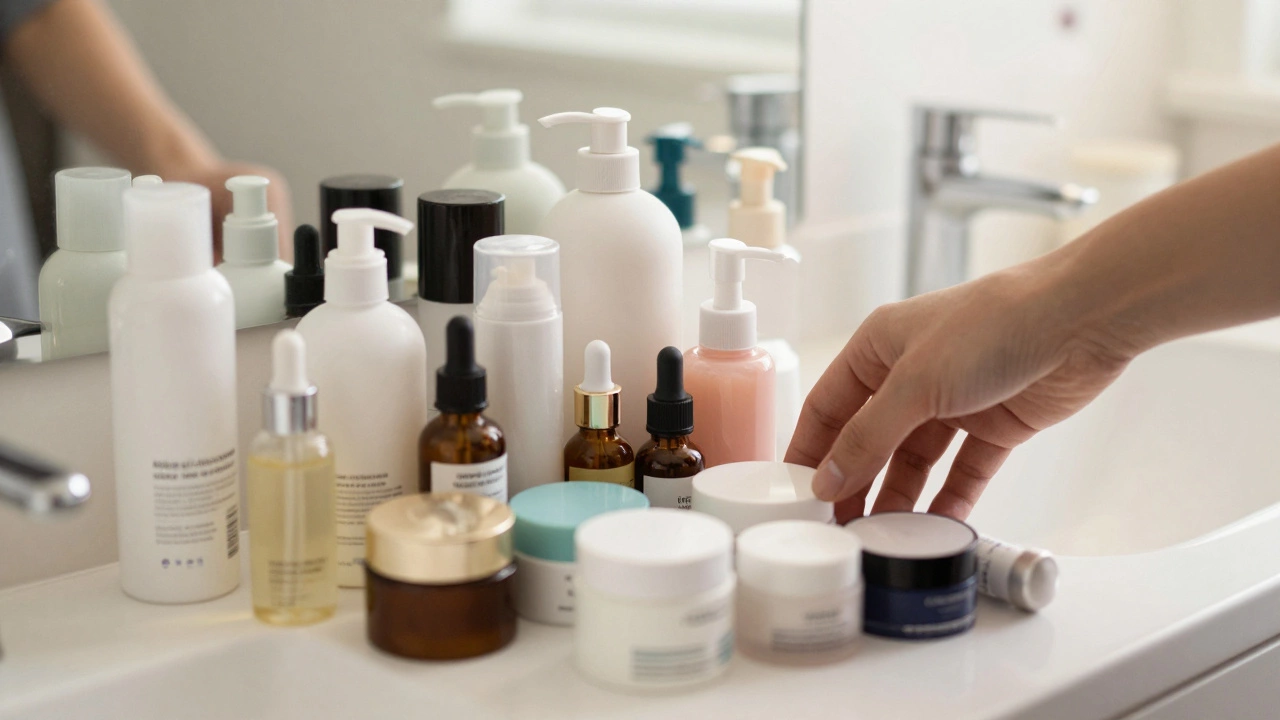
You have a shelf full of serums, essences, and toners. You feel like if you don't use them all, you're wasting money or neglecting your face. But here is the hard truth: using five active skincare products in one session can actually damage your skin more than help it. Your skin is not a sponge; it has limits.
Many people fall into the trap of thinking "more is better." They layer vitamin C, then niacinamide, then retinol, then hyaluronic acid, then a moisturizer with peptides. It sounds impressive, but biologically, it’s often chaos. This approach leads to irritation, breakouts, and a compromised skin barrier, which is the outermost layer of skin that protects against environmental stressors and retains moisture.
The Science of Skin Absorption
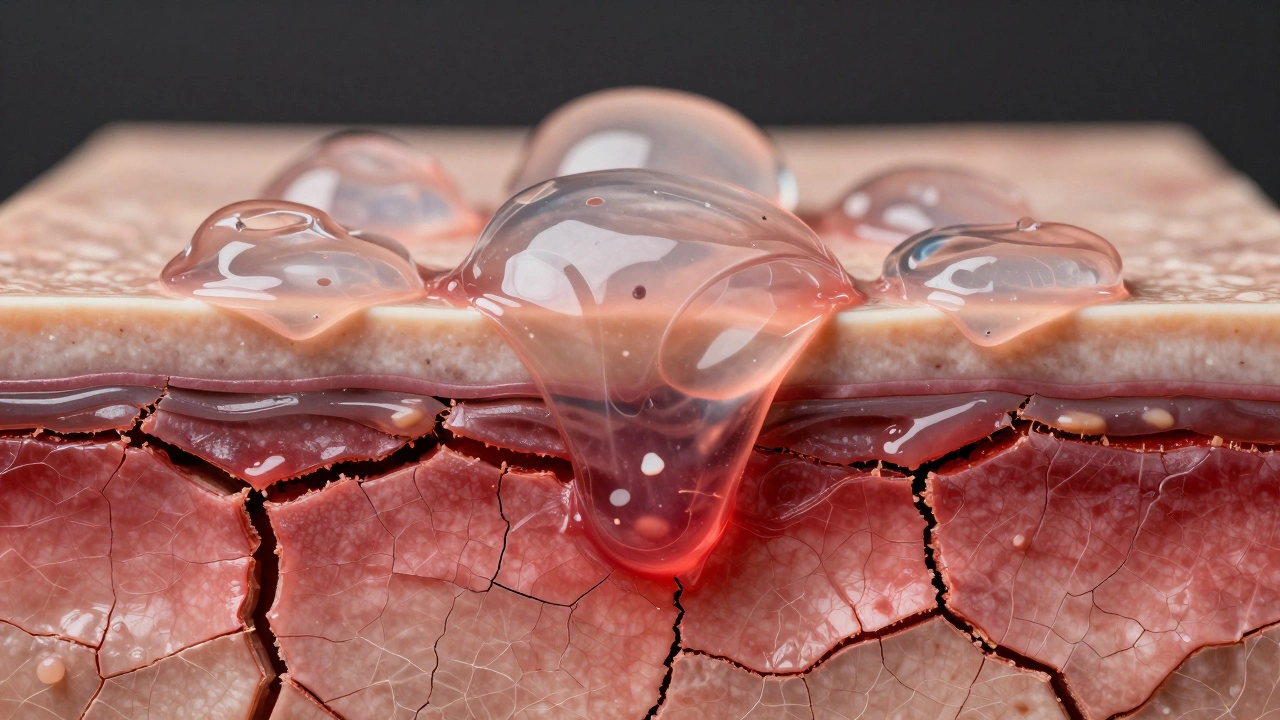
To understand why five products might be too many, we need to look at how your skin works. The stratum corneum is the top layer of the epidermis made of dead skin cells and lipids. Its job is to keep things out. When you apply a product, only a fraction of its ingredients penetrate this layer. Most sit on the surface or evaporate.
When you stack multiple water-based serums, you create what experts call "occlusion" without actual absorption. The first product forms a film. The second product sits on top of that film. By the time you get to your fifth product, your pores are clogged, and your skin isn't absorbing anything useful. Instead, you're creating a breeding ground for bacteria and trapping heat, which can trigger inflammation.
Dermatologists often cite the "rule of three" for active ingredients. If you are using three potent actives-like retinol, an exfoliating acid (AHA/BHA), and vitamin C-in one routine, you are likely overdoing it. These ingredients change the pH of your skin. Mixing them can neutralize their effects or cause chemical burns.
Signs You Are Using Too Many Products
Your skin will tell you when it’s overwhelmed. You don’t need a lab test to know if your routine is too heavy. Look for these specific symptoms:
- Persistent Redness: If your face feels hot or looks flushed after applying your routine, your capillaries are dilated due to irritation.
- Stinging Sensation: A little tingle from vitamin C is normal. Stinging from a basic moisturizer means your barrier is broken.
- Breakouts in Unusual Places: If you’re getting small bumps along your jawline or forehead where you usually don’t, it’s likely product buildup.
- Excessive Dryness or Oiliness: Paradoxically, overloading skin with products can strip it of natural oils, causing it to overproduce sebum to compensate.
If any of these sound familiar, your issue isn't a lack of products. It’s an excess of them.
The Minimalist Approach: Less Is More
In Sydney, where humidity fluctuates wildly between summer and winter, I’ve seen countless clients ruin their complexion by trying to treat every concern at once. The solution? Simplify. A effective skincare routine doesn't need ten steps. It needs three core pillars:
- Cleanse: Remove dirt, oil, and pollutants.
- Treat: Address specific concerns (acne, aging, hyperpigmentation).
- Protect/Moisturize: Seal in hydration and shield from UV rays.
This structure allows each product to do its job without interference. For example, if you want to fight wrinkles, you don't need a peptide serum, a collagen cream, and a retinol gel. You just need one well-formulated retinoid and a good moisturizer. Retinol stimulates cell turnover. Moisturizer supports the barrier while retinol does its work. That’s it.
How to Layer Correctly
If you do decide to use multiple products, order matters. The general rule is thinnest to thickest. Water-based liquids go first, followed by gels, then creams, and finally oils. However, even with correct ordering, limiting yourself to two or three key products per session is safer.
| Step | Recommended Count | Why? |
|---|---|---|
| Cleanser | 1 | Double cleansing is okay, but one gentle cleanser is usually sufficient. |
| Toner/Essence | 0-1 | Skip if your serum is hydrating. One hydrating toner is enough. |
| Serum/Treatment | 1-2 | Limit actives. Mix vitamin C (AM) and Retinol (PM). Don't mix acids with retinol. |
| Moisturizer | 1 | Choose based on skin type. Gel for oily, cream for dry. |
| Sunscreen/Oil | 1 | Sunscreen is non-negotiable AM. Facial oil goes last PM. |
Customizing for Your Skin Type
Not all skins are created equal. What works for someone with thick, oily skin might destroy someone with sensitive, thin skin.
Oily Skin: You might tolerate more layers because your natural oils provide some buffer. However, heavy creams can still clog pores. Stick to lightweight gels and watery serums. Two products max after cleansing.
Dry Skin: You need hydration, but not necessarily volume. Hyaluronic acid applied to damp skin followed by a ceramide-rich cream is powerful. Adding a third product often adds nothing but stickiness.
Sensitive Skin: This group must avoid the five-product trap entirely. Fragrance-free, simple routines are best. One cleanser, one moisturizer with soothing ingredients like centella asiatica or oat extract. Introduce new products one at a time, waiting two weeks before adding another.
The Risk of Ingredient Conflicts
Using five products increases the chance of mixing incompatible ingredients. Here are common clashes that render products useless or harmful:
- Vitamin C + Niacinamide: Old myths said they didn't mix. New research shows they are fine together, but high concentrations of both can cause flushing in sensitive skin.
- Retinol + AHAs/BHAs: Both increase cell turnover. Using them together causes extreme sensitivity and peeling. Use acids in the morning or on alternate nights.
- Retinol + Vitamin C: Vitamin C is unstable and works best at low pH. Retinol works best at higher pH. Applying them together reduces efficacy.
By reducing your routine to fewer products, you eliminate these guesswork conflicts. You control what goes on your face.
Building a Sustainable Routine
Start by auditing your current products. Throw away anything expired or separated. Keep only what you love and what works. Aim for a morning routine of cleanser, antioxidant serum, moisturizer, and sunscreen. That’s four steps, but the serum is optional if your moisturizer has antioxidants. An evening routine of cleanser, treatment (retinol or acid), and moisturizer. Three steps.
If you miss the ritual of many steps, add texture instead of actives. A facial mist or a sleeping mask once a week is harmless fun. But daily, let your skin breathe. Consistency with three products beats inconsistency with seven. Your skin will thank you with clarity, calmness, and resilience.
Can I use 5 skincare products if they are gentle?
Even gentle products can cause congestion if layered excessively. While mild ingredients like hyaluronic acid and glycerin are safe, applying five layers creates physical occlusion. This traps sweat and bacteria, potentially leading to milia or acne. Stick to 3-4 products maximum.
What is the most important step in a skincare routine?
Sun protection is the single most important step. Daily use of broad-spectrum SPF 30+ prevents up to 80% of visible signs of aging, including wrinkles and dark spots. No serum can undo sun damage as effectively as prevention.
How long should I wait between applying products?
Wait 60 seconds between water-based serums to allow absorption. Wait 2-3 minutes after applying vitamin C or retinol before moisturizing. This ensures the active ingredient penetrates rather than being diluted or wiped off.
Is double cleansing necessary for everyone?
No. Double cleansing (oil cleanser followed by water cleanser) is beneficial if you wear makeup, sunscreen, or live in a polluted city. If you have bare skin or sensitive skin, a single gentle cleanser is sufficient and less irritating.
Can I mix retinol and hyaluronic acid?
Yes, this is a great combination. Hyaluronic acid hydrates and plumps the skin, counteracting the drying effects of retinol. Apply hyaluronic acid to damp skin first, then follow with retinol, and seal with moisturizer.
 Skincare