Cosmetic vs. Drug Lotion Classifier
Paste the product description, marketing claims, or label text below to see how it is legally classified.
Key Indicators Found:
Grab any bottle of lotion from your bathroom shelf. It smells nice, feels smooth, and makes your skin look hydrated. But is it just a beauty product, or is it something more? This question isn't just about semantics; it’s about safety, regulation, and what you are actually putting on your body. If you have ever wondered why some lotions claim to treat acne while others only promise to soften skin, you are touching on the core difference between cosmetics and drugs.
The short answer is yes, most standard lotions are classified as cosmetics. However, the moment a lotion claims to do more than clean, beautify, or perfume, it crosses a legal line into being an over-the-counter drug. Understanding this distinction helps you navigate ingredient lists, understand regulatory oversight, and choose products that actually deliver on their promises.
The Legal Definition of a Cosmetic
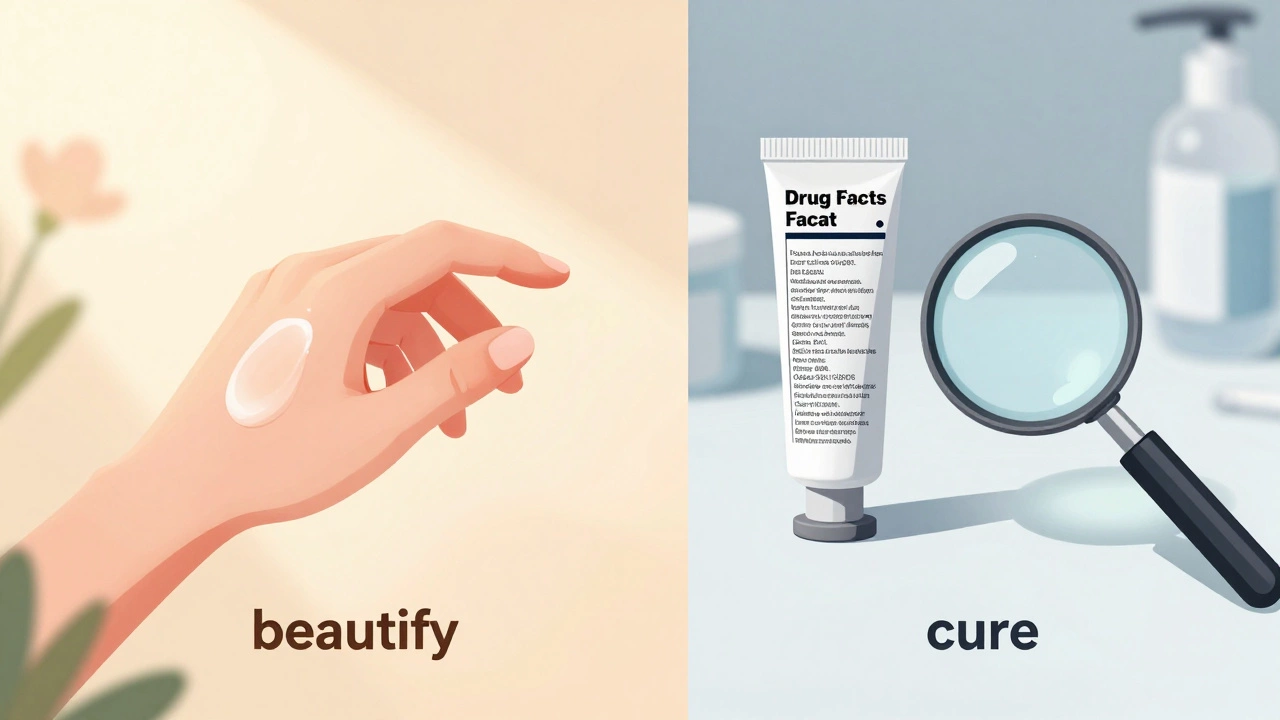
To understand where lotion fits, we first need to look at how government agencies define these terms. In the United States, the Food and Drug Administration (FDA) sets the standard that many other countries follow. According to the Federal Food, Drug, and Cosmetic Act (FD&C Act), a cosmetic is defined by its intended use. A product is a cosmetic if it is intended to be rubbed, poured, sprinkled, or sprayed on the human body for cleansing, beautifying, promoting attractiveness, or altering appearance.
This definition is broad but specific. It covers everything from lipstick and nail polish to shampoo and deodorant. Crucially, the definition relies on "intended use." This means the label, advertising, and marketing materials determine the classification, not just the ingredients inside the bottle. If a manufacturer markets a cream solely to make skin look smoother and feel softer, it falls squarely under the cosmetic umbrella.
What is the primary function of a cosmetic lotion?
The primary function is aesthetic: to cleanse, beautify, promote attractiveness, or alter the appearance of the skin without changing its biological structure or treating a disease.
When Does Lotion Become a Drug?
Here is where it gets tricky. Many products sold in the same aisle as regular lotions are technically drugs. The FD&C Act defines a drug as an article intended for use in the diagnosis, cure, mitigation, treatment, or prevention of disease, or intended to affect the structure or any function of the body.
Consider two tubes of hand cream. Tube A says, "Softens dry hands and leaves them smelling like lavender." That is a cosmetic. Tube B says, "Heals cracked skin and treats eczema flare-ups." That is a drug. Even if both tubes contain similar moisturizing bases like petrolatum or glycerin, the claim changes the legal status entirely.
This distinction matters because drugs undergo rigorous testing before they hit the market. They must prove efficacy and safety through clinical trials. Cosmetics, on the other hand, do not require pre-market approval from the FDA for safety or effectiveness, except for color additives. Manufacturers are responsible for ensuring their products are safe, but they don’t have to show the government proof before selling them.
Common Ingredients: Where Do They Fit?
You might think that certain ingredients automatically make a product a drug. While some ingredients are exclusively used in pharmaceuticals, many common skincare components can appear in both cosmetics and drugs depending on how they are used.
- Moisturizers (Ceramides, Hyaluronic Acid): These are typically cosmetic ingredients. They help retain water in the skin and improve texture, which aligns with the goal of beautifying and softening.
- Sunscreen Agents (Zinc Oxide, Avobenzone): These are always considered drugs in the US because they prevent sunburn, which is a disease-like condition involving DNA damage. A lotion containing sunscreen is a combination product.
- Retinoids: Over-the-counter retinol is often marketed as a cosmetic for anti-aging. However, prescription-strength tretinoin is a drug because it alters the structure of the skin cells to treat acne and photoaging.
- Salicylic Acid: When used in low concentrations for gentle exfoliation, it may be treated as a cosmetic. When marketed to treat acne, dandruff, or warts, it is an active drug ingredient.
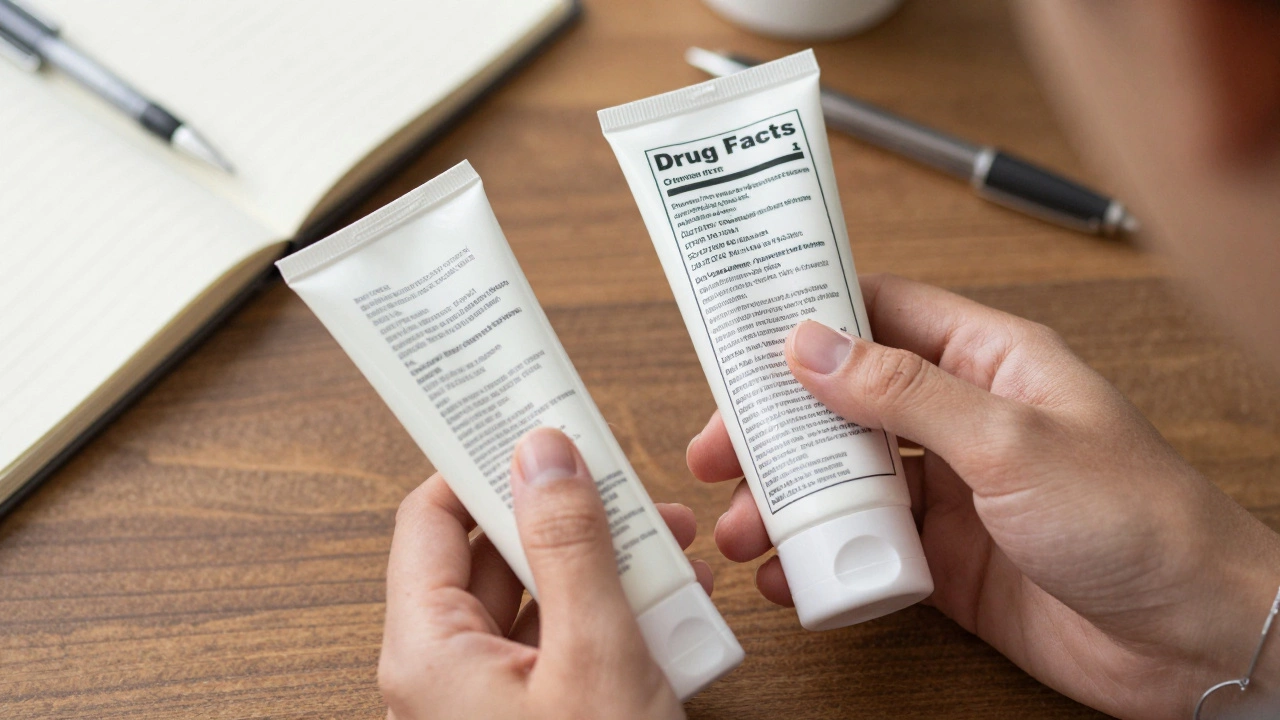
The key takeaway is that the ingredient list alone doesn't tell the whole story. You must look at the "Drug Facts" panel. If a product has a box labeled "Drug Facts" listing active ingredients, it is regulated as a drug. If it only has an "Ingredients" list sorted by concentration, it is likely a cosmetic.
Combination Products: The Gray Area
Many modern lotions blur the lines intentionally. These are known as combination products. A classic example is an anti-aging moisturizer that contains SPF 30. The moisturizing part is cosmetic; the sunscreen part is a drug. Another example is a hand cream that claims to relieve dryness (cosmetic) while also preventing chapped lips caused by wind (drug-like claim).
Regulators handle these by requiring compliance with both sets of rules. The manufacturer must ensure the cosmetic portion is safe and the drug portion is effective. For consumers, this means higher standards of quality control but also potentially higher prices due to the cost of clinical testing required for the drug component.
| Feature | Cosmetic Lotion | Drug Lotion |
|---|---|---|
| Primary Goal | Beautify, cleanse, soften | Treat, prevent, cure disease |
| Regulatory Approval | No pre-market approval needed | Must prove safety and efficacy |
| Labeling | Ingredient list only | Drug Facts panel required |
| Examples | Body butter, fragrance lotion | Acne wash, hydrocortisone cream |
Why Regulation Matters for Your Skin
You might wonder why this legal technicality should matter to you. The answer lies in accountability. Because cosmetics do not require pre-market approval, the burden of proof rests heavily on the manufacturer’s internal quality assurance. Reputable brands invest in third-party lab testing to ensure their lotions are free from harmful contaminants like heavy metals or bacteria.
However, less scrupulous companies might cut corners. Without mandatory FDA review, bad actors can slip substandard products onto shelves. This is why checking brand reputation and reading reviews is crucial when buying cosmetic lotions. In contrast, drug lotions have passed a higher hurdle. If you are dealing with a medical skin condition like psoriasis or severe acne, a drug-class lotion offers a guarantee of efficacy that a cosmetic cannot provide.
Furthermore, understanding these categories helps you avoid wasted money. If you buy an expensive "anti-wrinkle" serum that is classified purely as a cosmetic, it may temporarily plump the skin with hydrators, but it will not reverse collagen loss. If you expect structural change, you need a product with active drug ingredients like retinoids or alpha-hydroxy acids at therapeutic concentrations.
Global Differences in Classification
While the US system is well-known, other regions have different approaches. In the European Union, the definition of a cosmetic is stricter regarding safety assessments. All cosmetic products placed on the EU market must have a Product Information File (PIF) and undergo a safety assessment by a qualified expert before sale. This provides a layer of protection similar to drug regulations, even though the products remain cosmetics.
In Australia, where I live, the Therapeutic Goods Administration (TGA) regulates cosmetics differently than the FDA. Most cosmetics are self-regulated, but products making therapeutic claims are listed as "Complementary Medicines" and require registration. This means a lotion claiming to reduce inflammation would need TGA approval, effectively moving it out of the cosmetic category.
These global variations highlight that "lotion" is not a universal constant. Its classification depends on where you buy it and what the local laws say about its claims. Travelers should always check labels, as a product deemed safe and cosmetic in one country might be restricted or classified as a drug in another.
How to Read Labels Like a Pro
Next time you stand in the skincare aisle, take thirty seconds to decode the label. Look for these specific cues to determine if your lotion is a cosmetic or a drug:
- Check for "Drug Facts": This box is mandatory for OTC drugs. It lists active ingredients, purposes, warnings, and directions. If you see it, you are holding a drug.
- Scan the Claims: Words like "treat," "cure," "prevent," "diagnose," or "mitigate" signal drug intent. Words like "soften," "moisturize," "hydrate," "cleanse," or "beautify" signal cosmetic intent.
- Look for Active Ingredients: Drug facts panels list "active" ingredients separately from inactive ones. Cosmetics list all ingredients together in descending order of predominance.
- Identify Combination Products: If you see both a Drug Facts panel and a standard ingredient list, you have a combination product. Ensure you follow the usage instructions for both parts.
Being literate in these labels empowers you to make informed choices. It prevents you from paying premium prices for cosmetic products that promise medical results they cannot legally deliver. It also ensures you get the appropriate level of care for your skin health needs.
Frequently Asked Questions
Is baby lotion considered a cosmetic?
Yes, standard baby lotion is a cosmetic. It is designed to soften and protect infant skin. However, if it contains sunscreen or claims to treat diaper rash, those specific functions classify parts of the product as drugs.
Do cosmetic lotions expire?
Yes, all lotions expire. Most packaging features a Period After Opening (PAO) symbol, such as "12M," indicating the product is safe to use for 12 months after opening. Expired cosmetics can harbor bacteria or lose efficacy.
Can a cosmetic lotion cause allergies?
Absolutely. Cosmetics often contain fragrances, preservatives, and botanical extracts that can trigger contact dermatitis. Since they are not tested for individual allergic reactions before market release, patch testing new products is recommended.
Why are some lotions more expensive than others?
Price differences often reflect ingredient quality, brand positioning, and packaging. Drug-class lotions may cost more due to clinical trial costs. Cosmetic lotions may charge premiums for luxury branding or rare natural ingredients, despite similar base formulations.
Does organic mean a lotion is safer?
Not necessarily. "Organic" refers to agricultural sourcing, not safety or efficacy. An organic cosmetic still lacks pre-market safety approval from the FDA. Natural ingredients can be just as irritating or allergenic as synthetic ones.
 Skincare