
Makeup Primer Necessity Calculator
Answer the following questions to find out if primer is essential for your specific situation.
Recommended Solution:
Complete the form to see if primer is right for you.
Have you ever spent twenty minutes perfecting your foundation, only to have it slide off your face by lunchtime? Or maybe you’ve noticed those annoying little bumps forming under your concealer no matter how carefully you apply it. If this sounds familiar, the culprit might not be your foundation-it could be the missing step before you even pick up a brush. That step is makeup primer.
The beauty industry has pushed primer as an essential item for years. It’s everywhere: in tutorials, on shelves, and in every influencer’s bag. But here is the question that actually matters: do you really need it? Is it just another product designed to empty your wallet, or does it serve a genuine purpose?
The short answer is no, primer is not strictly necessary for everyone. However, for many people, it is the difference between looking fresh all day and looking like a melting wax figure by 2 PM. Whether you need it depends entirely on your skin type, your climate, and the specific problems you are trying to solve with your makeup.
What Actually Is Makeup Primer?
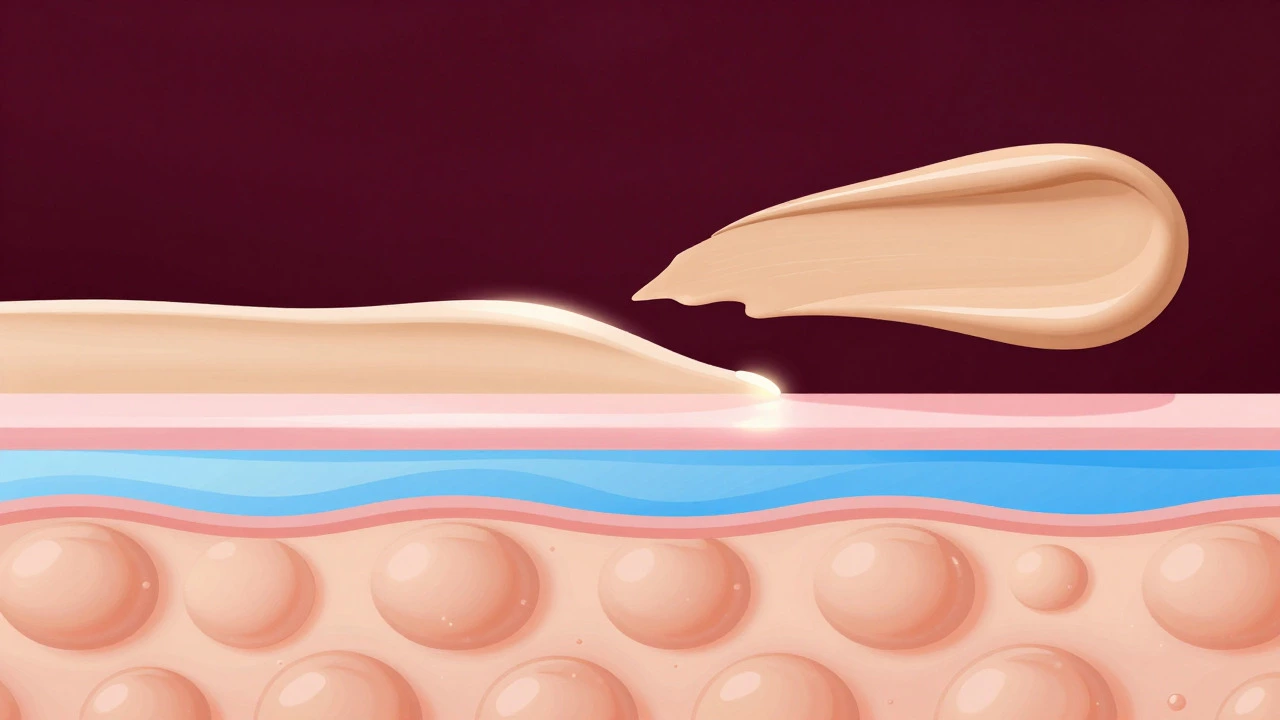
To understand if you need it, you first need to know what it does. Makeup primer is a cosmetic product applied to the skin before foundation and other makeup products to create a smooth base and improve longevity. Think of it like the sandpaper you use before painting a wall, or the glue you put down before hanging wallpaper. Its job isn’t to cover imperfections-that’s what foundation is for. Its job is to prepare the surface so the layers above it stick better and look smoother.
Most primers work by creating a barrier between your natural oils and your makeup. They often contain silicones, polymers, or hydrating ingredients that fill in fine lines and pores temporarily. This creates an even canvas. Without this layer, your foundation interacts directly with your skin’s texture and oil production, which can lead to patchiness, sliding, or caking.
It is important to distinguish primer from moisturizer. Moisturizer goes into your skin to hydrate it; primer sits on top of your skin to prep it. You can skip one or the other depending on your needs, but they serve different functions. Confusing the two is a common mistake that leads to bad makeup results.
When Do You Definitely Need Primer?
If you fall into any of these categories, skipping primer is likely a mistake. Here is who benefits most from adding this step to their routine:
- Oily Skin Types: If your T-zone gets shiny within an hour of applying makeup, a mattifying primer is your best friend. It absorbs excess oil and gives your foundation something dry to grip onto. Without it, your makeup will slide right off.
- Large Pores or Uneven Texture: Primers containing dimethicone or silica act as a blurring agent. They physically fill in enlarged pores and acne scars, making your skin look airbrushed. Foundation alone often settles into these crevices, highlighting them instead of hiding them.
- Hot and Humid Climates: Living in Sydney during summer means dealing with intense heat and humidity. In these conditions, sweat and environmental moisture break down makeup quickly. A gripping primer helps lock everything in place against the elements.
- Long Wear Requirements: If you have a wedding, a long shift at work, or an event that lasts eight hours or more, primer extends the life of your makeup significantly. It prevents oxidation (that orange tone foundation turns) and fading.
- Dry or Flaky Skin: Conversely, hydrating primers infused with hyaluronic acid or glycerin can plump up dry patches. This prevents your foundation from clinging to dead skin cells, which looks cakey and unflattering.
When Can You Skip It?
Not everyone needs to add another product to their morning routine. If your goal is speed, simplicity, or minimalism, you might be perfectly fine without primer. Here is when you can safely leave it out:
- Normal or Balanced Skin: If your skin doesn’t get overly oily or dry throughout the day, and your foundation stays put for six to eight hours naturally, you probably don’t need extra help. Your skin’s natural balance is sufficient.
- Minimal Makeup Days: If you are just wearing tinted sunscreen, a bit of mascara, and lip balm, primer is overkill. There isn’t enough product on your face to require a binding agent.
- Using High-Performance Foundations: Many modern foundations, especially those marketed as "long-wear" or "transfer-proof," have built-in priming properties. Brands like Estée Lauder Double Wear or NARS Natural Radiant Longwear Foundation are formulated to adhere to skin without a separate base. Adding primer on top might actually make them feel heavy or pill.
- Sensitive Skin Reactions: Some people find that too many layers cause irritation or breakouts. If your skin reacts poorly to silicones or complex ingredient lists, simplifying your routine by skipping primer can be healthier for your complexion.
Skincare vs. Makeup: The Blurry Line
One reason people debate the necessity of primer is the rise of "skincare-makeup hybrids." Products like tinted moisturizers, BB creams, and cushion compacts often contain SPF, hydration, and light coverage all in one. These products bridge the gap between caring for your skin and covering it up.
If your skincare routine is solid, your makeup will last longer regardless of whether you use primer. Well-hydrated skin holds makeup better than dehydrated skin. Using a good cleanser, exfoliating regularly to remove dead skin cells, and moisturizing adequately can mimic some effects of a primer. For example, applying a lightweight gel moisturizer can provide the slip needed for easy application, while a clay mask once a week can control oil production, reducing the need for a mattifying primer.
However, skincare cannot replicate the physical smoothing effect of silicone-based primers. No amount of drinking water will instantly fill in large pores for the next twelve hours. That requires the temporary physical barrier that only a dedicated primer provides.
Types of Primers and What They Fix
Not all primers are created equal. Choosing the wrong type can actually make your makeup look worse. Here is a breakdown of the main categories:
| Primer Type | Best For | Key Ingredients | Finish |
|---|---|---|---|
| Mattifying | Oily skin, large pores | iitemprop="description">Silica, Clay, Nylon-12Matte, blurred | |
| Hydrating | Dry, flaky, mature skin | Hyaluronic Acid, Glycerin, Vitamin E | Dewy, luminous |
| Illuminating | Dull skin, flat complexion | Light-reflecting particles, Pearl | Glowy, radiant |
| Pore-Filling | Uneven texture, visible pores | Dimethicone, Cyclopentasiloxane | Smooth, soft-focus |
| Color-Correcting | Redness, dark circles, sallowness | Pigments (Green, Peach, Lavender) | Neutralized tones |
Matching your primer to your foundation is also crucial. If you use a matte foundation, a dewy primer might clash and cause separation. If you use a glowy foundation, a heavy mattifying primer might kill that radiance. Consistency in finish usually yields the best results.
How to Apply Primer Correctly
Even the best primer won’t work if you apply it incorrectly. Here is the proper technique to ensure it does its job:
- Cleanse and Tone: Start with clean, dry skin. Any residue from previous days or excess sebum will prevent the primer from adhering properly.
- Moisturize: Apply your daily moisturizer and let it absorb fully. Wait about two to three minutes. If your skin is still tacky, the primer may pill or roll off.
- Sunscreen: Always apply sunscreen after moisturizer. Let this set for five minutes. Sunscreen is skincare; primer is makeup prep. Keep them distinct.
- Apply Primer: Use a pea-sized amount for the entire face. More is not better. Too much primer can feel greasy or cause your makeup to slide. Dot it on your forehead, cheeks, nose, and chin.
- Blend: Use your fingers, a sponge, or a brush to blend it out evenly. Focus on areas where you wear the most makeup, like the center of your face.
- Wait: Let the primer set for one minute before applying foundation. This allows the polymers to form their film. Applying foundation too soon can disrupt this process.
Common Mistakes to Avoid
Many people complain that primer doesn’t work for them, but they are often making one of these common errors:
- Using Too Much: Primer is potent. A thick layer creates a slippery surface that foundation cannot grip. Stick to a thin, even coat.
- Incompatible Formulas: Mixing water-based foundations with silicone-heavy primers can cause pilling. Check your ingredients. If your primer starts with dimethicone, avoid water-based foundations unless they are specifically designed to mix.
- Skipping Setting Powder: Primer prepares the skin, but setting powder locks the makeup in. For maximum longevity, especially in humid climates, powder is non-negotiable after foundation.
- Expecting Magic: Primer improves texture and longevity, but it does not change your skin type overnight. It won’t stop severe sweating or cure acne. Manage your expectations.
DIY Alternatives and Hacks
If you want to skip buying a dedicated primer but still want some of its benefits, there are simple household alternatives. While not as effective as professional products, they can help in a pinch:
- Facial Oil: For dry skin, mixing a drop of jojoba or squalane oil into your moisturizer can create a slick, hydrated base that helps foundation glide on smoothly.
- Aloe Vera Gel: For oily skin, a thin layer of pure aloe vera gel can soothe and slightly mattify the skin without clogging pores. It acts as a lightweight hydrator that doesn’t add grease.
- Hand Sanitizer (Dabbed Carefully): This is a controversial hack, but a tiny dab of alcohol-free hand sanitizer on the T-zone can temporarily tighten pores and absorb oil. Use sparingly to avoid drying out your skin.
Final Thoughts on Making the Choice
So, is primer necessary? It depends on your goals. If you are chasing a flawless, long-lasting finish in challenging conditions, yes, it is a vital tool. If you prefer a natural look, have balanced skin, or value speed over perfection, you can easily skip it.
The best way to find out is to test it. Try wearing your regular foundation without primer for a few days, then try it with a primer suited to your skin type. Pay attention to how your makeup feels at noon and at night. Does it fade? Does it cake? Does it slide? Your skin will tell you exactly what it needs. Don’t buy into the hype blindly; buy into what works for your unique biology and lifestyle.
Can I use moisturizer instead of primer?
Moisturizer and primer serve different purposes. Moisturizer hydrates the skin and sinks in, while primer sits on top to create a smooth barrier for makeup. If you have normal skin, a good moisturizer might be enough. However, if you have oily skin, large pores, or need long-lasting wear, moisturizer alone will not provide the same smoothing and gripping effects as a dedicated primer.
Does primer clog pores?
Not necessarily. Many primers are labeled "non-comedogenic," meaning they are formulated not to clog pores. However, silicone-based primers can trap dirt and oil if not removed properly. It is crucial to double-cleanse at the end of the day-using an oil-based cleanser followed by a water-based one-to ensure all primer and makeup residues are completely washed away.
Should I apply primer before or after sunscreen?
Always apply sunscreen before primer. Sunscreen is considered skincare and needs to be absorbed into the skin to protect it from UV rays. Primer is a makeup product that sits on top of the skin to prep it for foundation. Applying primer before sunscreen can dilute the sunscreen’s effectiveness and prevent it from forming a protective layer.
How long does makeup primer last?
Most makeup primers have a shelf life of 12 months after opening. Look for the open-jar symbol on the packaging, which indicates how many months the product is safe to use once opened. If the primer changes smell, color, or texture, discard it immediately to avoid skin irritation or breakouts.
 Skincare