Ingredient Safety Checker
Check Your Ingredient Safety
Is this ingredient safe for you based on your allergy profile? Select your allergy type and enter an ingredient to find out.
If you’ve ever read the back of an organic skincare bottle and panicked at the word sulfate, sulfa, or sulfite, you’re not alone. These words sound similar - and they’re all linked to sulfur - but they’re not the same. Mixing them up can lead to unnecessary fear, missed products, or worse, real allergic reactions. Let’s clear this up once and for all.
What is a sulfa allergy?
A sulfa allergy is a reaction to sulfonamide drugs - antibiotics like sulfamethoxazole or trimethoprim-sulfamethoxazole. These are prescription medications used to treat infections. The allergic reaction isn’t to sulfur itself, but to the specific chemical structure of these drugs. Symptoms can include rash, hives, fever, or in rare cases, Stevens-Johnson syndrome - a serious skin condition.
Here’s the key: sulfa allergies are almost always tied to oral or injected medications. There’s no documented case of someone reacting to topical sulfonamides in skincare. Even if a product contains a sulfonamide compound (which is extremely rare in cosmetics), the skin doesn’t absorb it the same way the bloodstream does. So if you’ve been avoiding all sulfur-related ingredients because of a sulfa drug allergy, you’re likely over-restricting your skincare options.
What is a sulfite allergy?
Sulfites are preservatives used in food, wine, and sometimes cosmetics. They prevent browning and microbial growth. Common sulfites include sodium metabisulfite, potassium bisulfite, and sulfur dioxide. These are different chemicals from sulfa drugs - no shared molecular structure.
People with sulfite allergies often have asthma. Exposure can trigger wheezing, coughing, or breathing difficulties. It’s rare, but possible, for sulfites to be found in skincare products - mostly in liquid formulations like toners or serums where preservatives are needed. The European Union limits sulfite concentrations in cosmetics to 1,000 ppm, and many organic brands avoid them entirely.
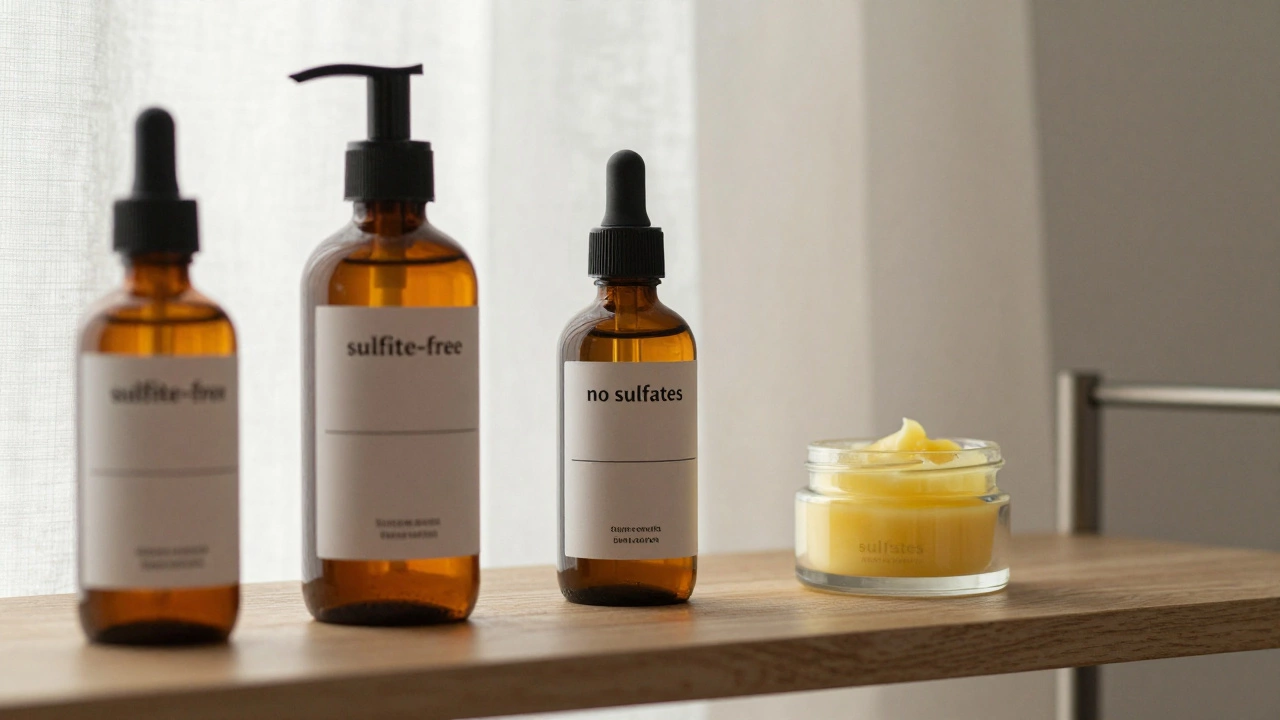
Check labels for: sodium metabisulfite, potassium metabisulfite, sulfur dioxide. If you’re sensitive, look for products labeled “sulfite-free.” Most clean beauty brands now avoid them - especially in Australia, where the Therapeutic Goods Administration requires clear labeling.
What about sulfates?
Here’s where confusion really kicks in. Sulfates - like sodium lauryl sulfate (SLS) or sodium laureth sulfate (SLES) - are cleansing agents. They’re foaming surfactants found in shampoos, body washes, and facial cleansers. They’re chemically unrelated to sulfa drugs and sulfites. But because their names sound alike, people with sulfa or sulfite allergies often avoid them unnecessarily.
There’s no proven link between sulfate sensitivity and sulfa or sulfite allergies. Sulfates can irritate skin - especially if you have eczema or rosacea - but that’s a physical irritation, not an immune reaction. If your skin stings when you use a foaming cleanser, it’s not an allergy. It’s just too harsh for your barrier.

What about elemental sulfur?
Elemental sulfur is a natural mineral used in acne treatments. You’ll find it in masks, spot treatments, and some organic skincare lines. It’s been used for centuries - think of the smell of sulfur springs. Unlike sulfa drugs or sulfites, elemental sulfur doesn’t cause allergic reactions in people with sulfa or sulfite sensitivities.
Some people report mild irritation or dryness from sulfur products, but that’s not an allergy. It’s a drying effect. In fact, sulfur is often recommended for sensitive skin because it’s non-comedogenic and doesn’t disrupt the microbiome like antibiotics or benzoyl peroxide might.
What should you look for on labels?
Here’s a quick cheat sheet for reading ingredient lists:
- Sulfa allergy? Avoid: sulfamethoxazole, sulfadiazine, sulfisoxazole - these are drugs, not skincare ingredients. You don’t need to avoid sulfates, sulfites, or sulfur.
- Sulfite allergy? Avoid: sodium metabisulfite, potassium bisulfite, sulfur dioxide. These are preservatives. Look for “sulfite-free” on packaging.
- Sulfate sensitivity? Avoid: sodium lauryl sulfate, sodium laureth sulfate. These are detergents. Not an allergy, just irritation. Switch to gentle cleansers with coco-glucoside or decyl glucoside.
- Elemental sulfur? Safe for everyone, including those with sulfa or sulfite allergies. Used in acne treatments and detox masks.
Many organic skincare brands in Australia - like True Botanicals, Aesop, and The Ordinary - clearly label sulfites and avoid them altogether. If you’re unsure, contact the brand directly. Most have customer service teams trained to answer ingredient questions.
Real-life example: A Sydney skincare user’s story
A woman in Bondi, who had a documented sulfa allergy from childhood, avoided all skincare products with “sulfur” in the name. She thought she was being safe. But she ended up with chronic acne because she avoided sulfur-based spot treatments - one of the few gentle, non-antibiotic options for her skin type.
After consulting a dermatologist, she learned sulfur wasn’t the issue. She switched to a sulfur mask with 5% elemental sulfur and saw a 70% reduction in breakouts in six weeks. She still avoids sulfites in toners - because those triggered her asthma - but now she knows the difference.

What about natural or organic certifications?
Organic certifications like COSMOS or ACO (Australian Certified Organic) don’t ban sulfites outright, but they limit them. ACO allows sulfites only if no alternative preservative is available, and only at very low levels. COSMOS requires sulfites to be clearly labeled and prohibits them in leave-on products for sensitive skin.
If you’re buying certified organic skincare, you’re already in a safer zone. Most certified brands avoid sulfites because they’re synthetic. And they definitely don’t use sulfa drugs - those are pharmaceuticals, not cosmetics.
When to see a dermatologist
If you’ve had a reaction to a skincare product and you’re unsure why, get it checked. Patch testing can tell you if it’s a true allergy or just irritation. A dermatologist can test for sulfite sensitivity, contact dermatitis, or even rare reactions to other ingredients.
Don’t guess. Don’t avoid everything that sounds like “sulf.” Get tested. Keep a journal: note the product, the ingredient list, and what happened. Patterns emerge.
Bottom line
Sulfa, sulfite, sulfate, sulfur - they’re not the same. They don’t cross-react. You don’t need to avoid all of them because of one allergy. Most people with sulfa drug allergies can use any skincare product safely. Those with sulfite allergies should check preservatives. Sulfates? Only avoid if your skin stings - that’s not an allergy, it’s a sign to switch cleansers.
Organic skincare doesn’t mean avoiding sulfur. It means avoiding toxins, synthetic fragrances, and unnecessary chemicals. Sulfur - the natural mineral - is one of the oldest, safest, and most effective ingredients in the game.
 Skincare