Foundation Fit Checker
Find Your Perfect Foundation
Answer these 3 questions to get a personalized recommendation for your mature skin
What's your primary skin concern?
By your 50s or 60s, your skin changes. It’s thinner, drier, and less elastic. Lines deepen, pores look more noticeable, and that smooth, even canvas you used to apply makeup on? It’s not there anymore. So when you reach for a foundation, you’re not just choosing a shade-you’re choosing a texture that either hides your skin’s new reality or makes it worse.
Why Older Skin Needs a Different Approach
Foundation isn’t just about color. It’s about how it interacts with your skin’s surface. Mature skin doesn’t reflect light the way younger skin does. It absorbs it instead, especially in areas with fine lines and dry patches. A heavy, cakey powder can settle into those lines and turn them into dark trenches. A liquid that’s too thin or too shiny can make skin look greasy or highlight texture you’re trying to minimize.
Most women over 50 aren’t looking for full coverage. They want even tone, no flashiness, and something that doesn’t cling to every crease. The goal is to look like you’re not wearing makeup at all-just better skin.
Powder Foundation: The Good, The Bad, and The Flaky
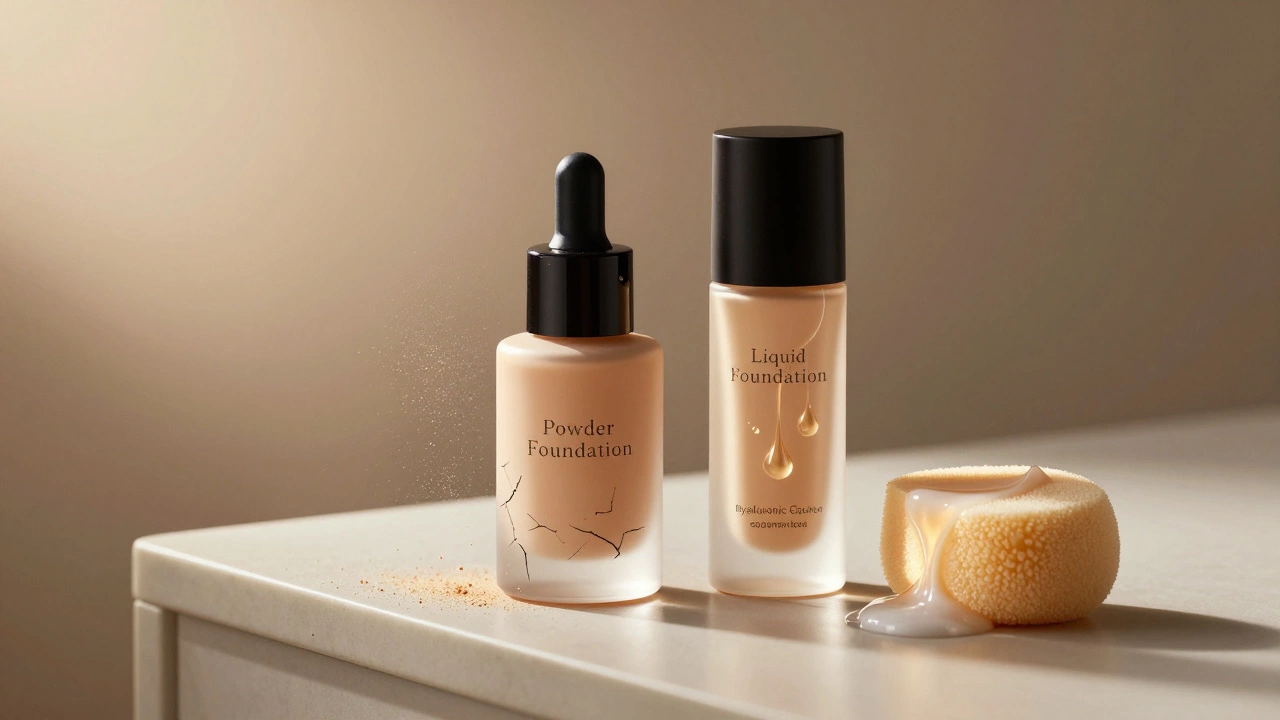
Powder foundation sounds like the obvious choice for oily skin. But for older skin? It’s often a trap.
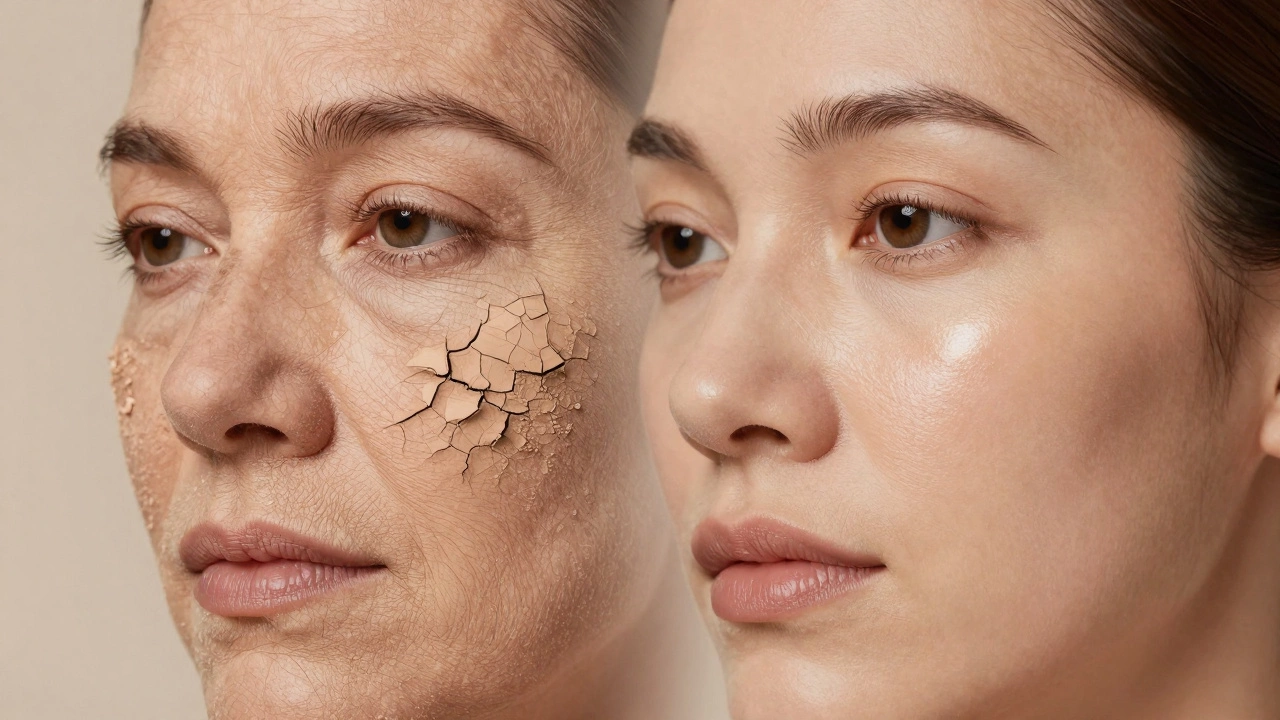
Mineral powders, especially loose ones, can look great on camera and feel light on the skin. But here’s the catch: they don’t hydrate. If your skin is dry-which most mature skin is-powder sits on top like dust. It doesn’t blend into the skin. It sits on it. And when you smile, laugh, or even blink, that powder slides into fine lines around your eyes and mouth. Suddenly, your cheeks look like they’re cracked.
Pressed powders are slightly better because they often have a bit more binding agent, but they still lack moisture. If you’ve ever applied powder foundation and then noticed your skin flaking around your nose or jawline an hour later, you know what I mean.
There’s one exception: if you have combination skin and your T-zone is oily but your cheeks are dry, a light dusting of translucent powder over the oily areas can help. But that’s not the same as using powder as your main foundation.
Liquid Foundation: The Real Winner for Mature Skin
Liquid foundation, when chosen right, is the most forgiving option for older skin. Why? Because it blends. It moves with your skin. It doesn’t sit on top-it integrates.
The key is finding the right formula. Look for these features:
- Hydrating ingredients: Hyaluronic acid, glycerin, squalane, or ceramides. These help the foundation glide on smoothly and don’t dry out your skin.
- Light to medium coverage: You don’t need to cover every freckle or vein. A sheer to medium buildable formula gives you control. You can add more where needed without looking mask-like.
- Matte but not flat: Avoid anything labeled “full matte” or “long-wear.” Those formulas tend to be drying. Instead, look for “natural finish,” “dewy finish,” or “radiant.” These mimic the way healthy skin reflects light.
- SPF 15 or higher: Sun protection is non-negotiable for mature skin. A foundation with built-in SPF saves you a step and helps prevent further damage.
Brands like Estée Lauder’s Double Wear Nude, L’Oréal True Match Lumi, and NARS Sheer Glow have been staples for women over 50 for years-not because they’re expensive, but because they actually work with aging skin, not against it.
How to Apply Liquid Foundation for the Best Results
Even the best liquid foundation can fail if applied wrong.
- Moisturize first: Wait five minutes after applying your moisturizer. Your skin needs to absorb it before foundation goes on. If you apply foundation on wet skin, it’ll slide off.
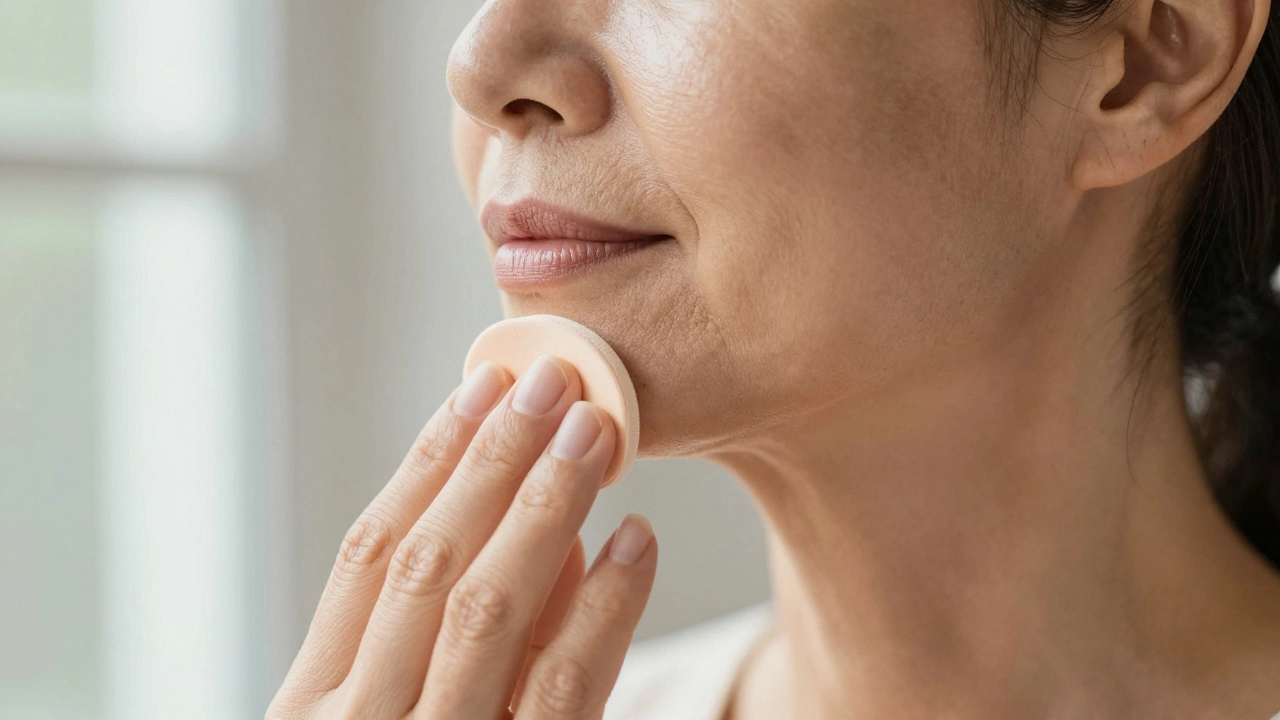
- Use a damp sponge: A damp beauty sponge gives you the most natural finish. Press, don’t drag. Dabbing helps the product sink into the skin instead of piling on top.
- Less is more: Start with one pump. Blend it out, then check in natural light. Add more only if needed. You can always build, but you can’t take it away.
- Set only where needed: If your nose or forehead gets shiny, lightly press a translucent powder over those spots with a fluffy brush. Don’t powder your whole face.
What to Avoid
There are three common mistakes that make foundation look worse on older skin:
- Using a shade too light: It’s tempting to pick a lighter shade to “brighten” your skin. But it ends up looking like a mask. Match your foundation to your neck, not your wrist.
- Layering too much: Three layers of foundation won’t cover better-it’ll look thick and unnatural. Use concealer for spots, not foundation.
- Choosing a formula with alcohol: Alcohol dries skin out. Check the ingredients list. If “alcohol denat.” is in the top five, walk away.
When Powder Might Actually Work
There are times when powder foundation has a place:
- If you have oily skin and live in a humid climate like Sydney in summer, a light dusting of a hydrating pressed powder (like Laura Mercier’s Translucent Loose Setting Powder) over the T-zone helps.
- If you’re using a cream foundation and need a touch-up midday, a tiny bit of powder can blot without adding more color.
- If you’re going to be in bright lighting-like a wedding or photo shoot-a light dusting can reduce shine without adding texture.
But even then, powder is a helper, not the main player.
The Bottom Line
For most women over 50, liquid foundation is the clear winner. It blends, it hydrates, and it doesn’t settle into lines. Powder might feel light, but it often makes skin look older, not younger.
It’s not about spending more. It’s about choosing the right texture. A $25 liquid foundation with hyaluronic acid and a natural finish will do more for your skin than a $60 powder that dries it out.
Test it in natural light. Try it on your jawline. Wear it for a full day. See how it looks when you smile. That’s how you know it’s right.
Frequently Asked Questions
Is powder foundation bad for mature skin?
Powder foundation isn’t inherently bad, but it’s often poorly suited for mature skin. It lacks moisture and can settle into fine lines, making wrinkles more visible. It works best as a light setting option over liquid foundation, not as the main product.
What’s the best finish for foundation on older skin?
A natural or radiant finish is ideal. Avoid full matte or dewy finishes that look greasy. Natural finish mimics healthy skin-slightly luminous, not shiny. It reflects light evenly, softening texture without highlighting it.
Should I use primer before foundation if I’m over 50?
Yes, but choose wisely. Skip silicone-based primers that fill lines-they can look cakey. Instead, use a hydrating primer with hyaluronic acid or peptides. It plumps the skin slightly, helping foundation glide on smoother and last longer.
Can I use BB or CC cream instead of foundation?
BB and CC creams can work if they have enough pigment and hydration. Many are too sheer for mature skin that needs even tone. Look for ones labeled "color-correcting" or "medium coverage" with SPF and moisturizing ingredients. Test them in daylight-some turn ashy on deeper skin tones.
How often should I replace my foundation?
Liquid foundation lasts 12 to 18 months. After that, the formula breaks down, the preservatives weaken, and it can start to separate or smell off. Using expired foundation can irritate sensitive mature skin. Write the opening date on the bottle with a marker.
 Skincare