Eyeliner for Aging Eyes
When you’re past 40, your eyelids change—skin gets thinner, lashes thin out, and that sharp wing you nailed in your 20s? It doesn’t always cooperate anymore. Eyeliner for aging eyes, a makeup technique tailored to the natural changes in skin texture and eyelid structure as we get older. Also known as mature eye makeup, it’s not about hiding age—it’s about enhancing what’s still there with smart, gentle application. The problem isn’t that you can’t wear eyeliner anymore. It’s that most formulas and methods were designed for younger, oilier, more elastic skin. What works on a 25-year-old can smudge, crease, or look harsh on someone over 50.
Eyeliner types, including pencils, gels, and liquids, each behave differently on aging skin. Also known as eye makeup formulas, they need to be chosen carefully. Pencil liners are often the best starting point—they glide on without tugging, and you can smudge them slightly for a softer look. Gels work well if you have steady hands and use a fine brush, but they dry fast and can settle into fine lines if applied too thickly. Liquid liners? Save them for special occasions. Most are too runny or too stiff, and they tend to accentuate wrinkles instead of hiding them. Look for formulas labeled "creamy," "smudge-proof," or "long-wear without drying." Avoid anything with glitter or shimmer on the lid—it draws attention to texture, not beauty.
Mature skin, skin over 40 that’s thinner, drier, and more prone to creasing and fine lines. Also known as aging skin, it requires different handling than teenage or 30-something skin. Moisturizing your eyelids before makeup isn’t optional—it’s essential. Use a lightweight eye cream, wait two minutes, then blot gently with a tissue. That tiny bit of oil left behind helps the liner glide. And never pull your skin taut when applying. That creates tension that leads to creasing later. Instead, keep your hand steady, rest your elbow on the counter, and apply in tiny dots along the lash line, then connect them. Less is more. A thin, soft line looks more natural and lasts longer than a thick, harsh one.
Don’t forget the lower lid. Many people skip it, thinking it makes eyes look tired. But a whisper of liner on the waterline—using a pencil, not liquid—opens up the eyes without looking heavy. And always set your liner with a neutral shadow pressed on top with a tiny brush. It locks it in place and prevents migration. If you’ve ever woken up with eyeliner on your cheek? That’s why.
There’s no magic product that fixes everything, but there are smart choices that make a real difference. The goal isn’t to look 25 again. It’s to look like your best, most put-together self—every day. What follows are real tips, honest reviews, and practical fixes from people who’ve been there. You’ll find what actually works, what’s overhyped, and how to make your eyes pop without the fuss.
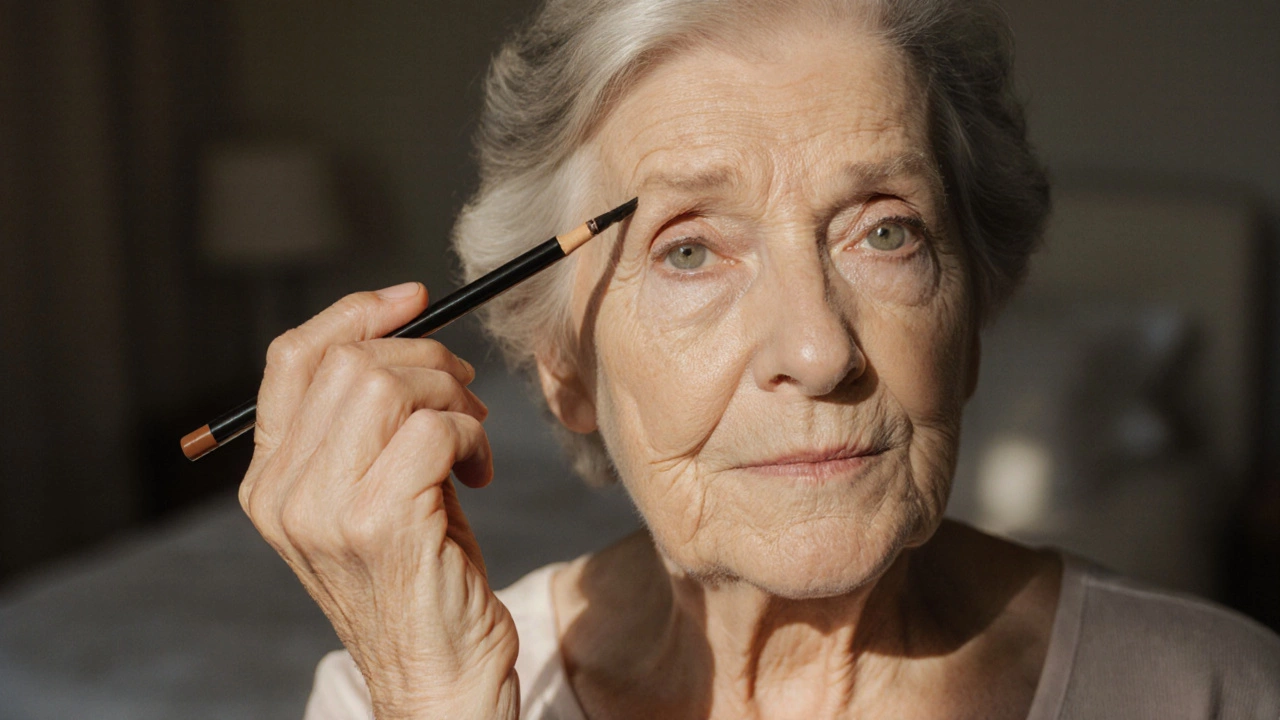
Should a 65-Year-Old Woman Wear Eyeliner? Real Advice for Mature Eyes
Should a 65-year-old woman wear eyeliner? Yes-if she uses the right type and technique. Learn how to define eyes without emphasizing wrinkles, what products work best, and why skipping liner can make you look more tired.
Read More
16 Nov 2025
 Hair Care