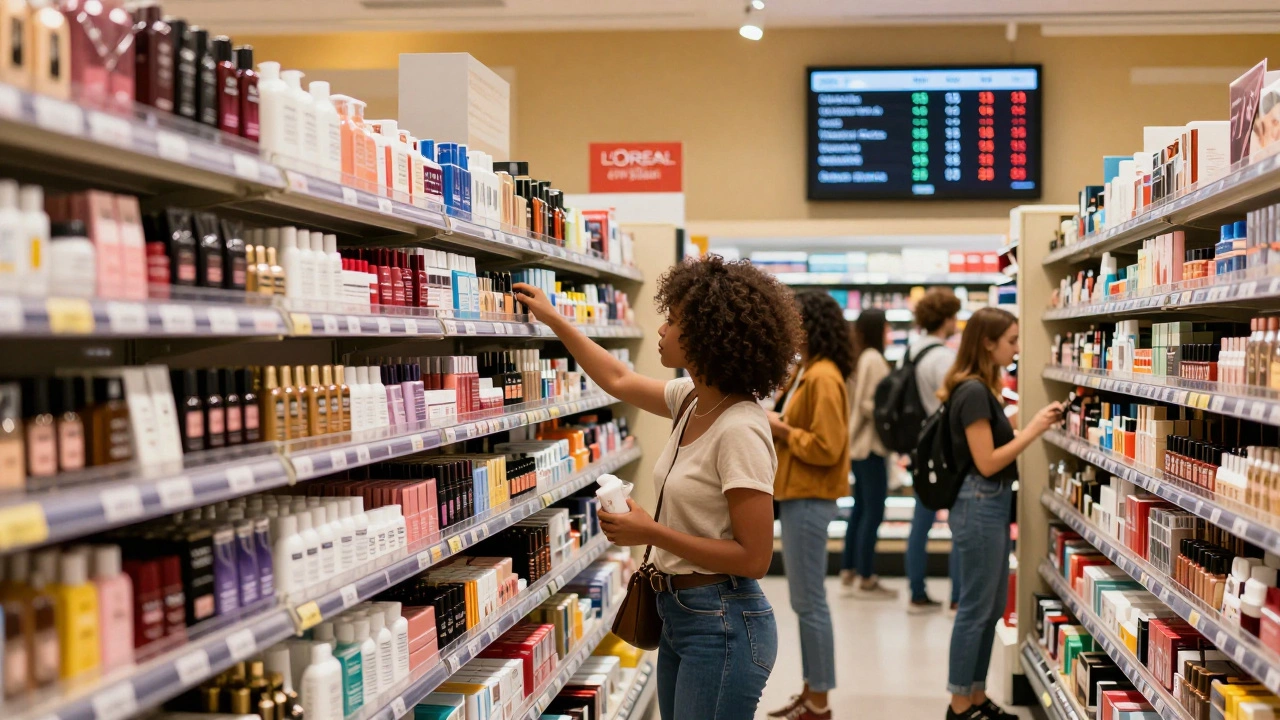
When you walk into any drugstore, department store, or online beauty shop, you’re surrounded by dozens of cosmetics brands. But only one stands above the rest-not just in sales, but in reach, variety, and sheer scale. The biggest cosmetics brand in 2026 isn’t a trendy startup or a viral TikTok favorite. It’s L'Oréal.
L'Oréal’s Global Dominance
L'Oréal doesn’t just sell makeup. It owns over 30 beauty brands, from luxury names like YSL and Lancôme to mass-market staples like Maybelline and L'Oréal Paris. In 2025, the company generated €38.5 billion in revenue, up from €35.9 billion the year before. That’s more than the next three largest beauty companies combined. It operates in 150 countries, with products sold every 1.5 seconds somewhere in the world.
Its portfolio covers every category: skincare, hair color, fragrances, sun protection, and professional salon products. The brand’s ability to dominate both high-end and budget segments is unmatched. You’ll find L'Oréal’s Maybelline mascara next to the register at Walmart, while its Kiehl’s serum sits in a boutique in Tokyo. That’s not luck-it’s strategy.
How L'Oréal Stays on Top
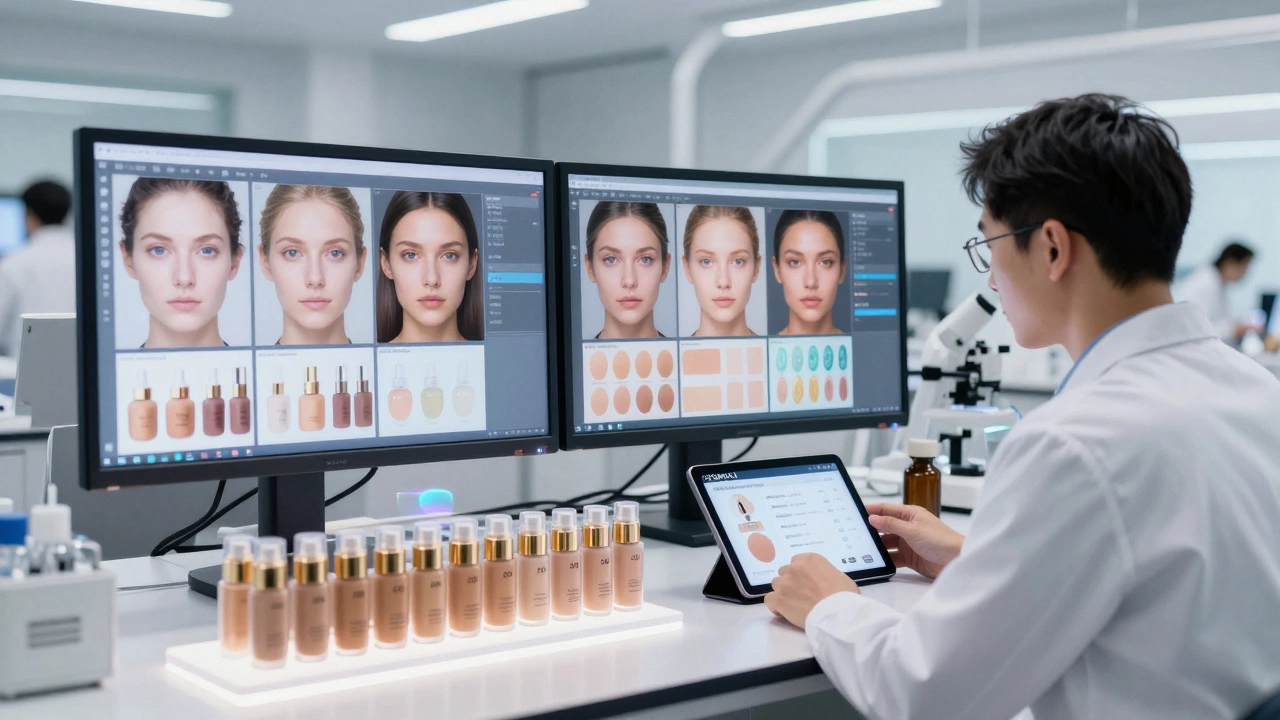
What keeps L'Oréal ahead isn’t just advertising. It’s R&D. The company spends over €1.1 billion a year on research and innovation. That’s more than any other beauty brand. Its labs in France and the U.S. test thousands of formulas every year. One example: its True Match foundation line, developed using AI to match over 100 skin tones, became the best-selling foundation in the U.S. in 2024.
L'Oréal also buys its competition. In 2023, it acquired NYX Professional Makeup for $1.7 billion, then in 2025, it snapped up Dr. Jart+, a South Korean skincare brand that had exploded in popularity among Gen Z. These aren’t random purchases. They’re calculated moves to fill gaps in its lineup before competitors can.
Who Else Is in the Race?
Other giants are trying to catch up. Estée Lauder, with brands like MAC, Clinique, and Estée Lauder itself, made €12.3 billion in 2025. That’s impressive-but still less than one-third of L'Oréal’s revenue. Unilever’s Dove and Love Beauty & Planet bring in solid numbers, but they’re spread across multiple categories like soap and deodorant, not focused solely on cosmetics.
Then there’s Shiseido. Once the top Asian beauty brand, it’s now struggling to keep pace. Its revenue fell 5% in 2025 due to slowing demand in China and Japan. Meanwhile, L'Oréal’s sales in Asia grew 8% last year.
Even the biggest direct-to-consumer brands-like Glossier or Fenty Beauty-don’t come close. Fenty Beauty, Rihanna’s brand, hit $1 billion in sales in 2023, which sounds huge. But L'Oréal’s Maybelline alone made $3.2 billion in 2025. Fenty has cult status. L'Oréal has global infrastructure.
Why Size Matters in Cosmetics
Bigger doesn’t always mean better-but in cosmetics, it means more access. L'Oréal’s scale lets it invest in sustainable packaging, global supply chains, and inclusive shade ranges that smaller brands can’t afford. In 2024, it launched a carbon-neutral lipstick line across 20 countries. Smaller brands might offer one shade in a new range. L'Oréal launches 40.
It also means more research into real-world needs. In 2025, L'Oréal partnered with dermatologists in Brazil to develop a sunscreen that doesn’t leave a white cast on darker skin tones. The product, called Solar Expertise Dark, sold 12 million units in its first six months.
Is L'Oréal the Right Brand for You?
Does being the biggest mean it’s the best for your skin? Not necessarily. If you want clean, minimalist skincare, you might prefer Aesop or Dr. Hauschka. If you’re into vegan formulas, you might lean toward Pacifica or Herbivore. But if you want choice, availability, and proven performance across skin tones, ages, and budgets, L'Oréal is the only brand that delivers it all.
Its products are tested on real people-not just focus groups. In 2025, L'Oréal conducted over 2 million consumer trials across 40 countries. That’s how it knows what works. That’s how it stays on top.
What’s Next for the Biggest Cosmetics Brand?
L'Oréal isn’t resting. It’s investing in AI-powered skin analysis tools that let customers find their perfect foundation shade using just a phone camera. It’s expanding its refillable packaging line to 100 products by 2027. And it’s launching a new line of hair color that changes based on body temperature-something it’s testing in labs right now.
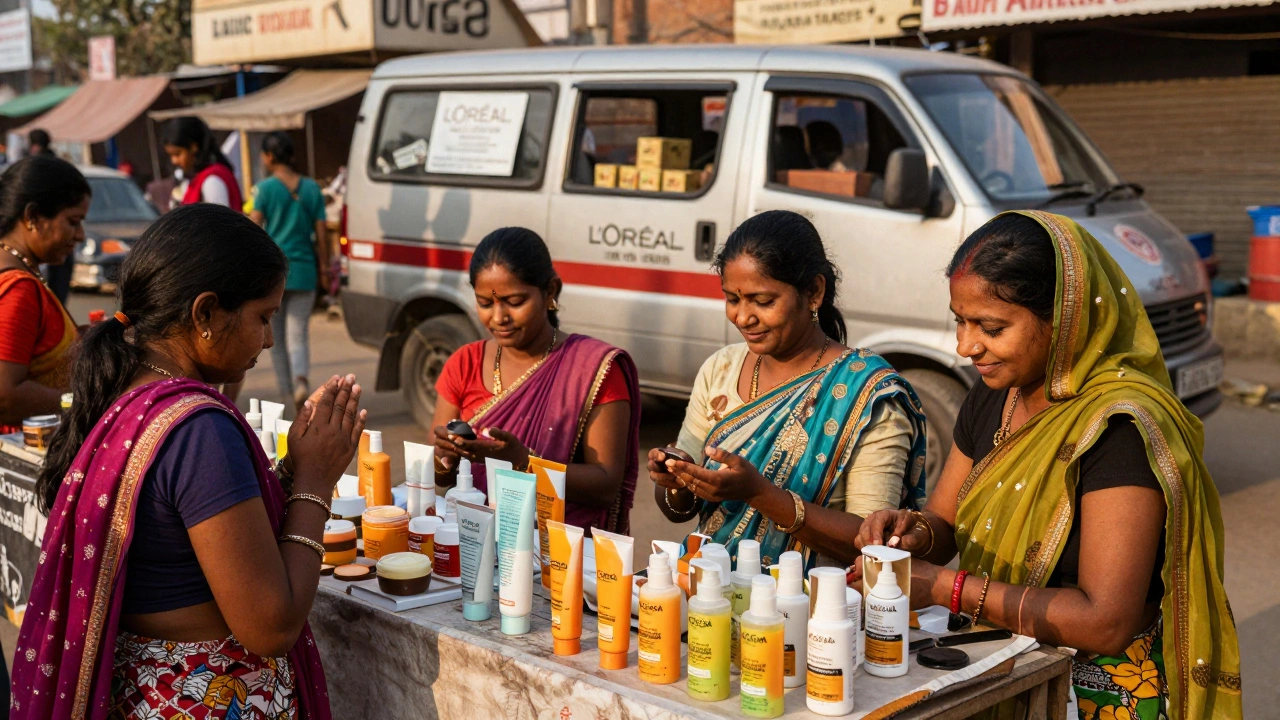
It’s also pushing into emerging markets. In Africa, where the beauty industry is growing at 10% a year, L'Oréal opened 300 new distribution points in 2025. In India, it launched a budget-friendly line with ingredients like turmeric and neem, tailored to local skin needs.
The biggest cosmetics brand isn’t just selling products. It’s adapting to the world-and making sure everyone, everywhere, can find something that works for them.
Is L'Oréal the biggest cosmetics brand in the world?
Yes. As of 2026, L'Oréal is the largest cosmetics brand globally by revenue, market share, and product reach. It generated €38.5 billion in 2025, far ahead of competitors like Estée Lauder and Unilever. Its portfolio includes over 30 brands, from luxury to drugstore, sold in 150 countries.
What brands does L'Oréal own?
L'Oréal owns more than 30 beauty brands. These include luxury names like YSL Beauty, Lancôme, and Giorgio Armani Beauty; mass-market favorites like L'Oréal Paris, Maybelline, and Revlon; professional lines like Kérastase and Redken; and skincare brands like La Roche-Posay, CeraVe, and Kiehl’s. It also owns Dr. Jart+ and NYX Professional Makeup.
How does L'Oréal compare to Fenty Beauty?
Fenty Beauty, founded by Rihanna, hit $1 billion in sales in 2023 and revolutionized inclusive shade ranges. But L'Oréal’s Maybelline brand alone made $3.2 billion in 2025. Fenty is a powerful niche player. L'Oréal is a global infrastructure with dozens of brands covering every price point and skin type.
Is L'Oréal ethical and sustainable?
L'Oréal has committed to 100% renewable energy in its factories by 2025 and plans to make 100% of its packaging recyclable or refillable by 2030. It’s already reduced its carbon footprint by 70% since 2005. Its Sustainable Packaging Initiative includes refillable foundations, biodegradable tubes, and waterless formulas. It’s not perfect, but it’s leading the industry in scale.
Why is L'Oréal so successful in Asia?
L'Oréal invests heavily in understanding local preferences. In China, it launched a line with centella asiatica and ginseng, ingredients trusted in traditional skincare. In Japan, it partnered with dermatologists to create anti-pollution serums. It also hires local scientists and adapts formulas for humidity, UV exposure, and skin types unique to each region-something global competitors often overlook.
 Skincare