Cleansing Routine Calculator
Determine your optimal cleansing routine based on your skin type, makeup usage, and daily habits. The most important step in your skincare routine starts here.
Why this matters: As explained in the article, proper cleansing is the foundation of healthy skin. Skipping this step prevents your other products from working effectively.
Stop scrolling through ten-step routines. Stop buying serums that promise miracles. The truth? You don’t need ten products to have healthy skin. You need one thing done right, every single day.
The Most Important Skin Routine Step Isn’t What You Think
It’s not vitamin C. It’s not retinol. It’s not even sunscreen - although that’s a close second.
The most important skin routine step is cleansing. Not because it’s flashy or expensive. But because everything else depends on it.
Think of your skin like a garden. You can plant the best seeds, water them daily, and feed them nutrients. But if the soil is clogged with weeds and debris, nothing grows right. Your skin works the same way. Dirt, oil, pollution, sweat, and makeup build up on your face all day. If you don’t remove them, your skin can’t breathe, repair, or absorb anything else you put on it.
Studies show that even mild, daily buildup can clog pores, trigger inflammation, and accelerate signs of aging. A 2023 dermatology review found that inconsistent cleansing was linked to 68% higher rates of persistent acne and dullness in adults aged 25-45. That’s not a coincidence. That’s cause and effect.
Why Cleansing Comes First - And Last
Every skincare product you use after cleansing works better if your skin is clean. Serums? They sink in deeper. Moisturizers? They lock in hydration instead of sitting on top of grime. Sunscreen? It spreads evenly instead of flaking off where oil pooled.
And here’s the part most people miss: you need to cleanse twice a day - morning and night.
Morning cleansing isn’t about removing dirt. It’s about removing overnight oil, dead skin cells, and the residue from last night’s moisturizer. Your skin regenerates while you sleep. That means it sheds cells and produces sebum. If you skip morning cleansing, you’re slathering on products over a layer of old skin and grease. It’s like painting a wall without sanding it first.
Night cleansing is non-negotiable. You’ve been exposed to UV rays, pollution, makeup, and sweat. If you go to bed without washing your face, you’re essentially letting all that gunk sit on your skin for 7-8 hours. That’s enough time for bacteria to multiply, pores to swell, and irritation to start.
What Kind of Cleanser Should You Use?
Not all cleansers are created equal. The wrong one can strip your skin, damage your barrier, and make everything worse.
Look for these three things:
- pH-balanced - Your skin’s natural pH is around 5.5. Cleansers between 4.5 and 6 are ideal. Avoid anything labeled “deep cleansing” or “pore purifying” if it says it’s alkaline - that means it’s too harsh.
- Gentle surfactants - Sodium lauryl sulfate (SLS) is a common irritant. Look for cleansers with cocamidopropyl betaine, decyl glucoside, or sodium lauroyl sarcosinate instead.
- No fragrance or alcohol - Even “natural” fragrances can trigger redness or sensitivity. Alcohol dries out your skin and weakens its protective layer.
For most people, a creamy or milky cleanser works best. Gel cleansers are fine if you have oily skin. Oil cleansers? Great for removing makeup, but use them as a first step - never alone. Always follow with a water-based cleanser to rinse away residue.

The Real Cost of Skipping Cleansing
Let’s say you’re tired. You come home, collapse on the couch, and think, “I’ll wash my face tomorrow.” That’s not just laziness. That’s a habit that damages your skin over time.
After a few weeks of skipping night cleanses:
- Your T-zone gets oilier - not because you’re producing more oil, but because dirt traps it.
- Your moisturizer feels less effective - it’s sitting on top of a layer of gunk.
- Your skin looks dull - dead cells aren’t shedding properly.
- Your acne flares up - bacteria thrive in clogged pores.
- Your fine lines look deeper - inflammation breaks down collagen.
And here’s the kicker: you might blame your serums or your age. But the real problem? You never washed your face properly.
How to Cleanse Right - Step by Step
It’s not complicated. But most people do it wrong.
- Wash your hands first. You don’t want to transfer bacteria to your face.
- Use lukewarm water. Hot water strips your skin. Cold water doesn’t dissolve oil.
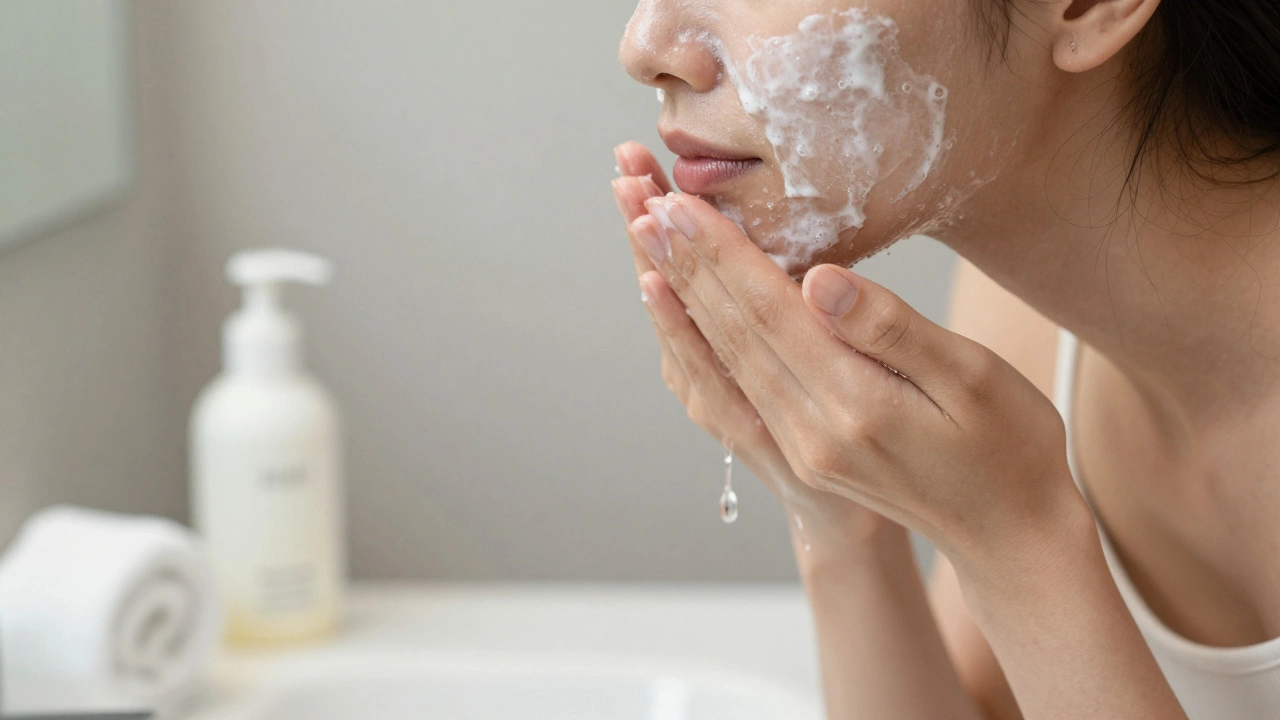
- Apply a dime-sized amount of cleanser. Rub it between your palms to activate it, then gently press it onto your face - don’t scrub.
- Massage for 30-60 seconds. Focus on your forehead, nose, chin, and jawline - where oil and dirt collect most.
- Rinse thoroughly. Use your hands to splash water, not a washcloth (they harbor bacteria).
- Pat dry with a clean towel. Don’t rub. Your skin is delicate when wet.
Do this twice a day. Every day. No exceptions.
What Comes After Cleansing?
Once you’ve nailed cleansing, then you can add other steps - but only if you need them.
For most people under 40, this is enough:
- Morning: Cleanse → Moisturize → Sunscreen
- Night: Cleanse → Moisturize
That’s it. No toners. No essences. No serums unless you have a specific concern like acne, dark spots, or dehydration.
And if you do use serums? Apply them right after cleansing, while your skin is still slightly damp. That helps them absorb better.
The Myth of the Perfect Routine
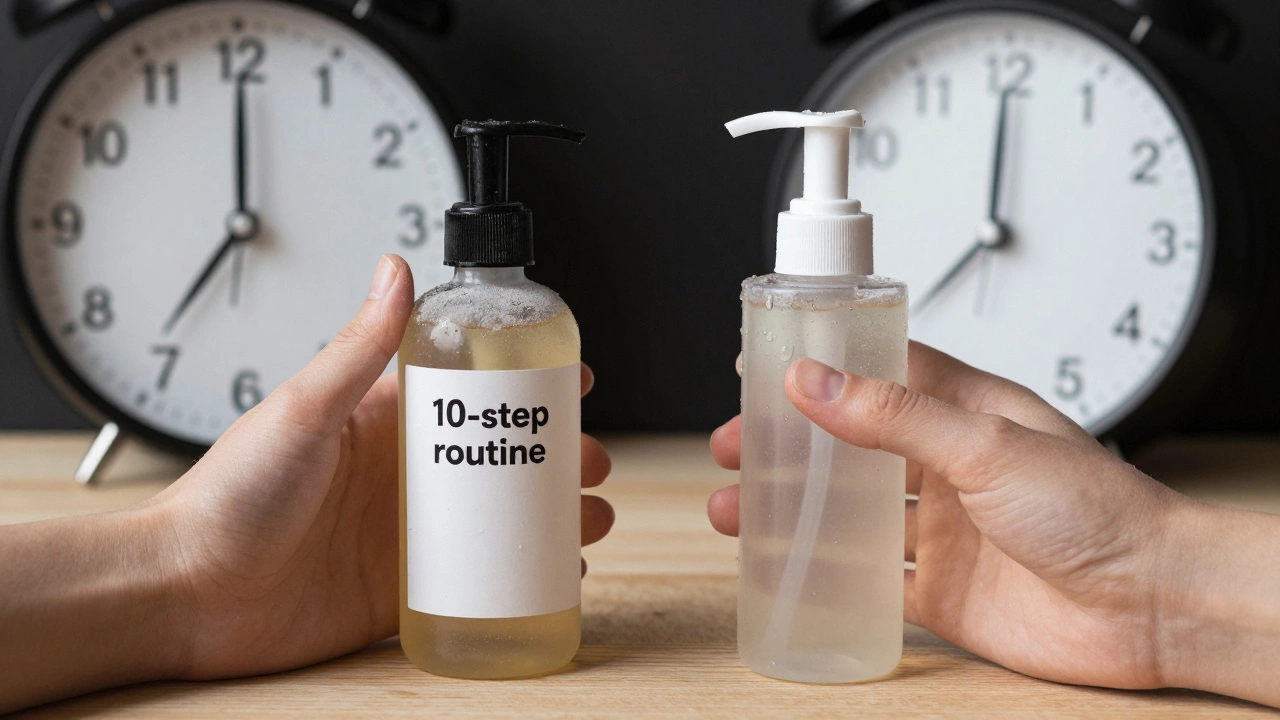
Instagram makes you think you need 12 products and 15 minutes every morning. Reality? Your skin doesn’t care how many bottles you own. It cares if you wash your face.
People with glowing skin aren’t using the most expensive products. They’re consistent with the basics. They don’t skip cleansing. They don’t overdo it. They don’t chase trends.
One woman in Sydney, 38, with combination skin and occasional breakouts, switched from a 10-step routine to just cleanser, moisturizer, and sunscreen. Within six weeks, her skin cleared up. No new products. Just consistency.
That’s the power of the most important skin routine step.
What If You Have Sensitive Skin?
Then you need to be even more careful.
Use a fragrance-free, soap-free cleanser. Look for ingredients like ceramides, niacinamide, or colloidal oatmeal. These help repair your barrier while cleaning.
Avoid foaming cleansers. They’re usually too drying. Skip exfoliating scrubs - even gentle ones - if your skin stings or turns red. Let your cleanser do the work.
Test new products on your jawline for a week before using them all over. If it doesn’t irritate there, it’s probably safe.
Final Truth: Skin Health Is Simple
You don’t need to spend hundreds on skincare. You don’t need to follow every influencer’s routine. You don’t need to buy the latest launch.
You just need to clean your face - properly - every single day.
That’s the foundation. Everything else is just decoration.
Is it okay to skip cleansing at night if I don’t wear makeup?
No. Even if you don’t wear makeup, your skin still collects oil, sweat, pollution, and dead skin cells throughout the day. Skipping cleansing lets that buildup sit on your skin overnight, which can clog pores, cause inflammation, and make your skin look dull. Cleansing isn’t just for makeup removal - it’s for skin renewal.
Can I use soap to clean my face?
Traditional bar soap is usually too alkaline for facial skin, with a pH around 9-10. Your skin’s natural pH is about 5.5. Using soap can strip your skin’s protective barrier, leading to dryness, irritation, and increased sensitivity. Always use a facial cleanser designed for your skin type - not body soap.
Do I need to double cleanse every night?
Only if you wear sunscreen, makeup, or heavy moisturizers. Double cleansing means using an oil-based cleanser first to dissolve oil-based impurities, then a water-based cleanser to remove the rest. If you don’t wear makeup or sunscreen, one gentle water-based cleanse is enough.
How long should I cleanse my face for?
At least 30 seconds, but no more than a minute. You don’t need to scrub hard or spend five minutes. Just gently massage the cleanser over your skin to loosen dirt and oil. If you’re using a cleansing brush, limit it to 30 seconds - overuse can damage your barrier.
What if my skin feels tight after cleansing?
That’s a red flag. Your skin should feel clean, not stripped. Tightness means your cleanser is too harsh or you’re using hot water. Switch to a gentle, pH-balanced cleanser and use lukewarm water. Follow up with moisturizer immediately after patting your skin dry.
 Skincare