Sulfa Allergy: What It Is, How It Affects Your Skincare and Makeup Choices
When you have a sulfa allergy, an immune reaction to sulfonamide drugs, often triggered by antibiotics like sulfamethoxazole. Also known as sulfonamide allergy, it doesn’t mean you’re allergic to sulfur or sulfate ingredients—those are completely different chemicals. But many people confuse them, and that’s where things go wrong in skincare and makeup. If you’ve ever broken out in a rash after using a new cream, or felt a sting when applying eyeliner, it might not be the product itself—it could be a hidden sulfa derivative.
Some cosmetics and topical treatments contain sulfonamides, a class of compounds used as preservatives or active ingredients in certain acne treatments and antiseptics. For example, silver sulfadiazine, used in burn creams, is a known trigger. Even though most makeup doesn’t include these directly, some acne spot treatments, anti-dandruff shampoos, and even certain sunscreens may carry sulfonamide-based ingredients under confusing names like "sulfacetamide" or "sulfanilamide." If you’ve been told you have a sulfa allergy, you need to read labels like a detective—not just for "sulfa," but for anything that sounds like it came from the same chemical family. This isn’t just about avoiding penicillin-like drugs. It’s about protecting your skin from hidden triggers that show up in products you use every day.
People with sulfa allergies often end up with irritated, red, or flaky skin—not because they’re using too much product, but because they’re using the wrong ones. You might think your breakout is from oil or dirt, but if you’ve recently switched to a new cleanser or serum, check the ingredient list. Brands like CeraVe and La Roche Posay, which you’ll find recommended in other posts here, are generally safe because they avoid sulfonamides. But that doesn’t mean every "dermatologist-recommended" product is safe for you. Some medicated toners, anti-acne treatments, and even certain foundations use sulfacetamide to fight bacteria. It’s not common, but it’s enough to ruin your routine if you’re sensitive.
You don’t have to give up your favorite routines. You just need to know what to look for. Skip anything with "sulf" in the first half of the ingredient name, especially if it’s followed by "amide." And if you’re unsure, patch test new products behind your ear for three days before applying them to your face. The good news? Most everyday makeup—foundation, mascara, lipsticks—doesn’t contain these ingredients. The real risk is in skincare that claims to "treat" or "cure" something. That’s where the hidden sulfa sneaks in.
Below, you’ll find real guides from people who’ve been there—how to pick safe products, what to ask your dermatologist, and how to spot misleading labels. No fluff. No guesswork. Just clear, practical advice to keep your skin calm and your routine simple.
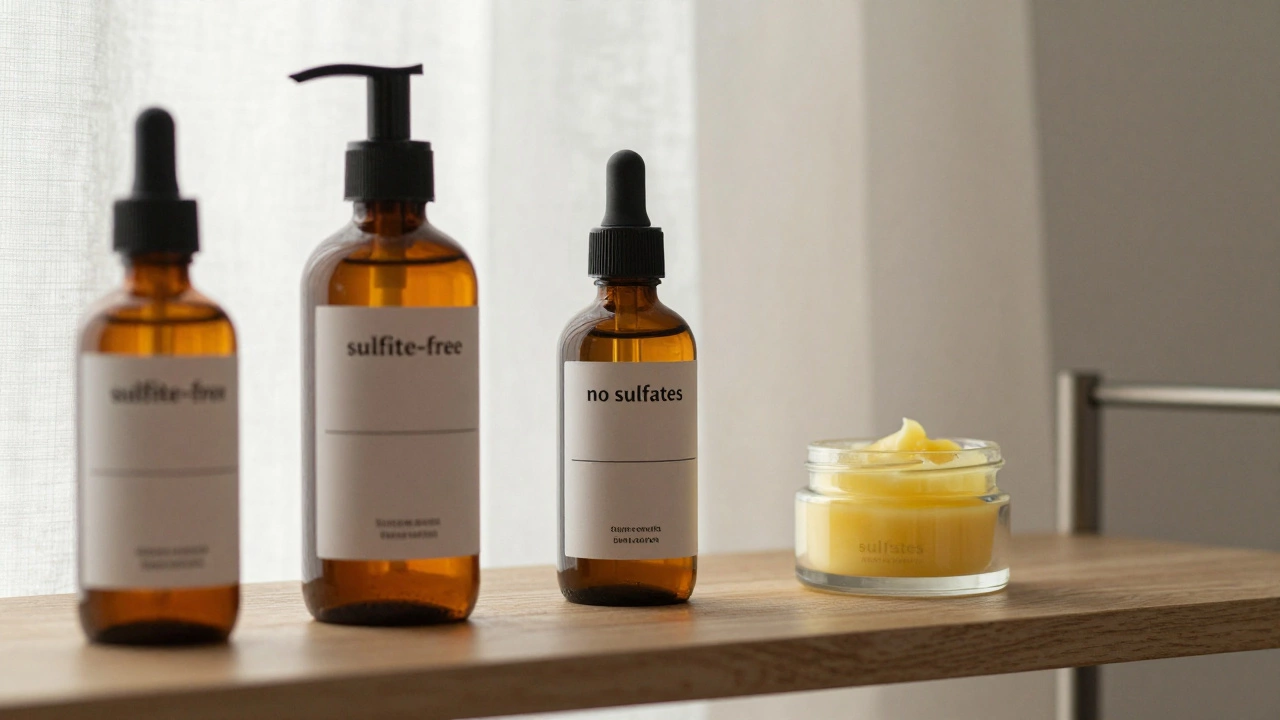
Is Sulfa the Same as Sulfite Allergy? What Organic Skincare Users Need to Know
Sulfa and sulfite allergies are often confused, but they're completely different. Learn what actually matters for organic skincare users and how to read labels safely without over-restricting your routine.
Read More
1 Dec 2025
 Skincare