Sulfite Allergy: What It Is, How It Affects Your Skin and Beauty Products
When you have a sulfite allergy, a reaction to sulfur-based preservatives commonly found in food and cosmetics. Also known as sulfur dioxide sensitivity, it doesn’t always cause breathing issues—it can show up as red, itchy skin, hives, or breakouts after using certain lotions, serums, or makeup. Many people don’t realize their skin flare-ups might be tied to something as hidden as sulfites, especially since these ingredients rarely show up as "sulfite" on labels. Instead, you’ll see names like sodium metabisulfite, potassium bisulfite, or sulfur dioxide—chemicals added to keep products stable and prevent mold.
These preservatives are sneaky. They’re in toners, cleansers, even some sunscreens and hair dyes. If you’ve tried switching brands, avoided fragrances, and still get irritated skin, sulfites might be the missing link. People with eczema, rosacea, or sensitive skin are more likely to react, but even those without known allergies can develop sensitivity over time. It’s not about being "organic" or "natural"—some of the cleanest-looking products still contain these preservatives because they’re cheap and effective. The real issue? You won’t find sulfites listed in the top ingredients, and most beauty blogs don’t warn you about them.
That’s why you need to know what to look for. A sulfite allergy, a reaction to sulfur-based preservatives commonly found in food and cosmetics. Also known as sulfur dioxide sensitivity, it doesn’t always cause breathing issues—it can show up as red, itchy skin, hives, or breakouts after using certain lotions, serums, or makeup. isn’t rare—it’s just misunderstood. Dermatologists see it often in patients who’ve tried everything: hypoallergenic products, expensive serums, even prescription creams—yet nothing sticks. The fix isn’t more products. It’s reading labels like a detective. Look for the hidden names. Avoid products with alcohol as the first ingredient—sulfites are often used in alcohol-based formulas. And if you’ve had a reaction after using a product you’ve used before, it’s not just coincidence.
What’s in your moisturizer might be the same thing that triggers your headaches after wine. The connection is real. And if you’re trying to fix your skin, you can’t ignore it. The posts below cover exactly what to avoid, which brands skip sulfites entirely, how to test products safely, and what to do when your skin reacts. You’ll find real advice on sensitive skin routines, how to decode ingredient lists without a chemistry degree, and which dermatologist-recommended brands actually leave these irritants out. No fluff. No marketing. Just what works when your skin says no.
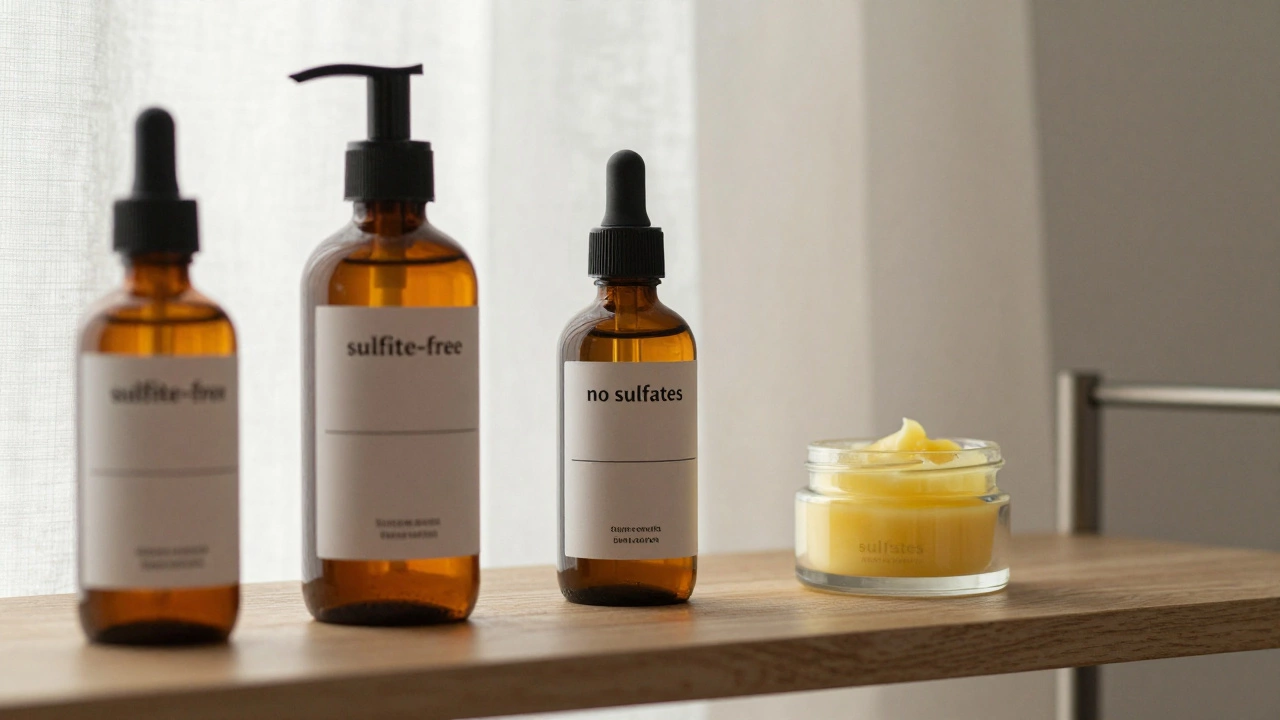
Is Sulfa the Same as Sulfite Allergy? What Organic Skincare Users Need to Know
Sulfa and sulfite allergies are often confused, but they're completely different. Learn what actually matters for organic skincare users and how to read labels safely without over-restricting your routine.
Read More
1 Dec 2025
 Skincare