Skincare Success & Brand Matcher
Who actually makes the most money in the world of skin care? If you walk into a department store or browse Amazon, you see hundreds of options. But when we talk about the most successful skincare line, we aren't just talking about hype on social media. We are talking about hard numbers: global revenue, market share, and brand recognition that spans decades.
The answer isn't a single product like a serum or a moisturizer. It is a massive conglomerate. The title for the most successful skincare entity belongs to L'Oréal, a French multinational cosmetics company founded in 1909. However, if you look at prestige skincare specifically, the Estée Lauder Companies, an American multinational manufacturer and marketer of quality skin care, makeup, fragrance, and hair care products holds a dominant position. This article breaks down who wins, why they win, and what "success" really means in the beauty industry today.
Defining Success in the Beauty Industry
Before naming names, we need to agree on what success looks like. In the beauty sector, success is measured by three main pillars:
- Total Revenue: How much money the brand brings in annually from all channels (retail, online, wholesale).
- Market Share: The percentage of the total global skincare market controlled by the brand.
- Brand Equity: Consumer trust, repeat purchase rates, and recognition worldwide.
Many people confuse "popular" with "successful." A viral TikTok trend might make a small indie brand sell out in a week, but that doesn't make it the most successful line globally. True success requires scale, supply chain mastery, and consistent year-over-year growth. When we apply these metrics, a few giant players emerge from the crowd.
The Undisputed Giant: L'Oréal Group
If you define success by pure revenue, L'Oréal Group is the heavyweight champion. Founded by Eugène Schueller in Paris, this company generates over €40 billion in annual sales. They don't just have one skincare line; they own dozens.
L'Oréal's strategy is simple: dominate every price point. At the mass-market level, they have L'Oréal Paris, which is often cited as the number one selling skincare brand in the US by unit volume. Their Hyaluronic Acid Serum alone has sold millions of units, becoming a cultural staple for hydration.
But L'Oréal doesn't stop there. They also own luxury brands like Kiehl's, known for their apothecary-style packaging and dermatologist-tested formulas, and Guerlain, a historic French house famous for its Abeille Royale honey-based skincare. By owning both the affordable drugstore hero and the high-end luxury treatment, L'Oréal captures consumers at every stage of their financial journey.
The Prestige Powerhouse: Estée Lauder Companies
While L'Oréal wins on volume, Estée Lauder Companies wins on prestige and profit margins. Founded by Estée Lauder and her husband Joseph in 1946, this company built its empire on the idea that skincare should be an experience, not just a commodity.
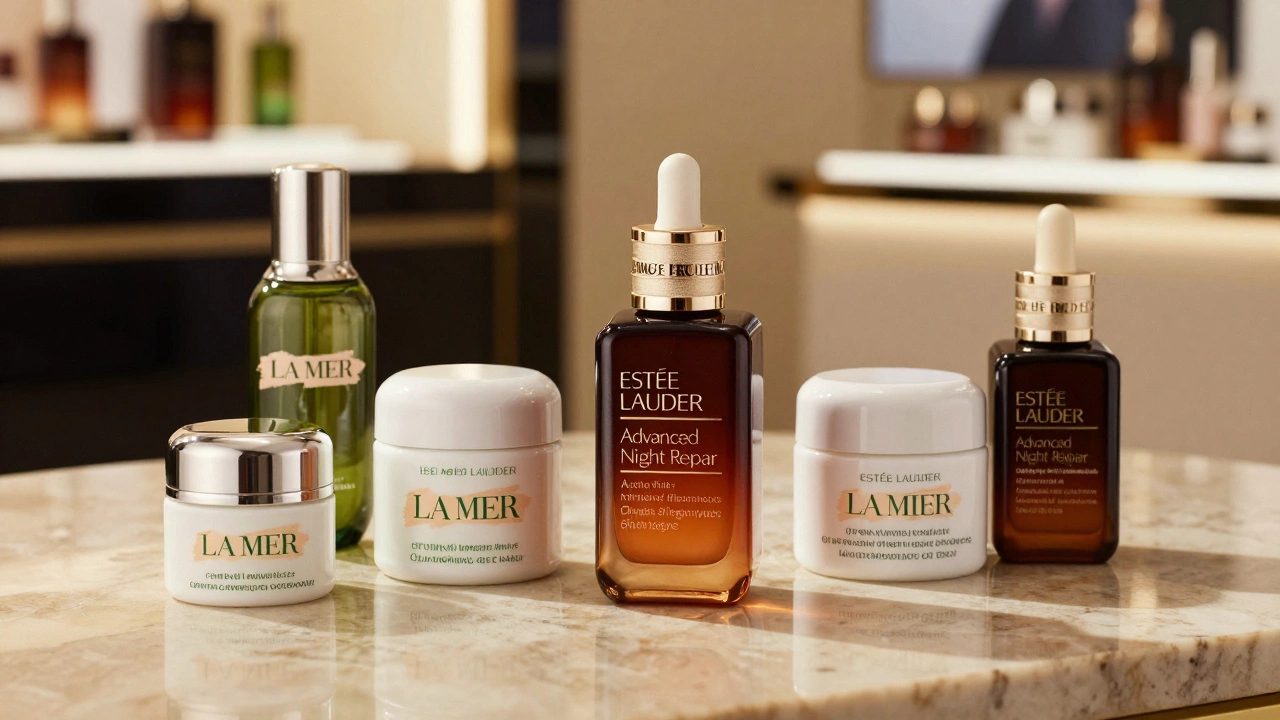
Their flagship brand, Estée Lauder, remains one of the best-selling prestige skincare lines in the world. Products like the Advanced Night Repair Serum are iconic. You can find them in airports from Tokyo to New York. The brand's success comes from heavy investment in research and development, particularly in areas like circadian rhythm science and cellular renewal.
Estée Lauder Companies also owns other powerhouses. Clinique revolutionized skincare by introducing fragrance-free, allergy-tested products in the 1960s. Today, Clinique is a leader in the dermatologist-recommended space. Meanwhile, La Mer sits at the ultra-luxury end, charging hundreds of dollars for creams based on fermented sea kelp. Despite the high price, La Mer consistently ranks among the top-performing luxury skincare brands due to its cult-like following.
The Rise of K-Beauty: Amorepacific
In recent years, the definition of success has expanded to include innovation and trend-setting. Here, South Korea's Amorepacific Corporation takes center stage. While their total revenue is smaller than L'Oréal's, their influence on global skincare trends is unmatched.
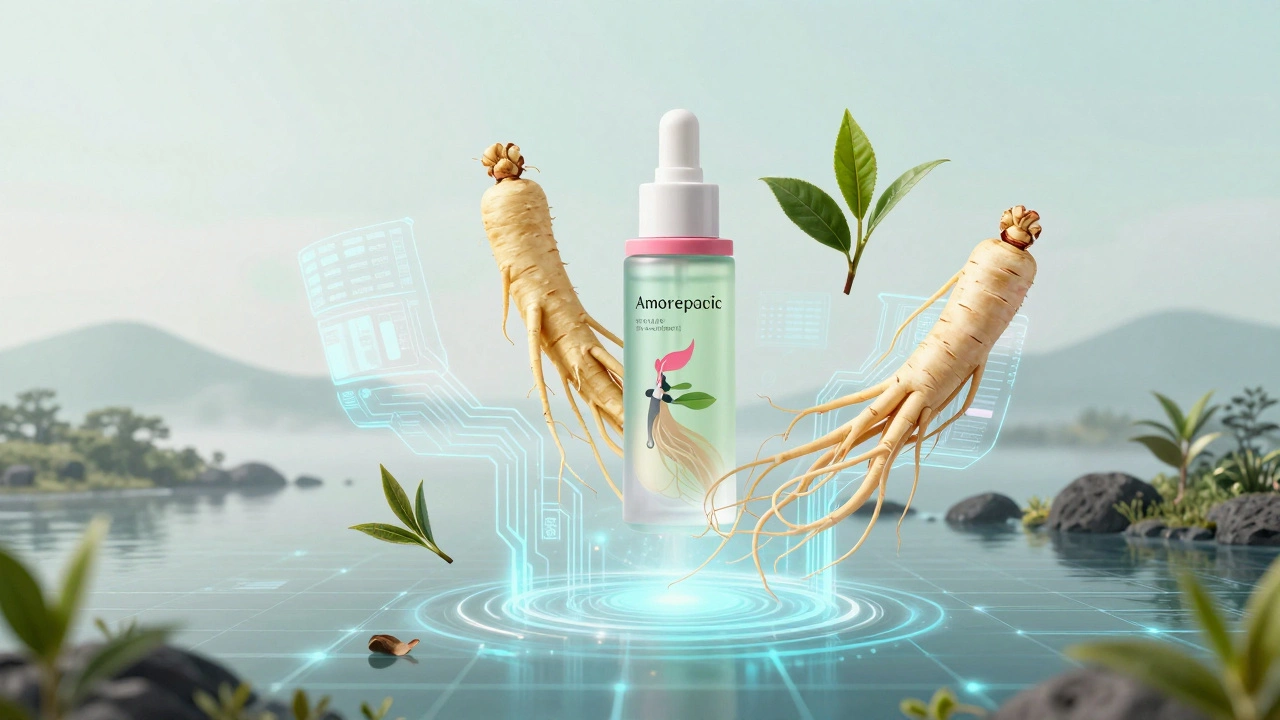
Amorepacific owns brands like Sulwhasoo, which popularized Korean herbal medicine (Hanbang) in skincare, and Innisfree, which focuses on natural ingredients from Jeju Island. They also acquired Dr. Jart+, a brand that became synonymous with the "Cica" trend (centella asiatica for soothing sensitive skin).
Amorepacific's success lies in agility. They were quick to adopt multi-step routines, sheet masks, and lightweight textures that Western brands initially ignored. For many younger consumers, Amorepacific brands represent the cutting edge of skincare technology.
Digital Natives: The Disruptors
Traditional giants didn't expect the rise of Direct-to-Consumer (DTC) brands. These companies skipped department stores and went straight to Instagram and TikTok. Two notable examples are Glossier and The Ordinary.
Glossier built a community around "skin first, makeup second." Their Milky Jelly Cleanser and Priming Moisture Gel became cult favorites. While Glossier faced financial challenges in 2023 and 2024, proving that viral fame doesn't always equal long-term stability, they changed how brands interact with customers.
On the other hand, The Ordinary, owned by DECIEM, disrupted the market by selling single-ingredient actives at shockingly low prices. Their Niacinamide 10% + Zinc 1% serum became a global phenomenon. The Ordinary proved that consumers wanted transparency and efficacy over fancy packaging. Although DECIEM was acquired by L'Oréal in 2024, the brand's impact on pricing expectations remains permanent.
Comparison of Top Skincare Conglomerates
| Parent Company | Key Skincare Brands | Primary Strength | Price Positioning |
|---|---|---|---|
| L'Oréal Group | L'Oréal Paris, Kiehl's, Vichy, La Roche-Posay | Massive scale, R&D budget, global distribution | Mass to Luxury |
| Estée Lauder Companies | Estée Lauder, Clinique, La Mer, Origins | Prestige branding, high profit margins, loyalty | Prestige to Ultra-Luxury |
| Amorepacific | Sulwhasoo, Innisfree, Dr. Jart+, Etude House | Innovation, trend-setting, ingredient purity | Mid-Range to Luxury |
| Shiseido | Shiseido, NARS, Clé de Peau Beauté | Japanese heritage, advanced optics in skincare | Prestige |
Why Big Brands Dominate
You might wonder why small brands struggle to compete. The answer is infrastructure. The most successful skincare lines spend billions on clinical trials. L'Oréal and Estée Lauder have proprietary testing centers where they simulate years of skin aging in weeks. This allows them to make bold claims backed by data.
They also control the supply chain. When a brand needs 10 tons of hyaluronic acid or retinol, big companies have contracts with raw material suppliers that guarantee quality and price stability. Small brands often face shortages or price spikes.
Furthermore, marketing power matters. These giants sponsor celebrities, fund dermatological associations, and maintain prime shelf space in Sephora and Nordstrom. Visibility drives trust, and trust drives sales.
How to Choose Your Own "Successful" Line
Just because a brand is the most successful globally doesn't mean it's right for you. Success is subjective when it comes to skin health. Here is how to pick a winner for your specific needs:
- Identify Your Skin Concern: Are you fighting acne, aging, or dryness? Look for brands with specific expertise. For example, La Roche-Posay is highly recommended by dermatologists for sensitive and acne-prone skin.
- Check Ingredient Transparency: Successful modern brands list ingredients clearly. Avoid those hiding behind "proprietary blends" without clear concentrations.
- Consider Your Budget: You don't need to buy La Mer to get good results. Drugstore brands like CeraVe (owned by L'Oréal) offer similar ceramide technology at a fraction of the cost.
- Look for Clinical Proof: Does the brand publish studies? Do they partner with universities or hospitals? This is a sign of serious scientific backing.
The Future of Skincare Success
As we move through 2026, the definition of success is shifting again. Consumers want sustainability. Brands are being judged on their carbon footprint, packaging recyclability, and ethical sourcing. Kiehl's and Clinique have made significant strides in reducing plastic use.
Personalization is also key. AI-driven skin analysis tools allow brands to create custom formulations. While this technology is still emerging, it promises to make skincare more effective by addressing individual genetic and environmental factors.
Ultimately, the most successful skincare line is the one that stays relevant. Whether it's L'Oréal's sheer size, Estée Lauder's prestige, or Amorepacific's innovation, these companies survive by adapting to what consumers want next.
Is L'Oréal the same as Estée Lauder?
No, they are separate competitors. L'Oréal is a French company, while Estée Lauder is an American company. They own different brands and operate independently, though they compete directly in many markets.
What is the number one selling skincare product in the world?
It varies by category, but L'Oréal Paris Hyaluronic Acid Serum and Estée Lauder Advanced Night Repair are consistently among the top sellers globally in terms of revenue and unit volume.
Are expensive skincare brands worth it?
Not necessarily. Many drugstore brands owned by large conglomerates like L'Oréal use the same active ingredients as luxury brands. You often pay for packaging, marketing, and brand prestige rather than superior efficacy.
Which skincare brand is best for sensitive skin?
Brands like La Roche-Posay, Avène, and Clinique are widely recommended by dermatologists for sensitive skin due to their focus on minimal irritation and barrier repair.
Who owns CeraVe?
CeraVe is owned by L'Oréal USA. It has become one of the fastest-growing skincare brands in the US due to its dermatologist-developed formula and accessible price point.
Is Korean skincare better than Western skincare?
"Better" is subjective. Korean skincare often leads in innovation, texture, and preventative care. Western skincare tends to focus heavily on anti-aging and clinical corrections. Both have excellent options depending on your goals.
 Skincare